 EKIP– Expert Club for Economics and Politics A Different Opinion
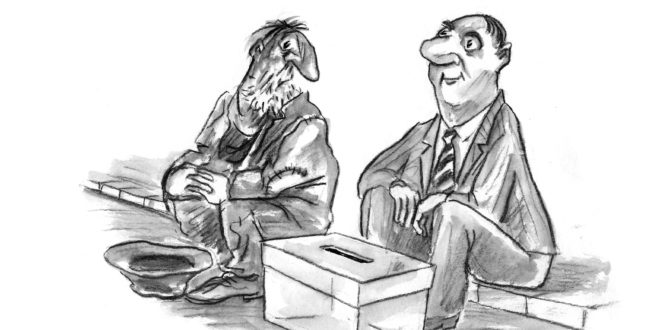
As the European Parliament elections approach, political parties are increasingly trying to encourage citizens to vote – preferably for them. Regardless of the differences in their political and economic platforms, all parties agree that every citizen in a representative democracy should exercise their right to vote, regardless of whether they can identify with any of the candidates or not.
The "obligatory" nature of voting is usually explained by several arguments, which, however, do not withstand closer examination:
1/ “If you didn’t vote, you have no right to complain” – fans of representative democracy believe that voting gives them a special right to criticize the government they have elected. However, voting has nothing to do with the right to express their will and vice versa – abstaining from voting does not take away the right to free speech. On the contrary, voting is an expression of agreement with the political class that emerged from it, therefore, by exercising their “right to choose” citizens deprive themselves of a good opportunity to blame the government by actively giving their support for it.
2/ “Choose the lesser evil” – a common strategy is to present a party as the lesser evil compared to the others. Jokingly, to such a “prompt”, libertarians respond “How does it feel to choose evil?”. In fact, this response contains the essence of the criticism of the chosen evil – the purpose of the political system, according to the theory of democracy, is to regulate relations within a group so that it lives better than in the absence of a political system. In the event that our choice is between one evil and another, the existence of democratic government becomes meaningless.
3/ “Democracy is the best system” – the encouragement to vote goes hand in hand with the reminder that representative democracy is the best political system. The argument is usually built on the principle of false dichotomy, with the voting citizen being reminded of the threat of totalitarian systems or “complete chaos” in which people kill each other indiscriminately to rob each other. The only alternative is to vote for a ruling clique that will “protect” people from these threats with the help of regulations and a repressive option. The possibility that in the absence of government, individuals may prefer to create and exchange property peacefully is not discussed, even though it is the most likely development in the absence of state violence.
Having established that the pressing reasons for voting now and today are not so pressing, let's consider the alternative. Refusing to vote is an act of blaming the government - in case the voter does not recognize his position among any of the alternatives presented, then this is the way to state it.
Abstaining from voting takes away some of the "democratic legitimacy" of the government created as a result of it - to the extent that democracies claim to rule on behalf of the majority, the fewer citizens have actively expressed their support for it, the less morally justifiable the decisions they make are.
Conversely, voting constitutes active support for the current system of legalized violence and legalized robbery. The voter gives his approval for the continuation of these practices and consents to them. Moreover, the act of voting itself constitutes violence, insofar as the voter delegates to his chosen one the right to use violence on his behalf, and presumably in his interest.
For these reasons, I will take advantage of the (still available) right to free expression and call on all those who do not want to legitimize a system of violence and who are not misled by a false choice that does not change the character of the political system, but only the actors at the helm – do not vote!






The stupidest thing is not to vote, I just don't know why there's even such an article.. Such calls doom the country for the future...