 EKIP– Expert Club for Economics and Politics A Different Opinion
 Dimitrina Ivanova
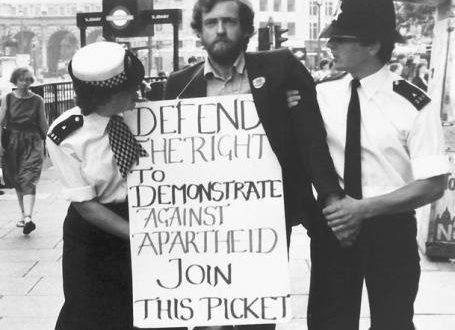
In this year's election, Labour in Britain won its fewest seats since 1987. This was followed by the resignation of leader Edward Miliband, who was elected after Gordon Brown's resignation. His resignation came after the failure of the 2010 election. The party was in crisis and the election for a new leader was crucial. It was held in a new way, using the "one member, one vote" system for the first time. Party supporters can pay three pounds to participate in the vote and more than 80 percent of them cast their votes for Jeremy Corbyn, known for his far-left ideas.
Corbyn won a surprise and convincing victory, winning over half the vote. He was elected more decisively than Tony Blair and has the largest mandate won by a party leader in Britain. At the same time, he was nominated by the fewest members of Parliament.
Corbyn’s initial aim was simply to stir up debate within the party and perhaps win over other candidates to more extreme left-wing ideas. In fact, at the time, no one thought he was even possible. The story of his triumph is linked to an untested electoral system designed to reduce the influence of trade unions. It allowed hundreds of thousands of supporters to vote and pushed the party to the far left. Above all, it is the story of the collapse of the “New Labour” party led by Blair and Brown. They moved the party towards the centre of the political spectrum with the idea of the “Third Way” – an attempt at a synthesis between socialism and capitalism. “New Labour” wants social “justice”, not equality, and a free market as the method to achieve it. Their failure led to Jeremy Corbyn – one of the most convinced representatives of the so-called “Old Labour” party – and his slogan of “new politics” 1. His appointed shadow finance minister declared that “Marx is back in fashion.” What is new is indeed well forgotten old. But Marx cannot be well forgotten enough.
Marxism and Labour
Labour's ideas are typically left-wing and worryingly populist - nationalising rail and energy companies, higher taxes for the rich, more social benefits, lower tuition fees, state rent controls. Corbyn has been warned by members of his own party that his economic policies are unworkable in the European Union. Eurosceptic Labour circles have commented that the idea of a National Investment Bank is against EU regulations. Kevin Hopking, a Labour MP, said: "We want to rebuild manufacturing. But there are rules in the EU that prevent us from providing state aid to intervene in industry." Trade unions are also pushing for an exit from the EU, as they are unhappy with competition laws, particularly the Treaties of Rome, which prohibit exclusive rights for state monopolies if they are detrimental to competitors. Corbyn won his leadership with the support of the trade unions.
For now, Corbyn supports Britain remaining in the EU. But unless he delves into populism, he will have to change either that position or his plans for the economy.
In this light, Corbyn's position on the so-called benefit cap becomes important. The benefit cap is a ceiling on social benefits, adopted in 2013. Even if a citizen receives several types of social benefits, the total amount cannot exceed a certain figure (350 pounds per week for an adult without children, for example). In mid-September, Corbyn said that he wanted to abolish this cap entirely. This move is not just populist, but dangerous. The government has adopted a number of measures against the drain on the infinitely generous programs and pleads against open borders. Removing the cap seems incompatible with remaining in the EU.
Same speech
Corbyn’s first conference was held at the end of September. His claims of a “new politics” were undermined after he was caught using a 1980s test as a conclusion. The speech’s author has offered it to every Labour leader since Neil Kinnock and all have rejected it. The party’s spokesman initially said the similarities were “pure coincidence”, but later admitted the test was the same. The gaffe added to criticism that Corbyn had failed to address the most important issues – the deficit, migration or the EU referendum. The spokesman’s subsequent statement did not help: “we don’t have a policy for every problem”.
Two days earlier, the Labour Party had held its conference in Brighton. John McDonnell had presented the shadow cabinet's economic plans. 2 The shadow chancellor himself is a curious figure. McDonnell became famous for a statement he made in 2003 in connection with his remarks on the IRA 3: "it is time we started to honour those involved in the armed struggle", he said at the time. He has said that he would happily go back and kill Margaret Thatcher. He is in favour of a 60% tax on incomes over £100,000, supports the nationalisation of banks, and has stood for party leadership several times, but has not garnered significant support. We can also add another interesting appointment - that of shadow environment secretary. Kerry McCarthy said earlier this month that "meat eaters should be treated like smokers". She describes herself as a "militant vegan" and is planning campaigns and advertisements calling for vegetarianism. It is curious that her position implies lobbying for the interests of farmers, including meat and milk producers.
McDonnell said: “It is unacceptable for the government to allow key industries to decline. The current government’s ideological decision not to have an industrial strategy is putting people’s jobs at risk.” The shadow chancellor also announced that university tuition fees would fall. The money for this would be raised by a 2.5 per cent increase in corporation tax. McDonnell would “lift the burden off the middle and lower classes” and “make companies like Starbucks, Amazon and Google pay their fair share of tax.”
McDonnell also said he planned a “radical overhaul” of the national institutions that govern the economy. In 2012, he said the government should control interest rates. He denied such plans in Congress, but said the Bank of England was failing to deal with inflation.
On September 16, Corbyn faced British Prime Minister David Cameron for the first time in PMQs, in which the opposition leader is allowed six questions. The tactic that Labour chose went down in history as the first time voters directly asked the questions.
Corbyn sent an email to thousands of people asking what they wanted to ask Cameron. He received more than 40,000 responses, and he chose six. They included high rents and housing taxes, mental health care and tax credits. Corbyn’s move was predictably met with widespread approval and a ripple effect on Twitter. PMQs, like many traditions in British politics, are largely ceremonial and have become an exercise in eloquence and a subtle way to insult your opponent. Another part of British politics that has become largely ceremonial is the institution of the monarchy. Over two days, Corbyn challenged both, refusing to sing “God Save the Queen” the day before questions.
Corbyn’s tactics are contradictory. He has no experience of PMQs, and that makes him vulnerable. Cameron has honed his eloquence, and the threat of a complete defeat of Labour seemed real. Corbyn used the voters’ questions and avoided it. Cameron knows it is acceptable to denounce Corbyn as weak or pathetic, but he could not imply the same to the voters. Although populist, his move also won him additional support.
More importantly, Corbyn has thus deprived himself of the right to ask follow-up questions. They are the tools for finding gaps, shortcomings and lies. Voters are asking widely debated questions, for which Cameron is perfectly equipped. The fact that Corbyn chose six on different topics deprived him of the opportunity to attack, giving Cameron a quiet field to promote government policy and the Prime Minister gained more from him. Corbyn escaped defeat, but he did not win.
Leftism on the Surf of Discontent
Almost every idea Corbyn has is riding on public discontent. It is normal for right-wing austerity policies to be unpopular with the average voter, just as it is normal for everyone to want more money and lower rents and tuition fees. This is possible. By the time the money runs out, investors have withdrawn and the bubble has burst. Corbyn may represent the “new thing in politics” when it comes to winning supporters. His proximity to voters and direct involvement seem charmingly close to better democracy. At the same time, they may be dangerously close to worse populism. The problem is that Corbyn’s ideas are old, already implemented and proven not to work. It is not clear how many times we need to nationalize key industries before we realize that it is not a good idea.
Corbyn is a protester, not a politician. This explains his behavior and demands. The desires of the square are always like that - they are not an economic program. The job of politics is to confront them with reality. But when suddenly and almost accidentally a protester finds himself in political office, the realization of utopian demands becomes dangerous.
The protester and the politician are in eternal opposition. The squares are a necessary pressure and in their essence do not require economic knowledge. It is acceptable for them to be primary, extreme or utopian. Their role does not require the actual implementation of the demands. The protest demands a higher salary. Its work does not include the question of “how”. The way and the possibility are the tasks of a politician.
Corbyn is undoubtedly introducing new approaches to British politics, but it is no coincidence that he seems unstable in his new role. He is unprepared, and his actions during PMQs show that he is aware of this. Corbyn followed the procedure as a protest leader - he announced the demands of the people. That half hour showed more about Labour than his speeches so far. His move was uncharacteristic, but it fundamentally missed the mark. The role of a politician in questions is to attack the positions and decisions of his opponent. Corbyn has shown that he is not yet one. The point is that it can be done.




Capitalism in the USA also achieved its greatest successes in 1950-1970 because there were high taxes and regulations, especially in the financial sector - a fact that cannot be denied and we know what happened in 1999 with the repeal of the Glass-Steagall Act of 1933 for the separation of banking, etc.
A few facts from the USA - in 2012, the difference in income between the average top manager and his average worker increased over nine times - from 30 times in the late 1970s to 277 times today.
Average hourly wages from 1975 to 2010 grew 10 times less than productivity
''between 1979 and 2007, the incomes of the middle 60% rose by less than 40% while inflation was 186%.'' - https://www.facebook.com/atanas.shalapatov/posts/1442612112683685
In other words, the so-called crises of capitalism, "business crises" are simply theft through banks, inflation, etc. "methods" and the worst thing is that these "methods" are legal in the form of ideologies such as neoliberalism, especially in financial capitalism.
Milton Friedman and especially Friedrich Hayek had industrial capitalism in mind when they spoke of a free market, not financial capitalism, meaning that financial capitalism requires strict regulations.
Milton Friedman - The American economic system is socialism for the rich and free enterprise for everyone else. If the average person can't pay his debt, he's forced to live in his car. If a banker can't pay his debt, he relies on taxpayers to bail him out.