 EKIP– Expert Club for Economics and Politics A Different Opinion

 Gayane Minasyan*
Recently, the need for educational reforms in Bulgaria has been a hot public topic. A number of political figures are actively trying to push their views in this direction. One of the main problems, however, is that the educational system in Bulgaria is a successor to the central-command approach of a bygone era. That is why a community of parents, teachers and public figures is growing, united around the cause of parental responsibility for the choice of education for their child and the free development of education in Bulgaria. This is a cause for the democratization of the country and the release of the wealth and energy of human potential.
There are a number of examples from the experience of countries that adhere to these principles and that show their crucial importance for achieving educational results. Such is one of the old democracies in Europe - Denmark, where the tradition of freedom in education dates back to 1855 in legislation, with documents attesting to civil and legislative processes in this direction dating back to 1814. Another such country is Great Britain, and also Israel - the nation-innovator, one of the leaders in the number of innovative businesses in the world.
Convinced that the path to change lies through free interaction and exchange of ideas, the National Parents' Network organized in February 2016 the Second National Meeting for the Free Development of Education with leading speakers in the field of education from these countries. The first meeting, which was held in 2014, was dedicated to informing the public about the cause of freedom and responsibility. The second meeting will be bilingual and will be held under the motto PRACTICES OF FREEDOM AND HUMANITY. It offers an introduction to the democratic legislative model of the Danish education system. It will provide up-to-date information on leading educational approaches from Denmark, Great Britain and Israel, respecting freedom and humanity and preparing children for success in the knowledge economy. For practitioners, there will be practical workshops led by the main speakers (interactive, in English). The conference will also provide an opportunity to present Bulgarian initiatives in the direction of the free development of education in order to expand the network of Bulgarian agents of freedom, diversity and educational initiative.
The diversity of human talents and the dignity of the human spirit cannot find a field for expression and development in a command education system, which is a legacy of the past. A democracy that does not respect the principle of parental responsibility and freedom of self-determination, thought, speech and association (integral to the choice of education); a democracy that is afraid of diversity and freedom of choice is not real, but only nominal. Moreover – without the liberation of the human spirit and talents, it is not possible for Bulgaria to acquire its unique appearance and take its worthy position on the map of prosperous countries.
The current trends in education development that will be presented at the conference are aimed at greater student empowerment and creating opportunities for learning through authentic collaboration. In addition, education is moving away from the isolation behind school walls and is beginning to restore in various ways the connection with the community to which students belong and are supposed to contribute. There is also an emphasis on the connection, knowledge and respect for nature and life in it.
*Gayane Minasyan is one of the founders of the National Parents Network (NPN)
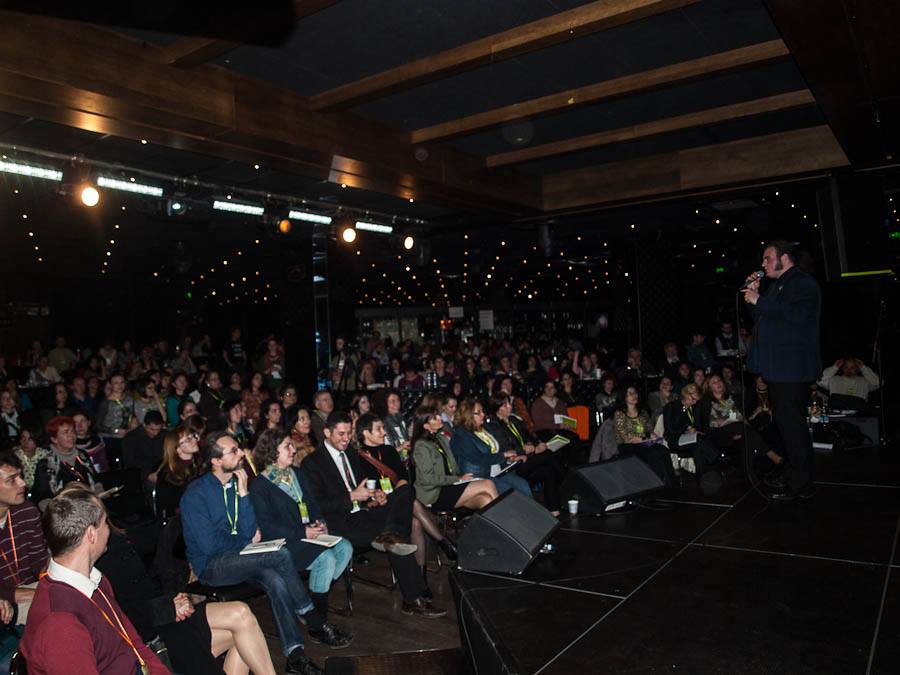
** In the photo you can see a lecture by the EKIP from the First National Meeting for the Free Development of Education




In 1989, the state order was about 23,000 students, and in 2015, it was about 57,000, which suggests that the economy has developed, but alas, and I will say it briefly - a systematic approach to a resource-based and planned ecological economy.
More here - https://www.facebook.com/boyan.durankev/posts/1701431930135034
I think strategically and geopolitically, I know what I need to do and I "ring the bell", but for the technical and legal shaping of some things, there are servants (in Latin, ministers), and narrow specialists, and academies of sciences for further shaping and calculations, because it's a lot of work to avoid catastrophes.