 EKIP– Expert Club for Economics and Politics A Different Opinion
(Clarification: In this article, I refer to Kuzman Iliev by the name "Kuzman," not "Mr. Iliev," not with the aim of disrespect or neglect, but to avoid the unnecessary burden of formal addresses. In every respect, I consider Kuzman Iliev a friend and collaborator in the cause of freedom in Bulgaria. Disagreements on specific issues and practical applications of ideas are normal between friends.)
“Left” libertarians and “right” libertarians is the axis of the “rift,” which Kuzman Iliev discusses in his article on libertarian views on immigration, “ Free Migration and Refugees: The Ideological Libertarian Rift.” The “right” are those for whom “private property is the foundation,” and therefore in an ideal libertarian society there would be no freedom of movement except with the express permission of the private owner. In today’s less-than-ideal conditions of state ownership, the same restrictions must be imposed by the state in order to maintain the same principle regarding what is formally considered “the property of all taxpayers.” The “left” are those for whom individual freedom is a supreme libertarian value. Of course, not at the expense of private property, but only with respect to state property, which “left” libertarians consider to be nobody’s property and therefore not deserving of the same protection as true private property. On the other hand, the “left” wants more “cultural exchange” as something positive, which the “right” does not want because it considers it dangerous to the traditional values of the West.
So far so good. Kuzman chooses the position of “right” libertarians, and that is not a problem so far, given that there is nothing to say which of the two positions is correct from a libertarian point of view. Except, perhaps, the etymology of the word “libertarianism” (from liberty, “freedom”), which seems to support the “left” more than the “right.” After all, if for the right, private property – and state property, as some form of private property – is a “foundation” above freedom, they should be called not “libertarians,” but “propertarians” (from property, “property”). But these are details. I am not trying to defend the “left.”
The main ideological assumptions
The problem comes when we bring into the picture Kuzman's main ideological assumptions: on the one hand, Austrian economics, and on the other, Christian values. Purely theoretically, these two positions have different starting points. In practical applications, however, as Kuzman rightly notes, they are close and overlap because classical liberalism and libertarianism are influenced by Christian values.
And the problem is that Kuzman’s position is not consistent with either classical liberalism or Christianity. Yes, I know that he adopted this particular practical position from Lou Rockwell and some of the later writings of Murray Rothbard. However, I would venture to argue that Rockwell and Rothbard are also inconsistent on this issue with their founding principles, as I will show in this article. More generally, neither Kuzman’s “right” nor “left” libertarians are consistent with the original ideas of either classical liberalism or Christianity. Therefore, Kuzman’s analysis is incomplete: he leaves out two major groups, the consistent classical liberals and the consistent biblical Christians. Both groups are actually of the same opinion on immigration and refugees; and this opinion differs from Kuzman’s.
First of all, we should be clear that classical liberalism does not support the idea of private property as a “foundation.” I know this will sound strange to many followers of the Austrian School, who intuitively accept private property as a fundamental value. Contrary to their intuition, however, pure classical liberalism accepts private property only as a secondary instrument, not as a primary value. Von Mises devotes only 2 pages to private property in his 800-page foundational work, Human Activity, and his analysis of its origins is not significantly different from that of Friedrich Engels: that it is the product of “arbitrary appropriation or forcible expropriation.” Mises’s conclusion is that therefore “private property is not sacred.” It is simply an instrument, but there is nothing in it that makes it moral in itself. He goes on to state that the legitimacy of private property lies only in the extent to which it serves the users, not its owner. "Private property is the ultimate expression of consumer self-determination."
This is not inconsistent with his overall position. For in Chapter 8 of the same book he specifically criticizes “metaphysical” views of economics and human activity. Given the philosophical terminology of the time and Mises’s specific examples, he has in mind religious views. Not only is property not sacred, nothing is sacred. Both human activity and the entire economy must be judged and studied on the basis of purely pragmatic principles, which for Mises are methodological individualism and social cooperation. Whatever brings good economic results is good. Private property must bring good economic results. If it does not bring such results, it is not worth defending.
Mises is not alone in this position. Gottfried Dietze maintains the same view in his book on property (Gottfried Dietze, In Defense of Property ). Private property is moral and protected only insofar as it is a proven useful “feature of our civilization.” In his article on “ The Ethics and Economics of Private Property,” Hans-Hermann Hoppe comes closest to the idea of attributing some moral value to private property . . . but even in this article he subordinates it to the abstract principle of “public order.” Private property has no ethical value in itself. It cannot be the foundation of anything, according to the theoretical presumptions of classical liberalism.
(To be clear, I do not share this presumption of classical liberalism. I share the Christian view that private property is sacred, that is, transcendently or divinely defined and protected in its own right, regardless of whether it serves the purposes of “public order” or “consumer self-determination” or “social cooperation.” In fact, the modern “intuition” that leads many libertarians to consider it sacred comes from Christianity, not classical liberalism. But that is a topic for another article.)
Therefore, consistent classical liberals cannot approach the issue of immigration on the “foundation” of private property – there is no such “foundation.” The consistent position is that both private property and immigration should be judged through the prism of social cooperation: If the results are good, then the means are good. If the results are bad, then the means are bad. This is the “pure classical position,” if we follow von Mises.
This conclusion leads us to the other inconsistency in Kuzman's position.
On a logical level, if everything were private, there would most likely be no migration issue, because everyone would be able to travel and stay only where they are accepted or invited.
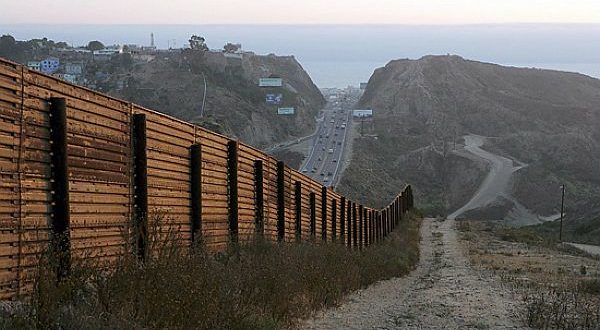
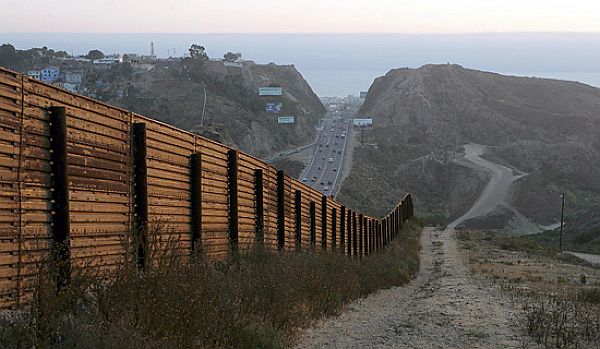
What Kuzman describes here is a closed-border society, where the traveler must ask for special permission for every private property he crosses. Again, while such a society may seem intuitively consistent with libertarian views, in reality it is not, because it does not conform to the very definition of the nature of private property. Kuzman’s view contradicts not only classical liberalism but also Christian values. Such a closed society would be a society of high social costs for all individual permissions. Moreover, such a society would criminalize being on private property even when no harm has been done, simply because permission was not asked. And even worse: the prohibition would have to extend to unauthorized presence even when it is positively beneficial: such as putting out a fire on the property in the absence of the owner.
The alternative— an open-borders society— is far more consistent with classical liberalism, and far more realistic. That is, a society in which one is free to be on any private property, except where the owner has expressly forbidden it or has demonstrated that he does not want others to be present. This principle is clearly seen at the most elementary level: If I do not want people to look at my genitals, it is my responsibility to buy clothes to cover the “private property” of my body. If I walk naked on the streets, no one is obliged to take it for granted that I do not want them to look at me unless I give them permission. If I want privacy for myself and my family, it is my responsibility to buy or rent a house. (A wall and a locked gate are a clear statement that I do not want outsiders.) If I do not want people to cross my land, it is my duty to enclose it with a wall, or to put up a guard, or—best for social cooperation—to build a road through it that people can cross, either free of charge or for a fee. (This is how at least 1/3 of Roman roads were built. The policy of the Emperor Augustus was that private landowners had no right to stop people crossing their property unless they had built a road across it. Many landowners preferred to build roads rather than tolerate people crossing.) Society is based on the principle of mutual responsibility: Owners are responsible for clearly stating their will, and others are responsible for respecting it. An owner's vaguely expressed will is not an expression of conscious responsibility.
 The two societies – open borders and closed borders – are based on different assumptions
about the nature of private property and therefore about the concept of “violation of private property.” Kuzman’s idea necessarily requires not an economic but a metaphysical definition of private property as some occult reality that is “violated” by the mere presence of outsiders on it. In his book, The Ancient City (Fustel de Coulanges, La Cité antique, 1864), Fustel de Coulanges shows that the pre-civilized tribes of Europe had such a sacred and magical view of property. Thus, presence on it has the same blasphemous meaning as the presence of non-Muslims in Mecca – the property is like a religious temple. Therefore, “violation” of private property is the very presence of outsiders on it.
But if we accept the ideas of classical liberalism, property is not sacred and magical; it is simply an economic concept. Economic in the sense that its definition is entirely related to economic, that is, scarce value. This is the meaning of the article by Hans-Hermann Hoppe that I cited above. This is also the basis of the definitions given by other classical liberals. Therefore, the violation of private property is entirely related to economic (scarce) value: either the destruction of value or the redirection of its use for purposes not permitted by the owner. Simply standing on or walking through a meadow or field overgrown with weeds is not a violation: space, air, or weeds are not scarce resources from which the owner gains economic benefits. A picnic in a private forest where no trees are destroyed (scarce value) is not a violation of property. And so on.
Obviously, in such an open-border society, the home and the economic value of the owners are protected, but at the same time, freedom of movement and social cooperation are not taken away. Social responsibility is shared between the individual owner and society; everyone's rights are also protected.
Since Kuzman mentions Christian values, this is also the view of the Bible. Private property is sacred in the Bible, that is, it is under divine protection regardless of society or the desires of the users. But this divine protection is expressed in a negative commandment, “Thou shalt not steal,” which indicates that only economic (scarce) value is protected. Private property in itself has no magical value. Thus the home is protected from encroachment, even with the right to lethal response under certain circumstances:
If the thief is found breaking in, and is struck down, and dies, there shall be no blood shed for him: but if the sun be risen upon him, then blood shall be shed for him (Ex. 22:2-3).
On the other hand, crossing property with open borders is not a crime, as long as there is no theft or destruction of value:
When you come into your neighbor's vineyard, you may eat grapes as much as you want until you are full; but you shall not put any in your vessel. When you come into your neighbor's standing grain, you may pluck the heads with your hand; but you shall not put a sickle to your neighbor's standing grain (Deut. 23:24-25).
To this we must add the laws of the gleaning (Deut. 24:19-22), which specifically entitle the poor and foreigners to benefit from the remaining ears and clusters after the harvest and grape harvest – that is, from the value that is not economic, since its collection would bring more expenses than income to the owner.
Based on such biblical laws, the legal system in Christian Europe for 1500 years has always protected the freedom of travelers and free access to non-economic (non-scarce) goods. Even today, in many states in the United States, it is legal for a traveler to stop at an unfenced private field or garden and satisfy his hunger from it. This is not a violation of private property.
Even less can crossing private property be considered a violation if it is not related to destruction or theft of economic (scarce) value.
Thus, Kuzman's (and Lou Rockwell's) argument against open borders—because a true libertarian society would be a closed-border society—has no support in classical liberalism. Nor does it have support in Christian values.
But something else becomes clear – and that is that the existence of state property and a welfare state cannot be a justification for giving the state even more power to control the movement of non-criminal individuals. Kuzman says of immigrants:
If they do not integrate either economically or socially, but instead use the generous social system, financed with what is taken from taxpayers, in every possible way, thus creating conditions for social disintegration.
Does state ownership hinder free movement?
There are so many contradictions in the idea that we should restrict immigration or close borders to refugees just because we have state property or a welfare state in Europe that it is difficult for me to decide where to start. I will touch on only the most important ones here.
First, if the welfare state is truly “owned” by taxpayers—and especially by those who do not want to pay to support immigrants—how come these “owners” cannot decide to protect their “property” from encroachment, even in the presence of immigrants? Kuzman says that this state property “is no one’s,” but it belongs to the taxpayer, and therefore the state’s admission of immigrants is a “forced inclusion,” which “violates the property rights” of taxpayers. But if taxpayers cannot decide to “enclose” this property so that it is not used by immigrants, then it turns out that the property is not theirs in the first place. Immigrants have nothing to do with this problem—the property may indeed be no one’s, but it is not the taxpayer’s, because they do not really have any say in it. Here Kuzman’s thesis about state property as “taxpayer property” breaks down. It makes far more sense to view state property as stolen property – and therefore it doesn’t really matter who benefits from it if the rightful owner can’t. Stolen money is stolen money, and it doesn’t matter whether it’s given for “charity” or “economic development.”
If the welfare state and public property were truly owned by taxpayers, then taxpayers would be perfectly free to build a “fence” around that property, and on the basis of the above idea of property, to restrict access to foreigners. If they cannot build such a “fence,” can we really speak of any “property”?
Second, by what logic can the existence of state property and a welfare state justify the criminalization of perfectly natural human activity and aspirations? No matter what version of libertarianism we adopt, a person’s desire to improve their situation – a better-paying job, more security, a better future for their children – is a perfectly natural desire. Suddenly, however, the existence of state property and a welfare state so drastically changes the moral rules that it justifies the criminalization of this perfectly natural desire. Thus, a family crossing a state border to escape war, or simply to find better living conditions, suddenly becomes a gang of criminals who can be hunted down and killed. Or at least deported back to the conditions they fled. Why should refugees or immigrants be to blame for our allowing state property or a welfare state? Such situational ethics is characteristic of the leftist part of the spectrum; leftists are the ones who tell us that different situations have their own different standards of good and evil. Since when are the "right" those for whom the same natural action deserves encouragement in one situation, and is a crime in another?
Third, what is the logic behind giving the state more power in one area (control of the movement of non-criminal individuals) because it has already usurped more power in another area (state property and the welfare state)? If a criminal has robbed a family (state property), can this be a justification for allowing him to also chain them up (control of movement)? Where is the end of the chain: more state power must lead to more state power, which leads to more state power . . . ? If state property justifies the deprivation of the freedom of a foreigner, why should it not justify the deprivation of the freedom of everyone, even citizens? When we make state property the ethical standard for the state's treatment of foreigners, are we not thereby giving the state a moral right to treat its own citizens in the same way?
But these contradictions are only the tip of the iceberg of a much more significant contradiction: Kuzman’s – and his “right-wing” libertarians’ – interpretation of the “cultural” challenges of free migration. According to this interpretation, a person is presumed to have adopted the culture of the place they come from, and will therefore always work to bring that culture to the place they are going:
The practical problem that we see clearly today arises if those entering do not share the values of the local communities—culturally and politically. . . .
In a democracy, newcomers and their children eventually become legal voters. Of course, they vote for politicians/statesmen who, in order to be in power, take it upon themselves to defend their group interests and values — often in opposition to the economic, social, and political ideologies that have brought the given community to its current levels, for example, of high standards, social peace, and cultural achievements.
Reference: the electoral alliance of left-wing political formations and Islamic communities in Europe.
The last sentence in this paragraph is somewhat misleading because it presents information in a way that has no practical relevance to the issue. What is relevant to our topic here is not what the “electoral alliance” is, but what percentage of Muslims in Europe , or what percentage of immigrants in general, vote for left-wing parties. Such statistics do not exist and probably cannot exist, since those who vote for right-wing parties usually do not openly identify themselves as belonging to any ethnic or religious community. In the US, numerous studies claim that the Latin American population is predominantly left-wing in their views – but they fail to note that right-wing Latin Americans do not like artificial ethnic stereotypes and rarely identify as “Latin American” in these studies. The same is true of Iranian immigrants in Europe and the US. And of many other groups – Koreans, Filipinos, Chinese, even Bulgarians and Russians.
This is the main feature of Kuzman's analysis: it is based on essentially collectivist assumptions about the individual and culture . If people come from Syria, they will invariably vote for the cultural and political values inherited from Syria. If they come from China, they will invariably want Chinese culture. And so on.
Intuitively, this seems true. There is just one problem: There is no historical evidence to support it . On the contrary, historical evidence suggests the opposite: immigrants and refugees are much more likely to abandon their inherited culture and adopt the culture of the host country. Of course, there are those who want to preserve some external features of their native culture – clothing, holidays, customs – but the majority of immigrants rarely feel nostalgic for the ethical and legal foundations of the culture they have left behind. Moreover, historical evidence suggests that immigrants become more zealous defenders of their new culture than those who were born into it.
Texas is a good example of this: After the Republic of Texas became a state in 1846, and especially after the end of the Civil War in 1865, central and northern Texas became a hotbed for hundreds of thousands of European immigrants. Unlike the more northern states, however, where settlers came primarily from Scotland, Germany, and the Scandinavian countries, settlers in Texas came primarily from central, eastern, and southeastern Europe—the Austrian, Ottoman, and Russian empires, as well as the rural areas of Bavaria and Saxony. In the 19th century, these areas of Europe were largely agricultural, unurbanized, and the dominant culture was patriarchal, clan, and feudal. In the homelands of these settlers, not only was there no trace of a free society and individualism, but the very idea of such a society was deliberately eradicated by the ruling classes and stifled by tradition. The settlers in Texas simply had nowhere to pick up the idea of freedom in their homelands. The culture they grew up with is completely opposite to the general culture in America, and contrary to the very original idea of Texas as a land of primal individualism and free capitalist relationships.
But contrary to expectations, Texas did not develop any culture of feudalism or patriarchal-clan society. There is not even a transitional period, not even a trace of culture even for a short time after their arrival. These same people who in the Old World were serfs or sharecroppers of large estates (there are several towns that were founded by Austrian nobles who abandoned their old estates and brought all their serfs to Texas), arrive in the New as completely new people, who immediately integrate into Texas as independent, self-sufficient individuals and families, fully equipped to survive life on the frontier. Many of them join the ranks of the Texas cowboys - and I need not remind you that cowboy culture is the complete opposite of the European strictly stratified feudal culture of the time. The result is that today, although there are numerous communities in Texas that outwardly preserve some of their national traditions (Ukrainian, Czech, Polish, Hungarian, German), none of these communities has anything in common culturally with the “homeland.” The cultures are completely different.
There are many such examples. Immigrants are people who consciously want to abandon their native culture – or at least its negative characteristics. Only a small minority strive to preserve it in the new place – and since this minority stands out clearly, most people are left with the impression that everyone is like them. Because the Corleone family, which brought the traditional mafia to America, makes for good material for a novel, but the DiGiorgio family, which created one of the largest vegetable farms in Texas , does not. Thus, many are left with the impression that the Corleones are representatives of the Italian community, while almost no one knows about the thousands of families like the DiGiorgios. And in Europe, attention is focused on the minority of Muslims in burqas and burnouses, while their secularized compatriots are not noticed because they are like everyone else.
There is no doubt, of course, that societies and cultures change, and they change irrevocably. They change so rapidly that today’s children in Bulgaria cannot even imagine their parents’ childhoods in the 1980s. Some of these changes are for the better, others for the worse. But these changes are influenced by multiple factors; there is almost no historical evidence that immigrants have any bearing on these changes . In fact, the data show just the opposite: Immigrants are generally a conservative factor; their aspiration is to preserve and fully live the culture they aspired to and came to, not to change it to the culture they fled from. And in fact, if we carefully examine the cultural changes in Europe over the past 200 years, we will see that it is the locals who are more likely to seek change. After all, of all the cultural factors and movements that have changed the face of Europe over the past 200 years, not one has originated outside Europe . Western society has never changed under external influence, nor under the influence of immigrants.
And if we are to be honest, before Kuzman worries that immigrants might change European culture, we should consider whether closing borders to immigrants, or giving the state the power to control the movement of non-criminal individuals, is not in itself a replacement for the cultural values that have brought the West to modern freedom and prosperity. Until the rise of communism and Nazism, Europe never closed its borders – even during times of war, which are certainly not absent from European history. Until the outbreak of World War II, travel within most countries in Europe was possible without a passport or any other form of identification. The refugee problem did not exist not because there were no refugees from the many wars, but because states simply did not bother to control the movement of private individuals.
So even the very idea of giving the state such power is already a retreat from Christian values and the traditions of Western civilization. Immigrants are not to blame for replacing these values – we replace them ourselves by insisting that the state pursue policies that contradict these values. Kuzman’s idea is an insoluble paradox: Let us replace our cultural values ourselves, so that we will not allow others to replace them for us. Let us give more power to the state and destroy our traditional freedoms, so that we will not allow others to give more power to the state and destroy our traditional freedoms. There is no point in this. If we are going to preserve our culture, we will preserve it. If we are going to change it, let us not pretend to preserve it. When we are not consistent in our thinking, we lose people’s trust, and our speech is worthless. If we believe in the universality of our values, let us adhere to them in principle and consistently.
On this topic, of course, much more can be said than is possible in one article. Of course, the growing libertarian community in Bulgaria should not be torn apart by unnecessary contradictions, and this is not my goal with this article. On the other hand, when some inconsistency or retreat from the original principles of libertarianism is noticed, a discussion and even a debate should take place - inconsistency harms our overall cause. This is precisely my goal.
The libertarian solution to the problem of immigration and refugees is simple and no different from the libertarian solution in any other area of our thinking and practice: The state should have no power over noncriminal individuals, and legislation should not criminalize activities and aspirations that are perfectly natural and justified. As libertarians, we must always be aware that the power of the state over one group always extends to everyone in society, and the criminalization of a natural action leads to the criminalization of all private initiative. As complex as the situation is today, it is still a temporary situation. When we succumb to the temptation to solve temporary problems by abandoning our core values, the results are not temporary but remain in society for a long time. Hayek's Road to Serfdom clearly shows this. Europe has experienced much greater crises than the refugee problem; in fact, compared to the crises of the past, the current crisis is a minor, if not a false, crisis. As libertarians, we will only show that we are serious if we stand firm on our principles, regardless of the fear-mongering of recent days.
So let's stay consistent with our principles.






In recent centuries, science has discovered and proven things that are written in the Bible, including about economics and finances - https://www.facebook.com/boyan.durankev/posts/1694350750843152
I can also explain the law of Moses about forgiving debts and freeing slaves every seventh year and how every 50 years everything starts over - everyone is equal.
As well as what Moses said in the book of Deuteronomy chapter 23 verse 20 abbreviated /Deut.23:20/ - ''to a foreigner you shall lend with interest......'' which is the basis of Zionism and in Wikipedia about Zionism in a well-written ''In 1975, the UN General Assembly voted resolution No. 3379, which condemned Zionism as a form of racism and racial discrimination.''
Zionism is more hidden behind the USA - neoliberalism in banking, etc. deregulation of financial capitalism in general
"The problem comes when we include Kuzman's basic ideological assumptions in the picture: on the one hand, the Austrian economy, and on the other, Christian values. Purely theoretically, these two positions have a different starting point."