 EKIP– Expert Club for Economics and Politics A Different Opinion

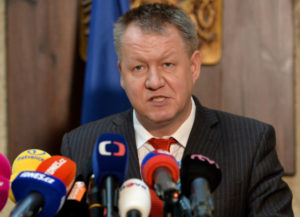
Statement by the Head of the Czech Delegation, Minister of Health of the Czech Republic, Dr. Svatopluk Nemeček, at the 59th Session of the Commission on Narcotic Drugs, Vienna, 14 March 2016.
"Dear Mr. President, Dear Ministers, Your Excellencies, dear friends and colleagues!
I am grateful for the opportunity given to me, as a representative of the Czech Republic, to address this important gathering of the world community. This year, in addition to the usual agenda of the Commission on Narcotic Drugs, we are expected to achieve a meaningful, significant consensus to inform the long-awaited outcomes of the United Nations Special Session on Drugs (also known as UNGASS 2016), which will be held in New York at the end of April.
The Czech Republic fully supports the statement presented by the delegation of the Netherlands on behalf of the European Union.
We all know well that the Special Session is being held at the request of several countries, which express their serious concern regarding the ability of the international community to achieve the tasks and goals set out in the Political Declaration and Plan of Action of 2009. We also know that we are faced with a situation of escalating violence, causing many casualties, which is directly related to the so-called War on Drugs – a war that failed a long time ago.
I believe that we must do our utmost to address the concerns of the countries that requested this special session of the UN General Assembly. We must not fail, but rather provide assistance to the many countries suffering from the fact that the war on drugs has been imposed on them in its most violent form.
The Czech Republic strongly supports the principles of rational and effective drug policy oriented towards human rights and public health and based on scientific evidence and good practices.
The Czech Republic has been experimenting with different versions of its national drug policy since the 1990s. Part of them was that in 1990 we abolished penalties for use. In the same year we decriminalized possession of quantities for personal use, now it is an administrative offense, punishable by penalties ranging from a warning to a fine. A quarter of a century later, we can present conclusive evidence that decriminalization works.
If you are interested in details about our policy, as well as the policies of other countries that have taken the same path, I would like to invite you today to the additional event that the Czech Republic is co-organizing.
Our drug policy is based on four pillars: prevention, treatment, harm reduction and law enforcement. They are tools of equal importance. Each of these four pillars helps us achieve our main goal – the well-being of our citizens and all people.
Based on verifiable information, we can show some results:
– we have the lowest overdose mortality rate per capita in the world;
– we are among the group of countries with the lowest prevalence of HIV and AIDS among injecting drug users;
– we have an extremely low prevalence of hepatitis B and C among injection drug users, probably the lowest in the world;
– in the Czech Republic, there is practically no organized crime related to drug distribution;
– last but not least, thanks to harm reduction services, about 85% of our problem drug users are in regular contact with support institutions. This ensures early inclusion in treatment and a high recovery rate. There are activities that civil society does significantly better and significantly cheaper than any government in the world.
Our government's approach is to use this fact for the good of our community and nation.
The data I have presented to you show that the Czech Republic is a country with relatively low social and economic costs related to illegal drugs. This is not because the Czech Republic is a drug-free country, but because we are doing our best to make the Czech Republic a country where drug-related harm is as low as possible. Reducing drug use is only one way, and we are implementing it together with others.
Every new aspect of our drug policy was carefully evaluated using rigorous scientific methodology, and when we weren't successful enough in some aspects of these changes, we went back and tried to fix them.
This is the experience we offer. As might be expected, we have claims to the final documents of the session meeting, let me list the three most essential for us.
First and foremost is the issue of the death penalty. It is our deep conviction that neither people nor institutions have the right to knowingly kill other people, if for no other reason than because a person can make mistakes.
The facts show that miscarriages of justice are even more common in drug-related cases than in other areas of criminal law. For this reason, we strongly urge that the final document clearly state the unacceptability of the death penalty for crimes against the drug regime.
The second, closely related to the first, is the problem of proportionality of punishment. Proportionality is an important principle in the effective implementation of the provisions of the UN drug control conventions and their main purpose: “the protection of the health and well-being of mankind.” Disproportionate punishments destroy the sense of justice in each individual country. They often cause additional evils – criminal behavior, stigma, social isolation. In this way, they severely undermine the well-being of nations. In today’s interconnected world, the death penalty and proportionality of sentences are international issues and should be noted as such in the outcome document of UNGASS 2016.
The third issue is the importance of harm reduction. There is overwhelming scientific evidence that harm reduction saves lives, improves public health and safety, and saves significant social and economic costs. It is of utmost importance that this is clearly stated in the outcome document of UNGASS 2016, so that it provides unambiguous guidance for the implementation of effective drug policies.
We are well aware that drug policy is a complex area, encompassing many intangible issues that science cannot qualify or quantify, such as religious and other values. However, there are universal values that form the very foundation of the United Nations and that we cannot ignore at UNGASS 2016.
We agree that it is unwise to abandon the UN commitments on drugs, which must remain the foundation of the entire system. However, if we continue to propose “more of the same”, regardless of the fact that it has clearly failed, we will not only seriously disappoint those who called for the special meeting at the highest level of the UN, but we risk the very existence of the international drug control system.
We still have a lot of work to do to create a worthwhile outcome document for UNGASS 2016. Our presumption is that whenever we feel at a dead end, we should return to the basics of the current drug control regime: preserving human well-being.
The Czech Republic's point of view is that it is better not to create a final document at all than to adopt a weak one for UNGASS 2016. We consider promoting a weak document that repeats stereotypes to be too risky. It would be better to remain silent, in recognition of our failure, to learn from it and to try to prepare better for 2019.
But this is not inevitable. If we work intensively this week, with an open mind and spirit, we will not have to remain silent – we will have a strong document that will lead us to a better future. This is my most sincere hope and wish.
Thank you for your attention.
Translation: Kalin Angelov
Editorial: Yulia Georgieva
Original: https://drive.google.com/file/d/0B4UcCzcAZ_pLTW5SS1E4V2dYVEk/view





For decades, there has been a "struggle" to reduce the multifaceted effects of drug use and distribution. The legislation in most consumer countries is radical and standard, but the situation has not changed much for the better (with the exception of the increasingly expensive technologies and efforts to detect trafficking that have been introduced, which still give some results). The standard approach, however, gives expected standard results. Drugs are sought for the purpose of use and, understandably, various entities try to supply them in various ways. However, this, according to the standard legislation, is completely illegal and accordingly given to organized crime (the Mafia or M for short), thus this activity becomes its entire monopoly and main income, and from there a fund for influencing society and the state.
The proposed method is in no way a plea for "legalizing drugs."
On the contrary. Even less of a panacea for eradication. The latter is clearly impossible as long as there is demand. Rather, it is a step to lighten part of the flow satisfying the demand and taking away the Mafia's generously granted monopoly.
How to reduce the drug mafia at least 2 times? as well as the crimes related to them!
Here's how:
• Drugs seized by the state are NOT destroyed
• The state analyzes them qualitatively and packages them in tamper-proof packaging of 1 dose each.
• In order to improve and strengthen the care for drug addicts, as well as legal market competition for the illegal drug business and distribution, the state provides legal access to drug addicts to the relevant substances that have passed quality control.
• The doses are sold in pharmacies to users with a Drug Addict Identification Card for a specific drug, issued after a blood sample proving the presence of the respective drug, at a monitored market price fixed on the packaging (with a floating surcharge for pharmacies, depending on the quantities held in stock, stimulating the inclusion of a sufficient number of pharmacies).
• The card is issued by the GP free of charge (paid by the Drug Dependents Fund) in return for an ID card and the results of the blood test.
• Every customer with an ILCN has the right to purchase, limited by online software,
of ...number of doses per day of the type of drug for which it was issued
• Data on the issuance of the ILKN and purchases under it are provided to specialized social workers to help drug addicts
• The proceeds from the sales go to the State Fund for Drug Addicts
• FN finances:
1. quality control, dosing and packaging
2. the functioning of the information system
3. specialized social workers and drug addiction support facilities
4. the analyses and work of the Institute for Active Combating Drug Addiction and Drug Mafia
5. Awareness campaigns and materials
6. Equipment and expanded staff of State Authorities to combat illegal drug distribution and trafficking
Demand determines supply!
Let's compare with an example, with the current level of Market Demand = 100% and with 20% of drug trafficking intended for the domestic market seized:
Option 1 - current:
captured and destroyed 20%
80% smuggled
Market deficit to be filled by ordering additional production and traffic + 20%
Market Demand Drug Production 120%
Payments to producers 120% (with all risks for them!)
Market share of M = 100%
Mafia State for Cross-Border Trafficking = 120%
Turnover (mainly to the afterlife) – individuals who have involved their lives, partially or entirely, in an association with the underground drug underworld 120%
State of those involved in drug production 120%
Option 2:
when caught 20%
Available in the Mafia = 80%
Legally provided quantities through the State with quality control 20%
Quantity destroyed and need to be replenished with new Drug Production and Smuggling 0%
Market share of M = -20%
Mafia State = -20%
Turnover (mainly to the afterlife) – individuals who have spent their lives, partially or entirely, in connection with the underground drug underworld 80%
Bribe Fund = -20%
Increased funding for staff, equipment, etc. of the Authorities for Intercepting Trafficking and Traffickers ... % -> times more than the current ones
Increased quantity of seized drugs = + N %, with N being a growing number due to the positive feedback loop – more seized –> more funds in the State Fund for Drug Addicts.
Effect:
1. Seized drugs reach their destination in a legal and controlled manner predetermined by demand, displacing available players and quantities and competing with the Mafia's monopoly.
Reduced:
2. Market share of the Mafia
3. Mafia State
4. Mafia Income
5. Turnover in the Mafia as a result of reduced interest and increased pressure from State authorities
6. Reducing Fund bribes and ties with other citizens and government officials
7. Providing the product sought by the market with State-guaranteed quality and weight
8. Reduced attractiveness of drugs as a result of removing the halo: "forbidden fruit", "freedom of thought in countries outside the state system", "thrill of buying the illegal"
Enlarged:
9. Access to health and statistical information about the drug-addicted population
10. Increasing self-financing of State and Technical means to combat the drug mafia
11. Increasing share of seized quantities!
Reduced:
12. Search for drug production due to lack of destroyed drugs during confiscation
13. Pressure to increase the production price (when ordering compensating quantities)
14. Number of people involved in production
15. Financial flow to producing countries
16. Corruption Fund
17. Number of individuals involved in trafficking
The Mafia fears the most the destruction of its monopoly. Ban alcohol and you will get the instant "Prohibition" boom in the states. Well... in the area of drugs the Mafia enjoys a decade of such a boom with a protected right to a Monopoly!