EKIP– Expert Club for Economics and Politics A Different Opinion
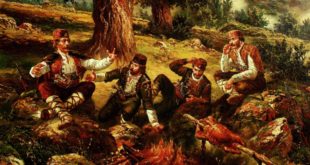
"Well, Grandfather Hadji, how do you see it, eh? A miracle, right? Something grand?"
"Hmm..." muttered Hadji Petar, glanced at him and said: "Three kilos of pyroxylin is his mother! Put it in the foundation, light the wick and not a stone will be left upon a stone!"
"Yes, my dear! Dad!... About three kilos... Maybe even less," added Uncle Tanko, wiping his nose with his sleeve.
(Chudomir, Bulgarians)
The ability of the Bulgarian to reproduce their literary characters so accurately has always shocked me, I don't know for what exact reason. Is it because of the haunting déjà vu feeling every time a Bulgarian innocently and naturally utters the same or almost the same phrase that I am used to reading in one of my favorite Bulgarian authors? Or is it because of the realization that these authors had an almost supernatural insight into the hidden personal psychology of the average Bulgarian, which made them able to predict his reactions so accurately decades after they wrote?
I don't know what it is, but I often see such reactions. A friend of mine visited Bulgaria last year to see her parents, had a 6-7 hour stay in Vienna, explored the city, then enthusiastically told her parents that she wanted to pay for a week-long vacation there so they could explore it too. Her father replied, quite seriously, "Well, what am I going to do about Vienna." A friend of mine, who emigrated and settled in Western Europe, invited his cousin and his wife to visit, they went shopping, the wife bought some shoes, but she didn't have the money to pay right away. My friend paid extra. When they got home, the wife said to the cousin, he reacted philosophically, "He had more money, he paid." And so on, there are many examples.
I have had the opportunity to recall the above quote from Chudomir twice. The first time was in 1986, when I was on a field trip to East Germany with my high school classmates and we went to see the same famous Völkerschlachtdenkmal that the hero in the story talks about. While we were looking at the monument from the outside, one of my teachers and I almost simultaneously reacted to the words of grandfather Hadji Petar: “Three kilos of pyroxylin is his mother.” And then we laughed.
The second time is actually many times over the last year, reading various discussions on the Internet about the benefits of private gun ownership, and the bizarre objections of some average Bulgarians.
Objections to the free bearer of arms
Most of these objections, to one degree or another, boil down to the same reaction: “Three kilos of pyroxylin is his mother.” Well, they don’t use the exact same words, but the spirit is the same, typically Bulgarian, Grandfather Hadjipetrov. If I had to mention specific examples, my favorite is this:
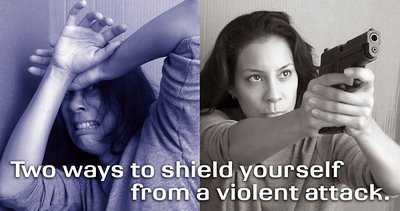
I write: “If a woman has a gun, she will be able to defend herself against a rapist.”
The modern grandfather Haji answers me: "Well, he'll defend himself. Let him come out to meet her with a bazooka, let's see how he defends himself."
No, I'm not kidding. This is a real argument in a real discussion. When I asked the author of this impressive argument where exactly he had seen rapists chasing women with bazookas, his answer was, "Any kind of gun can be found if you have the money." And it never occurred to him that he had thus given the best argument against government control of personal guns.
Other opponents of the freedom to own personal weapons are not quite as grotesque as Horemash, but their objections do not depart in meaning too much from Grandpa Hadji Petar's three kilos of pyroxylin: “If the attacker is well trained,” for example. Or “There will be a shootout.” Or, “What will happen if he quickly takes the weapon away?” Or, “If he has watched a movie with Chuck Norris, he will know enough tricks to neutralize it.” And so on.
Grandpa Hadji Petar is, of course, technically right. Three kilos of pyroxylin is indeed the mother of the Monument to the Battle of the Nations: in the right place in the foundation, and you will see how grandiose the thing is. And modern grandfathers Hadjis are also technically right: there is no way a woman with a gun, even a .45 caliber, can defend herself against wandering rapists with bazookas, or against Chuck Norris. But what these Balkan philosophers do not think about is the simple fact that the point of the Völkerschlachtdenkmal is not to withstand three kilos of pyroxylin, and the point of a personal weapon is not to provide complete and perfect security to its owner in conditions of fierce infantry and tank offensives with tactical artillery and aviation support.
Yes, of course, sometimes a rapist or thief is trained well enough to be able to wrest a loaded gun from a victim with 100% certainty without getting shot. Such cases, however, are rare—hardly 1% of all. Pulling the trigger on a gun is usually almost instinctive; the victim has every advantage over an attacker trying to take the gun. Taking a gun requires many years of careful training, self-discipline, and hard work. The psychology required for such self-discipline is the exact opposite of the psychology of a rapist or thief; it requires dedication, effort, willingness to endure pain, and forgoing present pleasures for future gains.
The rapist and the thief have the exact opposite psychology: they want to get benefits and pleasure now, without caring about the consequences in the future. They don't take risks now; they don't like to suffer pain now. The goal is pleasure, not pain. Yes, there is a small percentage who are completely mentally deranged and want to take risks and pain. But most are not. Most back down immediately when their lives are in danger, when there is a risk of being hurt and experiencing pain. And in most of these cases, the presence of a gun in the hands of the intended victim is a serious factor in their decision to abandon the crime. Thus, thousands of women who have been victims of rape could have been protected if they had had a gun in their hands, even if they never used it.
Logically, shouldn't we give these thousands of women that opportunity? Should the few isolated cases where an attacker ignores the risks and pain and attacks anyway be our standard? There is always some minimal chance that a giant flood will wash away my house; should I therefore not have standard drainage in my yard to deal with the small floods that we experience every year? There is always at least a theoretical - albeit microscopic - chance that someone will firebomb my house; does that mean I shouldn't have a fire extinguisher to deal with the far more likely small fires? What is this logic that the tiny probability of finding yourself in incredibly unusual circumstances negates the need to be prepared to deal with more common circumstances?
Practical argument
But there is another, more moderate argument against the free carrying of weapons. More moderate, but just as untenable. Namely, that it would be very difficult for the victim – and especially if the victim is a woman – to handle a gun. Various absurd data are cited, such as the fact that in order for a woman to learn to handle a gun, she needs many years of training, and so on. Therefore, it is better not to allow the free carrying of weapons and not to give the weak in society the right to defend themselves with weapons against violent people.
Such a position is not based on real data. Quite the opposite: it only takes a few hours to learn how to handle a gun safely and shoot accurately at close range. The argument is rather based on a primitive misunderstanding – or even fear – about the meaning and purpose of technological development.
The meaning of technological development is precisely this: New technologies allow more and more people to achieve the same results with less expenditure of resources. One of these resources is physical strength. Another is time for training. The development of technology allows more and more people to do more and more tasks and achieve more and more results with less physical strength and in less time. Computers are a good example: they do calculations and other tasks for us that previously required a lot of time and special training of specialists. The development of software is also like that. (Before Windows, only highly qualified specialists could communicate with computers.) Cars are another such example. And so on.
A firearm is simply a technological advance over the ordinary fist, the club, or the dagger. In order for a person to be able to defend himself with an ordinary fist, he needs many years of training and great physical strength. Less time and strength are needed to fight with clubs. The blade of the dagger gives even greater advantages, because it allows for better defense with less force and less time to learn. A firearm almost completely equalizes forces - strong and weak, women and men learn to fight with it in the same amount of time. One or two weeks are enough for a woman to learn to defend herself in an ordinary everyday situation. This is the meaning of technology. This is also the goal of gun manufacturers - to make them as safe as possible for their owners and as effective as possible for each person. There is no magic in firearms, just as there is no magic in a stove. Simply better technology, therefore safer and more effective.
So, the arguments of our typically Bulgarian grandfathers from Hadjipetrov are completely unfounded. The minimal probability that a thief or rapist would be willing to risk his life just to commit a crime is not a serious argument against the right of ordinary people to defend themselves against criminals. Also, is it not true that it takes a long time to learn how to handle a weapon – can self-defense with fists be learned in a shorter time? In all cases where carrying weapons is prohibited or restricted, criminals have an advantage over victims. However, when victims have the freedom to be armed, the forces are equal.
So it is time for the Bulgarian to grow up above the Horemhesh arguments against personal weapons. An armed nation is a free nation; and only a free nation can be a prosperous nation. So far, there has been no case of prosperous slaves in history.