EKIP– Expert Club for Economics and Politics A Different Opinion
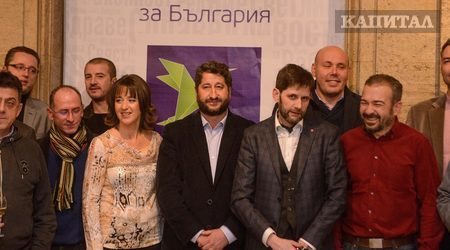
The creation of the "Yes, Bulgaria" formation was announced two days ago at an event in the capital, in front of the eyes and ears of a large part of the protest movement, scattered across various organizations from parties (DEOS and the Greens) to streamlined coalitions (Protest Network). The application was to organize a party around the resigned minister in Borisov's second cabinet - Hristo Ivanov - who left power after the failed attempt at a "historic compromise" on the topic of judicial reform.
Several key things became clear from the speeches of the main speakers (Hristov and Kristiyan Takov). The main reason for founding the new party is the exhaustion of all other methods for achieving the change that the founders want. Attracting voters for "Yes, Bulgaria" will be concentrated in Sofia - it was consciously said that there are no structures, nor are they able to provide the classic incentives for participation in political life such as positions and appointments. The slogan that we heard earlier in the year "there is no left, there is no right" was repeated. The new party members stated that they were not interested in "taking power", but in influencing policies in and through parliament.
Based on all this, the new political formation can take the first of two possible paths– that of the only single issue formation in the country (similar to the British UKIP). They have all the prerequisites to be successful in such an undertaking focused on judicial reform. They can concentrate on electoral groups in large cities, and mainly Sofia, who are interested in the topic, can attract both left and right-wing voters and achieve the position of a small but strong parliamentary lobby.
They will succeed if they keep their focus strictly on judicial reform and nothing else. If they start writing programs and speaking out on policies in other areas, they will quickly lose as voters one or another group that otherwise agrees with their single issue – they will take the second possible path. For example, if they give a vote to the greens and statist-minded liberals, they will lose the right-wingers and libertarians and vice versa. Maintaining this discipline will be extremely difficult, considering two things – the colorful nature of the coalition that came together to form it and the vocality of these same people on social and other networks. On the second path, we will see a “smart-beautiful” party, for which a group of voters limited in size to one or two theater halls will vote.
In fact, they have already started with a few wrong moves from "Yes, Bulgaria". They invited so many activists from different formations and by taking pictures with them, they have already created connections that they will have to work hard to untie later. People from the Protest Network are already associated with the new party, and even if they do not have a place in the leadership, they are noisy enough to stick all sorts of problems on the party. Secondly, they left the single issue format and started talking about education and corruption. For me, education is a vote-moving issue, if I do not agree with Hristo Ivanov, I will not vote for the judicial reform either.
The possibility for a successful single issue party is uniquely great. "Yes, Bulgaria" has come across a problem that is widely understood, has good personnel potential, and as we have seen, strong media support. All that remains is for them to not mess up their strategy and tactics.