 EKIP– Expert Club for Economics and Politics A Different Opinion
Changing the mindset of a society does not happen overnight. It is a long and tiring process, requiring the energy and tireless work of a sufficient number of people. We are not talking about the mass of people who must change their worldview, we are talking about those public figures and leaders who must explain to this mass what is happening and what should actually happen. Hayek calls them “second-hand idea dealers” – opinion leaders, university professors, talking heads from TV, bloggers, those who do not formulate, but are the first to perceive the new idea and manage to convey it easily and understandably to a wide range of receivers.
Bulgaria has its opinion leaders. Every morning, when you turn on your TV, they take turns from studio to studio, posting long and difficult-to-digest statuses on Facebook, signing and declaring recommendations and threats to the government. If we try to categorize them into several main groups, we should certainly mention at least these:
A) The supporters of the old order who try to give it a new look or remember it fondly, in short – the people of the old left
B) Those who gained their public authority mostly around the 2013 protests remained known as the smart and beautiful
C) The group that is on your TVs and in your minds solely to support the status quo and the establishment
D) Libertarians, who have only recently started to become interesting to Bulgarian journalism and society. I personally belong to them.
Despite certain nuances (especially in group B), these people mainly exist on Facebook. Their statuses are read by thousands, their fan list is constantly growing, even Egoist recommends them to us in special articles“ Who to follow to understand politics”. This is no coincidence. Traditional media, such as television and radio, are gasping for breath and noticeably losing influence to social networks. …which is not a big deal. Networks provide a greater opportunity to communicate with the author of ideas and concepts, to confront your positions in the name of creating a more sustainable one, etc. But does this really happen?
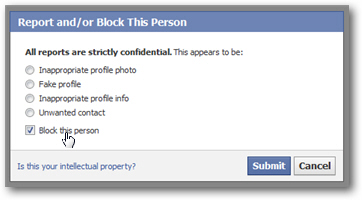
Blocking
Lately, we have noticed a strange trend of denying debate, the exchange of ideas, precisely what will make social networks dominate traditional ones - the ability to communicate.
The smart and beautiful Ruzha Smilova (group B), a university professor, blocked almost all representatives of the libertarians (group D). The blocking came after a cultural exchange of arguments on a topic of public importance, and all this happening on the wall of a third person - again a libertarian. Something in the reasoned exchange of postings on a site where Ms. Smilova is a guest, just like the other debaters, has offended her so much that from now on she will learn nothing about an entire significant group and a piece of the pie called Public Debate.
I was very surprised to learn that the person I was recommended to follow from the Egoist article, Emil Jasim (group B), had blocked me, without me even remembering a single significant interaction/confrontation/exchange of positions with him. I also discovered that I am not the only one (PHOTO)
Such behavior is a practice in a significant part of the quoted group in question (B - smart-beautiful), which we must follow "if we want to understand politics"... and it is absolutely unacceptable to me.
But it's not a big deal for me to be unacceptable. In the eyes of these people, we are enemies, harmful and dangerous for their wall or... their personal comfort. Above all, I see it as disrespectful behavior towards their own audience and an immoral selfish act that aims only to preserve your personal authority.
Why?
Well, because you are an opinion leader, a public figure, an activist, a know-it-all. Isn't it extremely important what you say to the people who trust you?! Why are we worried when the television airwaves are taken over by Dinkovtsi, Petna and Volentsi?! At the very least, because we know that these people are not right. They do not possess a worldview that can be defended and argued consistently. When you choose instead of answering arguments with arguments, to walk away and pretend they don't exist... don't you become the same?!
Let's make this very important distinction again. These people were not insulted, harassed, or treated disrespectfully. We are talking about a polite exchange of positions and arguments about them. Blocking a polite opponent means admitting that you are wrong, but not admitting it at the same time. On the one hand, you are running away from a fair fight and it is very clear to any observer that the cowards are the losers, but on the other hand, you minimize the possibility that this loss of yours will hurt your authority by becoming known to more people.
 We can also find a more serious professional distortion in this behavior – both of the public figures cited as examples, Ms. Smilova and Mr. Jasim, are teachers. The civil servant-teacher is endowed with formal authority that allows him to be right in the teachers’ room, just because he is the teacher in it. There, regardless of the interest of truth, formal authority can crush anyone else. Alas, when this does not happen in a free space, such as social networks, these people seem to lose those methods of influence from which they draw their confidence.
Going beyond the Smilova-Jasim scale (because they are just an example of the behavior of an entire group of people), the withdrawal of sensible people from the sensible debate is detrimental to society. Who do we leave this debate to then? To Pishtova and the Cone? Because no matter what we say on Pishtova's wall, he will not block anyone. He will not cower in a corner and selectively surround himself with people who confirm his personal prejudices in order to feel in a safe space, respected and important. He will not call anyone a "Rubler", "Servant of Piglet", "Sorosoid", "Liberal" just because he disagrees with him and usually those who disagree with him are paid by "PIK" "counter-protesters". Isn't this exactly the Bolshevism that we are all supposedly fighting against?!
Don't you have at least some basic responsibility to the thousands of people who compare their opinions with yours to be well-reasoned and consistent?! If it turns out that you're wrong and you continue to sow arguments over these thousands of people that someone else can smash to smithereens, what kind of person does that make you?!
This is the silent cry of the old authorities. All they have to do is cower in a corner and pretend that what is happening is not true. It is happening and ignoring it does not change it. It is incredibly undignified and disrespectful to all those people who have listened to them all this time…it is disrespectful to respond to a polite attempt to criticize your views…with ignoring them. It reminds me of being asked about 400 times “Who proposed Peevski?” and you bleating in response, right? 😉
Perhaps this is the reaction of a person who sees that he is no longer relevant. All these years, the old authorities have been conducting television and other polemics with the representatives of group B (the status quo), who, let's face it, have no idea what they are talking about, but simply repeat props and memorized phrases. It is always easy against them. It is difficult to face a young, inspired person, ready to delve into the data and statistics, to reopen the forgotten book, to devote enough time to be serious in his position and to serve the interests of the truth. It is difficult... but no one promised you an easy life, nor easy authoritarianism.
We are cocky because we are straight.
You're probably wondering why this is so important to us as Group G (libertarians). The debate is important to us because we know we are right. We know we are right because so far no one has come forward and put forward arguments that we cannot answer with stronger arguments. That's why we don't block anyone (here's my blocklist and let someone from the ones quoted post it, let's see). We don't accuse anyone of "ruble-hoarding", "pig-shocking", shady interests... it's much easier for us to defeat them in the arena of evidence and arguments, again: Because we are right.
We were right when we were ringing the bell that Trump was the likely winner of the election. We were right when we took to the streets to stop the nationalization of private pension funds. We were right when we defended Uber from government crackdowns and argued that it was a much more responsible taxpayer than taxis. We were right that mandatory voting would create more problems than it would solve. And when we called for #FreeHemp, we were right again.
And if people from category A (the old leftists) deserve respect and admiration for coming out to have an honest and open debate with us, those from group B (the smart and beautiful) have a serious sin before their supporters. It turns out that the "ruble-mongers" Volgin, Simov, Dimitar Sabev have more personal dignity and courage than those "moral pillars" of 2013 with whom we crossed the streets of the capital. They have it because they agreed to stand up to people like Vlado Karolev, Krasen Stanchev, Petar Ganev, to step out of their Facebook comfort zone and subject their views to criticism.
…So, my dear reader, the next time someone offers you a list of people to follow to “ understand politics,” think again. It may turn out that your Facebook kings are naked…
We are the Bulgarian Libertarian Society and we are not afraid to debate, talk, argue, prove ourselves right. Come and try it…if you feel like it.





"Old authorities" in a relative sense. In fact, Group G (the libertarians) are the representatives of an older order.
Classical liberalism died with Herbert Spencer in 1903. Three years later, Lloyd George introduced the welfare state. The free trade consensus finally collapsed in 1932 with tariff reform in Great Britain. Since the 1880s, the Liberal Party has been moving towards moderate socialism with the so-called "New Liberalism" of Hobhouse and Green. In most countries except England and France, liberalism has been a force of centralization and disintegration of local customs, for example against the Carlists and Basque self-government in Spain.
Spenser wittily pointed out that the divine right of kings was replaced by the divine right of parliaments. At least the king had some concept of ownership over his lands, unlike assemblies and mobs.
From the perspective of the modern "centrist," libertarianism is appallingly reactionary. He would have abhorred William Graham Sumner, as well as the outspoken Victorian individualism of Spencer himself. After all, in the brave new world the state is the charitable agency carrying out the will of the people. And what greater prestige than to be a "public leader" and a "talking head"? The impulse to power over one's fellow citizens is eternal! Since the Pendleton Act of 1883, creating the permanent civil service, and through the labors of Woodrow Wilson to export "national self-determination" to the League of Nations (and then by Roosevelt through the Atlantic Charter of 1941 and hence the United Nations), the fruits of the public-administrative state are ripe for every ambitious philanthropist to pick!
The centrist position always points and moves to the left. And Cobden, Bright and Bastiat were the leftists of their time. Now they are ancient idols of the remnants of dead economic liberalism, which is almost fascism by modern standards (after all, Georgi Dimitrov defines fascism as "an open terrorist dictatorship of the most reactionary, most chauvinistic and most imperialist elements of finance capital").
Well, since the libertarian has managed to look so far back, why doesn't he try even further? Why not Carlyle, Metternich, and Bonald? And the libertarian has already taken on the role of the outcast in modern politics (unless he uses the Fabian strategy of the Cato Institute and all the like, ultimately left-wing radicalism with programs for liberalization, but Rothbard rightly criticizes this) - why doesn't he perfect his role as the most reactionary element?
Wikipedia (Libertarianism) has it somewhat well written - ''The term libertarianism originally referred to philosophical beliefs about "free will", and later came to be associated with anti-state socialism and political movements influenced by the "Enlightenment", critical of institutional authority, which, in their view, served as a form of social domination and injustice. While in general, the term retained its political usage as a synonym for any social or individualistic form of anarchism, in the United States, it began to be used to describe pro-capitalist economic liberalism rather than radical, anti-capitalist egalitarianism''
,and some things need to be clarified
I have explained most things starting with quotes from the anthology “50 Nobel Laureates and Other Great Scientists on Their Faith in God” - https://www.facebook.com/atanas.shalapatov/posts/1765168490428044
REGARDING THE LAST SENTENCE OF THE ARTICLE - I AM READY (I AM CURIOUS) TO DISCUSS, I.E. TO PROVE MY THESIS.