 EKIP– Expert Club for Economics and Politics A Different Opinion
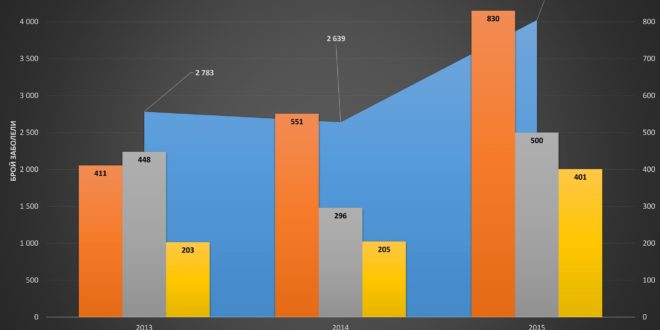
The article talks about a real Bulgarian municipality and the incident is based on real and public data. We will call it “municipality X”, due to the fact that neither the name of the municipality nor the medical team working on its territory should be discredited. The article will present the state of health insurance at the local level and how easy it is to commit thefts with funds from the National Health Insurance Fund (NHIF).
This is a story about Municipality X, which has one functioning hospital with a capacity of 60 beds and three functioning departments – for internal medicine, obstetrics and gynecology, and pediatrics. Municipality X also has several general practitioners and one emergency department. The municipality has a population of approximately 18 thousand people and a negative natural growth rate. It seems that Municipality X is relatively small and its population is gradually decreasing. How does it turn out that the incidence of diseases in Municipality X increased by 53% between 2014 and 2015?!
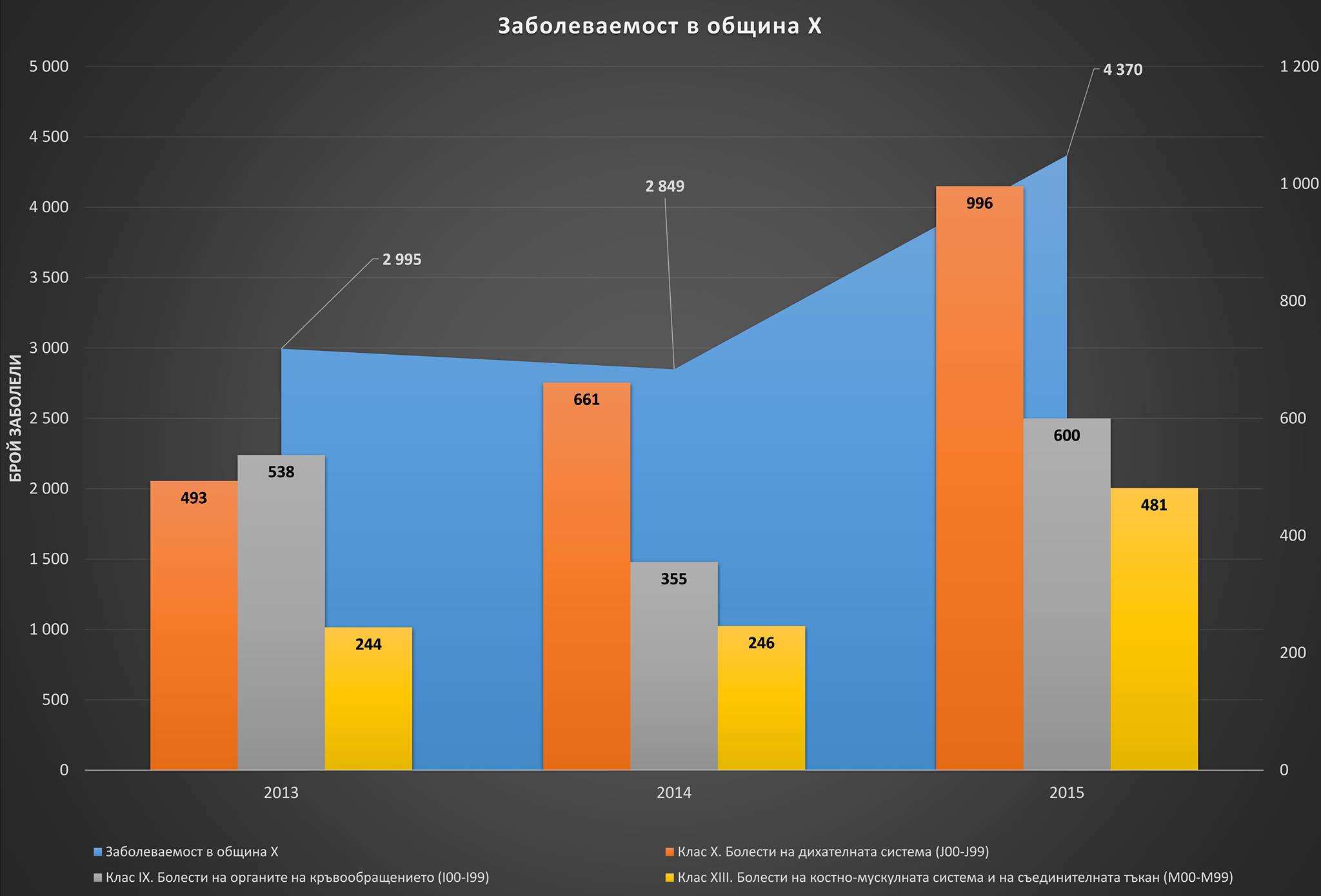
The incidence increased sharply between 2014 and 2015, with 2,849 cases registered in the territory of Municipality X in the first year, and in the second year the number of patients increased to 4,370. The increase was 53%, and the reasons for this were neither epidemiological nor demographic, but rather administrative - referrals, clinical pathways and hospital limits.
The greatest increase in the number of patients is seen among diseases of the respiratory system, where the growth is about 50%. This, put simply, sounds like this: You go to your doctor with a cough and chest pain, it turns out to be some form of flu. He prescribes you medication, and in your referral it says "Bronchopneumonia", which requires a minimum hospital stay of 7 days. You go home peacefully, and hospital X absorbs money for your non-existent illness.
The next increase is seen in diseases of the circulatory system, where the registered cases in 2014 were 355, and in 2015 they rose to 600 - a jump of approximately 69%. Last but not least, the graph also includes diseases of the musculoskeletal system and connective tissue, where the increase is 95%.
The conclusion from the above data is that the state and fraud in the health insurance system in Bulgaria are best seen at the micro level. The proverb says that the one who eats the cabbage is not crazy, but the one who gives it to him is crazy. With such statistics, the Regional Health Inspectorate of Municipality X should have requested an audit of the relevant medical institution and the doctors at Hospital X, but did not do so. The other problem is that the divisions and headquarters of the NHIF have payment, not control functions.
The monopolistic megastructure of the NHIF predisposes to vicious practices at the regional and municipal level, which are difficult to notice in the national statistics. The solution to the problem lies in the demonopolization of the NHIF and the transition to a private insurance model, due to the fact that a private company would never pay a hospital for non-existent health manipulations or at least would check the reliability of the submitted information before doing so. The beginning of the healthcare reform started with the creation of the NHIF, but its end should end with a smooth transition to a private insurance model, which would stop the abuse of our 8% contributions from our salaries.






First of all, this graphic as a type and form should be taken outside and shot for mercy.
Secondly, the municipality could be easily identified using the parameters from the first paragraph. At least there are only 3-4 municipalities with such a population.
Third, I don't doubt that the cash register is being filled. Still, it would be good to check the data for correctness, as well as the interpretation. I haven't sat down to look at which municipality it is, but in all 4 the average age is quite high. In 2015, there were quite serious strains of flu, which would explain the spike in complications. In fact, it also explains the increase in heart disease, as well as the weather and other factors. Look, the last path is really interesting and we need to see the breakdown by month whether the increase is only in winter.
The data should definitely be used for such purposes, but we need to be careful with assumptions and notice what we have taken for granted. Incidence is not a constant.
The study is much more in-depth than what is seen in the article. It is a conclusion from it. If more information is given about the municipality - it will become visible. There are quite a few municipalities with such indicators, btw. But the study also included interviews with medical personnel and other methods for extracting information. It was also checked for external factors such as migration, epidemics, viruses, administrative addition of other municipalities to this one, etc. The conclusion is that none of these things happened.
That's right - morbidity is not a constant.
As for the graph, I tried to make it as informative as possible. It looks colorful, but it presents the data as it is.