 EKIP– Expert Club for Economics and Politics A Different Opinion
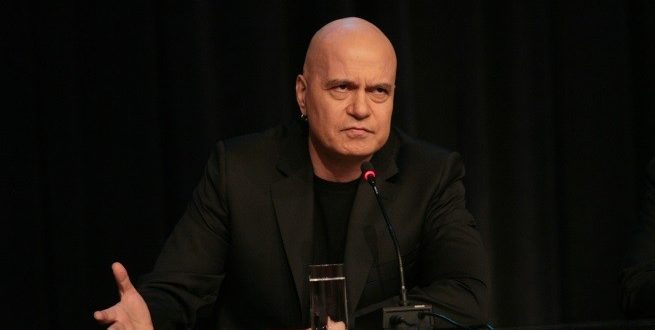
In recent days, the controversy has raged over whether the removal of the recorded episode of "Slavi's Show" for 27.03.2017 from the air is a manifestation of censorship or a contractually justified action by bTV Media Group. The topic once again divided the public space into defenders of Slavi and his opponents, with almost none of them defending their thesis with objective arguments, looking at the case without emotions. This article will try to provide such a view. For this purpose, it is initially good to indicate a few basic definitions that will help us in the analysis.
What is freedom of speech?
This is an extremely important civil freedom, mentioned in the "Universal Declaration of Human Rights" adopted by the UN in 1948. In essence, it is expressed in the freedom of everyone to have and express a public opinion without interference and pressure from the state authorities. That is, in order for there to be a violation of freedom of speech, there must be clear interference from the state authorities. In the specific case of digital media, the official representative of the state authorities is the CEM (Council for Electronic Media). What is this council: the members of the council are appointed according to the following quotas - two from the President's quota and three from the Parliament's quota. At its first meeting, the council elects a chairman, who has a term of office of one year. CEM is supported by the state budget, and last year the annual budget amounted to 1,200,000 leva. Among its most important powers are the election of the general director of BNT and BNR; the preparation of opinions on their budget; granting and revoking licenses for radio and television activities and monitoring the activities of media services, which obliges the media to keep an archive of what was broadcast for the past three months.
What does this monitoring actually consist of?
According to the Radio and Television Act, the Council must monitor whether television stations have at least 50% content of European origin; whether content that instils national, political, ethnic, religious and racial intolerance is allowed, programs praising or excusing cruelty or violence, as well as whether the media broadcast programs that are unfavorable or create a risk of harm to the physical, mental, moral and/or social development of children. During elections, a specialized regime is introduced, which is determined in a preliminary agreement between the CEC and the CEM. The CEM obliges the media to broadcast content that is not suitable for children after 23:00 or, if it is necessary to broadcast it earlier, to clearly indicate that the content is not suitable for persons under 16 years of age. For each violation of these requirements, and many others, the CEM imposes fines, such as the fine of 15,000 leva for the use of cynicism in a program broadcast in the afternoon. Many of the decisions and fines, however, are interpretative and depend on the understandings of the members, who in turn have their own political affiliations. In this line of thought, the definition of an independent regulatory body is strange, given the political affiliation of the council.
Was there state intervention in the suspension of the broadcast on March 27, 2017?
At first glance - no, this is a decision of the management of the media, which is private and concludes its contracts in such a way that nothing can oblige it to broadcast content that the management believes does not meet its standards. However, there is one peculiarity that escapes many people, especially those who do not follow the show. Since mid-February, the presenter shared on air that he has been placed under special monitoring, and it is not clear whether it is internal or by order of the CEM, but we can make an assumption that even if it is internal, it is dictated by the fines imposed by the bTV Council due to the obscene language sometimes used in the show.
But is this the main thing in this case?
Rather, the leading element is the election campaign and the growing political engagement of Slavi Trifonov, although he still insists that this is a civic position, which is guaranteed to every Bulgarian under the Constitution. The direct threats to the political class and the indirect call for protest to the viewers in the letter, because of which this episode was stopped, we can safely define as the appropriation of the media's airtime for personal purposes. This is also the official position for the decision of its management. As we can see from the subsequent development, the showman did not fulfill his threat to read the letter again in the next episode, thus showing that he himself does not believe these actions to be censorship, although he defines them as such in order to bring additional "suspense" to the case.
In the episode recorded the next day and broadcast without interference, the team discussed freedom of speech and Bulgaria's place in the "Reporters Without Borders" ranking, without drawing the attention of the viewers that the ranking in question concerns the press and Bulgaria's place is due to the monopoly in the print media distribution sector, which showed its harm in the censorship of the new print publication "Pras-Press", as well as the monopoly in the newspaper groups, which with 1-2 exceptions are owned by the same person, who has become a symbol of the oligarchy in Bulgaria. This same person has been an MP for years and has excellent relations with the executive and judicial branches, which gives him the opportunity to carry out real censorship and to subordinate other sectors to his will besides the newspaper sector. The only way to protect the interests of media service users in this situation is for them to raise their standards and boycott all newspapers from the groups in question, even if they buy them for the crossword puzzles or the television program, and thus, through a market instrument, either bankrupt the said newspapers or provoke the owner to strive for better quality information.
Was Slavi Trifonov censored after all?
Given the concepts we have examined, what happened with "Slavi's Show" was not censorship, but discipline of the host, who had given other reasons for taking down shows, but the media management did not take any measures, being tolerant of the causes defended by one of its most popular faces. In essence, however, the letter expresses his personal struggle and position with an element of threat and crosses the line between political satire and entertaining show programs, and in order to get national airtime in a private media, politicians and political candidates appear on other types of shows and answer questions, rather than making addresses or reading speeches, which are typical of bygone times.
Author: Vesselin Kunchev


I am providing the Team team with her letter free of charge. You can use it in your articles.