EKIP– Expert Club for Economics and Politics A Different Opinion
Author: Ivo Kolarov
Human rights are a main theme of all political programs in Europe and the rest of the “Western” world. Along with the so-called “natural” ones, new and new ones are increasingly being sneaked in, such as the privileges of receiving free medical care, education, income, etc. In Bulgaria, populism has long been tolerated by the new political fashion, but it has also recently increasingly trampled on the right of people to own, and even more so, to dispose of their private property. The latest such example is the referendum in Stara Zagora on the purpose of the properties in part of the “Bedechka” area.
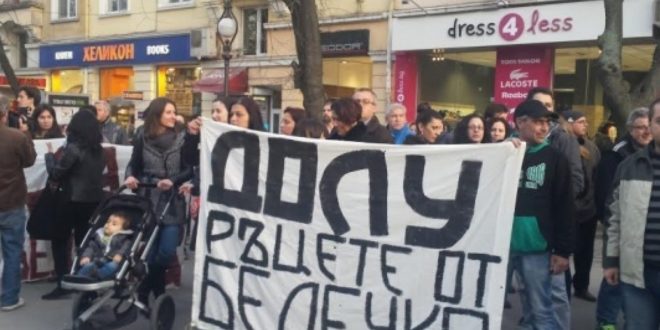
The conflict in Stara Zagora
The first half of the question to the citizens in the "Bedechka" referendum reads:
"Should the private undeveloped properties in the "Bedechka" neighborhood be expropriated, in accordance with the Municipal Property Act and the Spatial Planning Act, (…)".
Why does the question call the area a “neighborhood”? According to the city’s urban development plan, since 2011, the smaller part of “Bedechka” has been categorized as a “Parks, Gardens and Greening Zone”. Back in 2003, 250 acres of the terrain were returned to their owners. The reason for the decision is the fact that the lands on which “Bedechka” is located were nationalized in 1956 by the Bulgarian Communist Party. After two decades of being in the TKZS, the forcibly taken away vegetable gardens of the locals were declared a park, and after 1989, only a part of their legal owners sought them back. Thus, at present, most of “Bedechka” is categorized as a zone for mixed development.
Nearly 30 years after the collapse of communism in our country, the nationalization of land is once again on the agenda.
Déja vu communism
Nearly 30 years after the collapse of communism in our country, the nationalization of land is again on the agenda. This time, however, the initiative is not from the party, but from a group of citizens supported by the municipal council. The principle, however, is the same - violation of private property through the methods of the state. The "will of the people" in the referendum was formed by only 15.42% of those entitled to vote, 85% of whom voted for the alienation of the land. Although the expression of direct democracy was formally unsuccessful (40% of citizens must participate in the referendum), the result, it turns out, does not matter. A party member of the mayor of Stara Zagora is the country's prime minister, who personally gets involved in the give-and-take, offering plots of land to the Ministry of Defense as compensation. The local government has two years to retaliate against the owners of the plots after a possible change in the urban development plan.
Compensation to the owners is not expected to be the only costs, however. Mediapool quotes the initiators of the referendum from "Save Bedechka", who claim that the construction of the necessary infrastructure for the functioning of the park will require about 20 million leva (half of the municipality's revenue from local taxes and fees for 2016). This explains the interest of the authorities in the status of the area, but is also a clear example of the irresponsibility of such initiatives. Their methodology is as follows:
- A group of people wants to keep something they like;
- He uses the state to take it from its owners;
- Shifts costs onto society as a whole
The harms of green activism
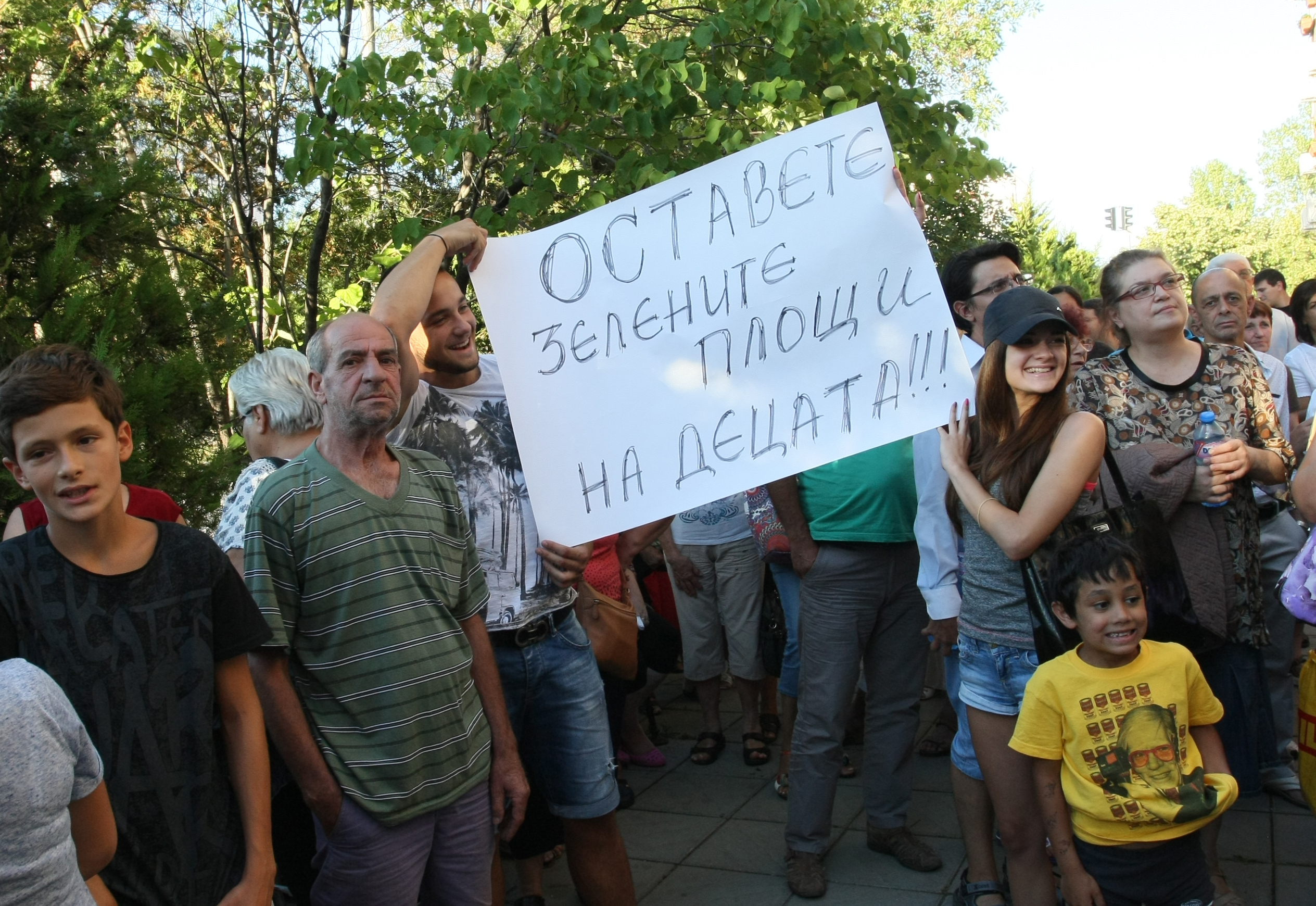
A similar scenario played out in the Sofia neighborhood of Mladost in 2016. Residents of the area organized protests against the construction of private plots of land that have the required state permits. The anger of the crowd was directed at the builders of residential buildings that are either entirely in or in close proximity to green spaces. In the case of Mladost, the citizens managed to nominate their leader as a candidate for mayor and he won the elections, promising to impose a moratorium on construction. Their demands also implied the familiar expropriation of land and its transformation into green spaces at the expense of the municipality and taxpayers.
Since the newly elected mayor Desislava Ivancheva failed to organize a referendum to limit the rights of the owners, she practically blocked the administration of the municipality. The initiative committee "For Green Youth" that raised her, instead of rejoicing in the success, and even more so taking partial responsibility for the actions of the mayor, withdrew its support for Ivancheva. The party, the political engineer of the fiasco - "Normal State", did the same.
The balance sheet
The examples of "Bedechka" and "Mladost" should show us the following - private property is guaranteed by law, but not by democracy. Everyone should be aware of the risks of owning something that others may like. If enough people (in the case of Stara Zagora, 18,984 people) want it, they can take away your right to own a given object (or at best replace it with another one of the state's choosing). This dangerous trend cannot be beneficial to a society in which the rule of law and individual freedom are lacking anyway.
Limiting public ownership in favor of private ownership is the course of action that must be taken. In this line of thought, initiative committees should fight to buy out the sites they want to preserve or develop, rather than twisting the hands of their owners through the state. In this way, they will both fulfill their goals and the owners will be adequately compensated.
Image source: DarikNews.bg, Flashnews.bg