 EKIP– Expert Club for Economics and Politics A Different Opinion

Author: Teodor Karakolev
The topic of funding culture was briefly relevant before the elections, but quickly fell off the agenda after the populist positives were reaped. The main comments revolved around “increasing the money for culture” – as, in fact, in every sphere. (Almost) every minister you ask what should happen to the money for so-and-so would say that it should be increased.
Actually, there is nothing wrong with that. Indeed, for healthcare to be better, there needs to be more – but also better managed – money. And education, ecology, culture.
The difference between statist, centralized government and capitalist government is that in the latter, this money does not have to go through the state, be forcibly taken from citizens, and a large percentage of it is sunk into unnecessary officials and their unnecessary associated expenses. There are countless examples of such activities in the Black Book of Government Waste– and there are only the most striking ones.
The money should go to the creators of culture, not the bureaucrats.
But back to culture. This type of talk from “experts” across the political spectrum is limited to saying that “more money for culture” is “more money in the Ministry of Culture.” In fact, it’s the exact opposite.
Money for culture is the money that reaches the ultimate creators of culture– actors, screenwriters, directors, musicians, museum workers, gallery owners, artists, entertainers, archaeologists, and so on. Money for officials, ministers, the minister's fuel, award ceremonies, electricity, and repairs to the ministry building, and so on, is not. These are unnecessary expenses.
The main argument of our totalitarian-minded fellow citizens and rulers is that the people are too illiterate and would not voluntarily give money for culture. And if they did, they would not give it to the right place, for quality culture. Therefore, the money should be collected centrally, and some official should decide which gallery is better than the other, which museum deserves more than the other, which archaeological site deserves more than the third; or more generally, which department, which type of art deserves more than the other type of art.
State funding of culture is inefficient and corrupt
This centralized, practically totalitarian principle of distributing funds for culture creates not only a lot of unnecessary bureaucratic bureaucracy, but also a powerful weapon for political pressure. If someone is not convenient to the ruling power for some reason, then their funds are limited. Thus, the cultural heritage in the "unconvenient" cities disintegrates, and in the "convenient" ones it is distributed according to a non-market, political principle, which also guides the philosophy behind the work of cultural institutions - archaeologists, restorers, builders are appointed on a political principle.
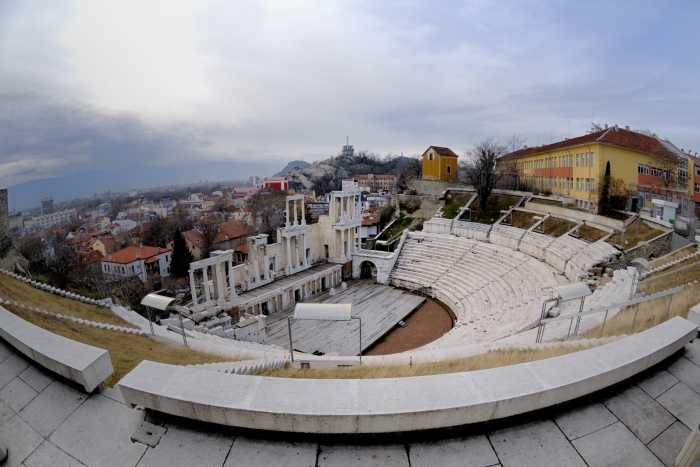
And although sometimes quality people achieve success, it more often happens that the "success" of these people is simply that they are close to the ruling power - and the result is a crumbling, newly renovated National Gallery, destroyed archaeology of Serdica, a parody of all the restored fortresses in the country, which, by the way, are visited by extremely few people - precisely because they were made inadequately and boringly.
And while these millions of our taxes, which the majority of us neither agreed to give nor have control over their distribution, are being given away to keep the respective mayor quiet, private business - this "illiterate people" who otherwise would not give money for culture - is actually working more meaningfully and actively.
If what is lost in the form of taxes remains in private hands, we can safely expect that people will continue to invest in culture.
Private initiative supports culture much more
Only two recent examples will be mentioned here, but such behavior is indeed everywhere and constantly present. In every city and region, business in one form or another often supports the existence of some kind of culture.
A few days ago, a concert was held, organized by the BILLA hypermarket chain. The goal of the campaign is quite specific – to raise funds for the restoration of the Madara Horseman. By the way, the condition of the Madara Horseman has been problematic ever since it was even present in scientific literature (of course, even before that). The condition of the many fortresses, into which huge funds were poured, was, however, quite decent. And not one of them has been assessed at a world level by UNESCO (and if it had been, it would have already been excluded). So much for the state's ability to direct funds to the most problematic places.
What the future development will be remains to be seen – how much money will be collected, whether it will be enough, whether it will be spent qualitatively. The point is that the funds collected were given voluntarily by Bulgarian citizens in support of the preservation of a site. Although they already lose 40% of their earnings in the form of various types of taxes – part of which should go to cultural heritage, Bulgarians and Bulgarian companies are still willing to allocate their income for this. If what is lost in the form of taxes remains in private hands, we can safely expect that people will continue to invest in culture.
Let people decide for themselves how to support culture
And investing in culture is, above all, a good image. In the race for this good image, a kind of competition is created. For example, another hypermarket chain – LIDL, also announced that it will invest part of its profit in cultural and historical heritage. The company will finance projects in the field of culture – as well as educational, environmental, etc. – from its own profit. And this profit is formed by us, the consumers, who choose to shop at LIDL or another hypermarket. Thus, for us, the consumers, it becomes more prestigious to shop at one store or another; or one product or another. It should be emphasized again that these are just two examples – a huge number of businesses around the country organize similar sponsorship activities, sometimes advertising themselves, sometimes not.
So the question "Who will give money for culture, if not the Ministry of Culture" is not adequate. The Ministry of Culture already has our money, over which we have no control. If the money there - and in general in the state apparatus - decreases - we will again give the money for culture. The difference is that we will have more control over what we give it for, and it will be much closer to the culture itself - which will also be created on a freer principle, without passing through the hands of politically engaged officials.






One comment
Pingback: For culture without a ministry | Misl