EKIP– Expert Club for Economics and Politics A Different Opinion
Brittany Hunter, Foundation for Economic Education
Power is intoxicating. It can corrupt even the most principled of people, destroy entire civilizations, and bring long-standing regimes to their knees. The moment one person is consumed by the thirst for power, others are nothing more than pawns who can and will be sacrificed to achieve their goals.
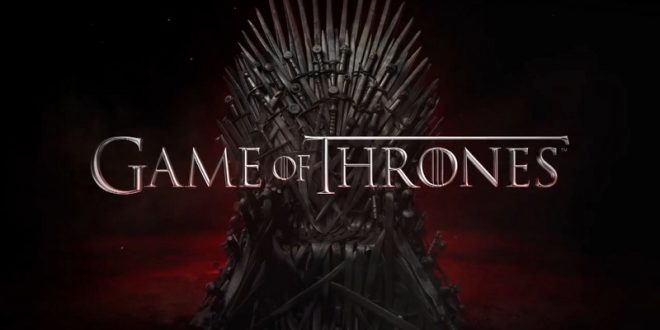
It has been this way since the emergence of the first societies, and it will be so as long as there are states to appropriate and rule. This is precisely why Game of Thrones is such a captivating series. As the title suggests, Game of Thrones is a story about the quest for the crown in the fictional country of Westeros.
"Perhaps your mistake was your trust in kings."
As I made my way through each episode of the series (at first embarrassed by all the blood and violence, but later moved by the number of severed heads), I realized that all this violence is done in the name of power and at the expense of the individual. Or, to put it another way, all the lives sacrificed are lost to strengthen the state and the power of those who control it.
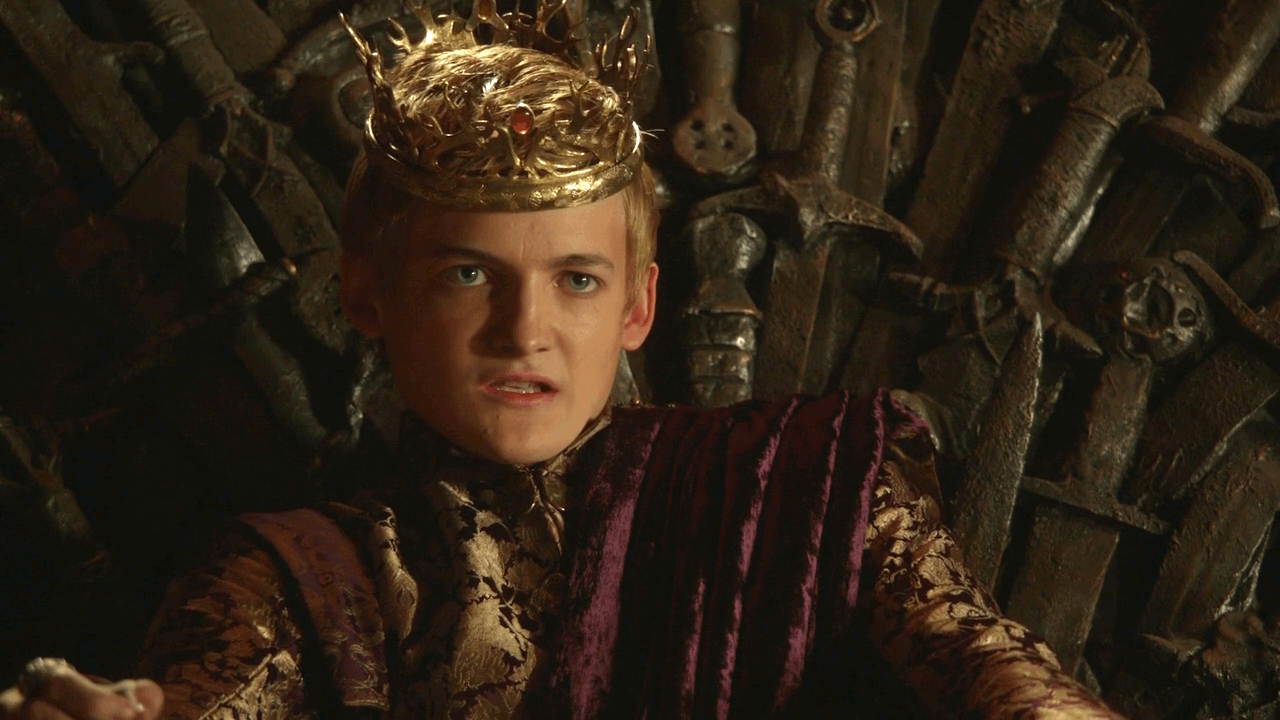
And if that weren't enough, with very few exceptions, each of the seven kingdoms of Westeros is ruled by lords who are more interested in preserving their own positions than in the well-being of their subjects. And while many of the rulers, notably Ramsay Bolton and King Joffrey, are abominable creatures, intoxicated by their own power and lacking any compensating qualities, there are still vassals and members of the army who would die to protect a leader who has absolutely no interest in them.
The series is a kind of thesis on the nature of power and its influence on individuals.
And while human history is littered with obedient subjects, I still don't understand why the people of Westeros are so eager to be ruled by someone. The rulers of the Seven Kingdoms have little to offer their subjects except the false promise of protection from external threats. Yet, with each successive instance of corrupt leadership, unwavering loyalty grows stronger.
Even the Brotherhood Without Banners, a relatively loose group of individuals who refuse to swear allegiance to a specific ruler, feel the need to follow a leader. It all boils down to (and the series starkly demonstrates) the age-old truth that absolute power corrupts, regardless of geography or ideology. And while the series was probably not intended to be a thesis on the nature of power and its impact on the individual, it certainly is.
But here, a ray of light appeared...
Watching the sixth season, I noticed how the tide was finally turning. People were tired of fighting for causes that had no direct connection to them. They were tired of the eternal sacrifices that somehow did not stop their suffering and did not alleviate the oppression they suffered, no matter who took the position of ruler. Trust in those in power had only made their lives worse. No king or ruler would free them by keeping them in absolute slavery.
In one of the final episodes of season six, during a conversation between two characters about their predicament, one of them remarks, “Maybe your first mistake was that you were inclined to trust kings.” How apt is this comment, and how accurately it captures the entire problem that human civilization has struggled with for millennia. Why do people trust authoritarianism?
Free yourself from the shackles
Fear is one of the most powerful human motivators. It can make people do things they never knew they were capable of. It can make them capitulate to the insane whims of leaders they believe will protect them in return. Perhaps the most ingenious strategy ever implemented in a fictional story is the role of Daenerys Targaryen, who successfully conquered the East by exploiting the fears of enslaved populations and thus building a reputation as a hero in neighboring lands.
With each successive conquest, Daenerys promises freedom to the slaves if they sacrifice their lives to support her conquests. And while the slaves perceive her as their noble liberator, in reality she is just another master they obey, but a more cunning one. The situation resembles a nation that advertises itself as free while simultaneously introducing compulsory military service. Freedom in words only. Ultimately, the life of each citizen is promised to whoever ascends the throne, and their only value in the eyes of the ruler is as a replaceable body that can be thrown into battle against the enemy army.
"Fear makes people do the unthinkable, things they didn't believe they were capable of."
As her armies and conquests expand, Daenerys continues to speak of freeing all who have been treated horribly by their former masters. While she has one of the most generous hearts of any character on the show besides the Starks (including Jon Snow), she still maintains her power through violence.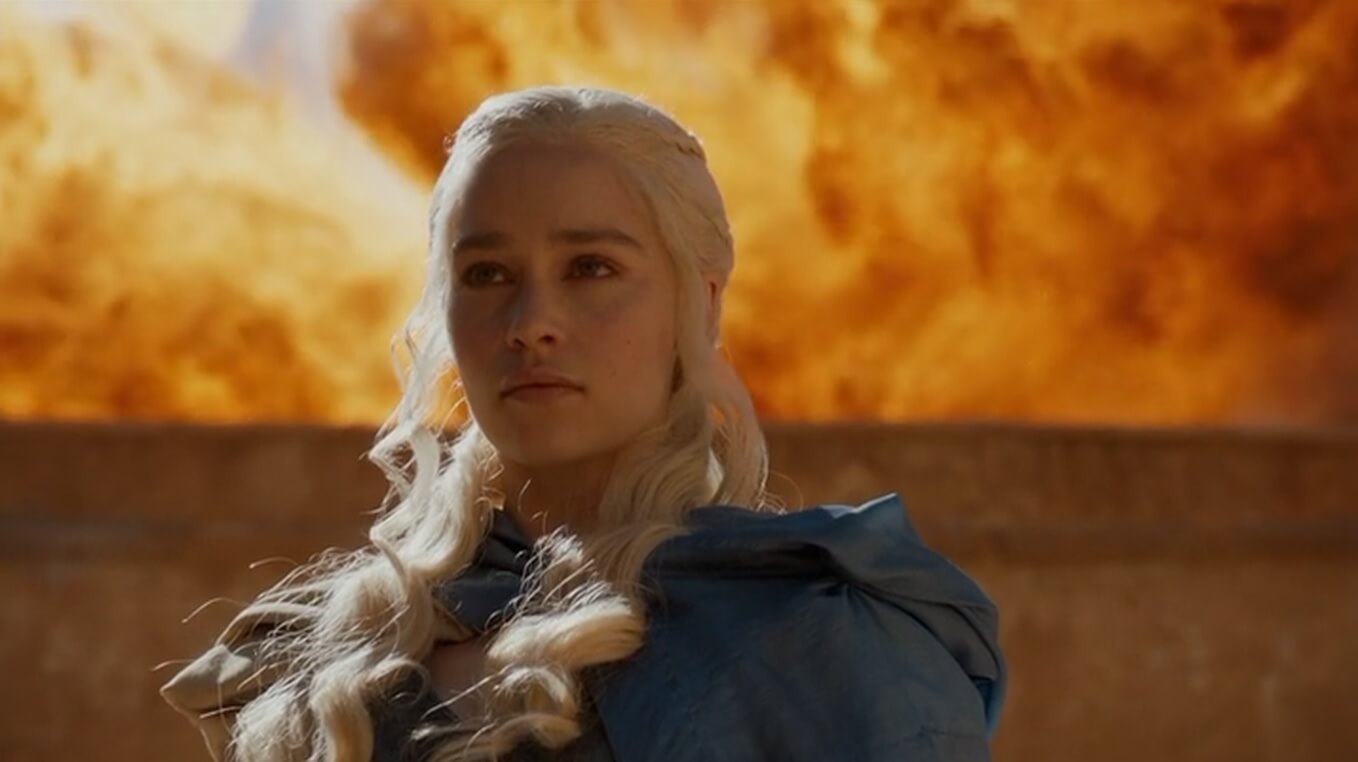
She explicitly encourages her people to kill in her name with little choice. After a group of former slave owners go on a rampage and kill over the loss of their slaves (the Sons of the Harpy), Daenerys begins to rule by the primacy of her desires and emotions, rather than the rule of law—a principle she otherwise claims to follow; and this has been the Achilles' heel of many rulers before her.
From liberator, Daenerys becomes enslaver
Daenerys' desire to show her opponents that she is a just and strict ruler in order to deter their campaign against her leads her to bring the man who killed her people to justice, rather than simply executing him as she has done with so many others. However, while the defendant awaits trial, one of Daenerys' soldiers, intoxicated by his love and devotion to her, arbitrarily realizes what he believes is right and takes his life.
To demonstrate what happens to those who disobey the orders she gives them, Daenerys publicly beheads this soldier as he pleads for mercy. The telling thing about the scene is that while she is trying to uphold the rule of law, she is violating it by denying her own soldier a fair trial. For the rule of law to exist, a fair trial is necessary for every citizen. Instead, only those of high status receive it, even in the world of Daenerys Targaryen, "the one who breaks chains."
The newly freed soldiers are furious after realizing they’ve simply traded one master for another. And where the rebelling slaves once had written “bloody death to the masters,” now the words “Mass is the mistress” are read, addressed to Daenerys. Up until this point, throughout the entire series, I’d thought Daenerys was the most uncorrupted character. Yes, she kills people, but everyone in J.R. Martin’s story kills, and Daenerys at least has purer intentions. Not only has she spent most of her life in exile, but she herself was, in a sense, a slave.
Before her brother died at her request, Daenerys was subjected to numerous atrocities at his hands and was often offered to various men so that her brother could achieve his goals. Even her marriage to Drogo was forced to strengthen the Targaryen claim to the throne with real military power.
All of these factors made Daenerys a character that viewers sympathized with. Having experienced unprecedented hardships in her life, viewers initially had high hopes for the heroine. But even Daenerys, the mother of dragons, doesn't realize how power corrupts her, despite her claim to be a liberator. Without realizing it, she becomes the enemy she supposedly fights.
Winter has always come.
For as long as there have been nations, the threat of despotism has always lurked around the corner. And as history and fiction have shown, the only antidote is to remain vigilant. "Winter is coming" is the credo of House Stark. It is repeated often by the family and its supporters in the North, scattered across the Seven Kingdoms. It is an ominous warning never to let your guard down or, intoxicated by temporary comfort, succumb to blissful ignorance of what is happening around you. Winter, or some other menacing enemy, is always waiting for us...
For the Starks, winter represents not only the looming threat of the White Walkers from the North, but also the power struggle in which they are inevitably drawn due to their noble origins. The Starks are unique in that they have never actively pursued power. Their primary concern has always been survival and the preservation of family honor. Unlike others, they do not see the throne as the only means to achieve their goals. Even when the dying King Robert Baratheon names Ned as temporary regent until his son grows up, the Starks agree only because the heir to the throne is a potential tyrant.
"Winter is Coming" is a reminder that only constant vigilance can keep tyranny pressed to the wall.
Although some of the family members play with power, Sansa in particular, the Starks remain extremely distant from the other characters in their attitude towards it. They seem to understand the nature of power and what it can do to those who seek it. They also understand the need for constant vigilance. They know that there will always be people who will fight for absolute control and that they themselves must always be ready to resist this and defend their dignity as individuals.
It is almost certain that in the real world there will always be a game of thrones. While politicians fight to gain or hold on to power, individual citizens are the ones who lose. Game of Thrones brilliantly shows us that as long as people insist on a king, a president, or any leading authoritarian figure to protect them and guide their lives, winter will always come, and at the expense of the individual.
Translation: Sofia Rogleva
Original article: Game of Thrones Is a Treatise on Absolute Power Corrupting Absolutely
Image source: Moddb.com, Bustle.com, Wallpapercave.com, Gameofthrones.wikia.com