EKIP– Expert Club for Economics and Politics A Different Opinion
This article is part of the "Black Book of Government Waste", published in 2015.
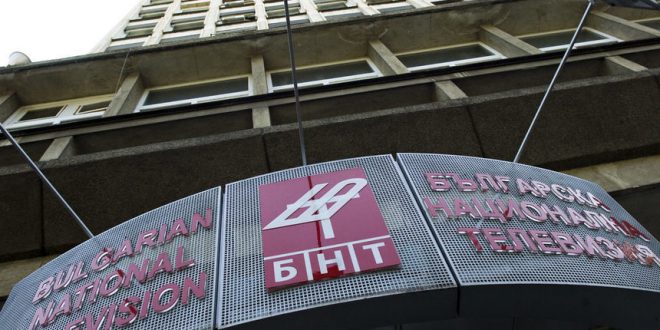
With over 65 million leva in annual subsidies from the state budget, the Bulgarian National Television is the largest budget-financed media in the country. Television is an institution with a special status, performing certain public functions. The current director of BNT, Vyara Ankova, defines public television as one in which “different communities and generations recognize their interest” (1).
In search of this balance, through which different generations and communities can find their interest in the program of BNT, the legislator has imposed serious restrictions on its financing, which severely limits the time that the television can provide for advertising blocks. Therefore, the annual advertising revenue of the television in 2015 was only 7.5 million leva, or 11% of the subsidy(2). Thus, the television is placed in a situation to rely almost entirely on the subsidy coming from the central budget.
Two important questions for the management of the institution come to the fore here – what will be the size of the subsidy and how it is spent and how much does the existence of a public television cost the taxpayer and how their money is used in delivering the final product. The development of budget transfers to BNT since 2010 is interesting. The transfer from the state to BNT was worth 60,088,000 BGN in 2010, marked a sharp jump in 2012 to 67,114,000 BGN and in 2013 reached 70,128,000 BGN. This was followed by a decline to 65,147,000 BGN in 2014, explained by the Ministry of Finance (MoF) with 12% cuts for all budget structures (3). The size of the subsidy was maintained in 2015. and is present again in the draft budget for 2016. Historically, with this amount, the subsidy is rather a compromise and does not reach the values of 2013 or 2009 (76,803,000 BGN), but at the same time it is far from 60,000,000 BGN.
Valuable decorations
A glimpse into how the budget of the Bulgarian National Television is spent can be given by the reports of the State Financial Inspection Agency (SFI), which examine the legality of public procurement procedures in various state institutions, but also provide information on the nature and amount of expenses. The SFI report on BNT from 2013(4) contains information about the awarded public procurement contract "Supply of ready-made universal decor for BNT artistic and entertainment programs - second-hand" from 2005.
The first interesting thing that the inspectors from ADFI discovered is that for the specific public procurement, a negotiation procedure was opened without an announcement – i.e. without different companies being able to join the competition for better price and quality. According to Art. 90, para. 1, item 3 of the Public Procurement Act (PPA), a specific company can be directly invited by the then director of the television Ulyana Pramova if “awarding a public procurement to another person would lead to a violation of copyright or other intellectual property rights”.
Upon inspection, it was found that the company "Interproductions" EOOD does not own copyright or other intellectual property rights or exclusive rights acquired by virtue of a law or administrative act. In this case, the only reason why Ms. Prumova got away with an administrative violation act in 2013 in this case was the expired three-year term for initiating administrative criminal proceedings. It becomes even more interesting when we look at the price of the decor, which was illegally directly selected by the director of the television. The supplier's initial offer was the amount of 230,000 leva including VAT, which after negotiation was reduced to 182,222.80 leva including VAT. For the purposes of this material, we consulted two private television stations - one smaller cable and one larger terrestrial - in order to make an attempt to compare the serious expenses at BNT and those in the private sector.
In both cases, we were told about the price of new sets – for the smaller television station the price is close to 10,000 leva, while for the larger one it is up to 40,000 leva. In the second case, it involves the construction of a completely new studio, with cranes and a large amount of equipment. The ADFI inspection ends with the information that there are no bilaterally signed acceptance and delivery protocols certifying the delivery of the set. It is entirely possible that, despite the procedure, despite the correspondence conducted and the contract concluded (for which information was also sent to the Public Procurement Agency) – in the end, the television station did not buy/receive the set. Either way, the example is a vivid illustration of the way in which taxpayers’ money can be wasted quickly, without any particular interest in finding an opportunity for its effective spending. Indicative of how serious BNT is in terms of size and cost of maintenance at the taxpayer's expense, are the contracts that the television company concludes with external contractors for the provision of sanitation services for the buildings in which it is housed.
How much can a cleaning cost?
The national television can accommodate the expensive sets in its enviable building stock. According to a 2013 document (5), even after a significant revaluation of the value of the properties owned, their total value reaches 41.961 million leva. BNT has several buildings in Sofia, Varna, Plovdiv and Ruse, one building in Blagoevgrad and some slightly exotic properties such as a study room in Vidin and a creative home in Pamporovo.
Of course, maintaining this wealth costs taxpayers a lot. The 2013 ADFI report (6) examines a public procurement contract for the “Hygiene and Cleaning of the Buildings of Bulgarian National Television”, opened in 2006. The competition was won by the company “Vasilka Sofia” EOOD, with the contracting authority committing to pay the contractor BGN 16,293.00 including VAT every month for 3 years.
This makes a total of 586,548 leva with VAT for the three years, or almost 200,000 leva per year just for the services of the hired company. In addition, during the same period, contract No. 07/04.01.2008 and contract No. OP-746/04.01.2008 were concluded, respectively worth 15,640.61 leva with VAT and 28,133.28 leva with VAT for the “delivery of hygiene materials”. That is, in 2008 alone, the television spent 43,773.89 leva with VAT on the delivery of hygiene materials in addition to the remaining 200,000 leva, which are paid to the hired cleaning company. It should be noted that the company has offices only in Sofia and Plovdiv, so BNT probably pays local companies for the cleaning of the remaining buildings. Thus, the amount needed just to clean up BNT's property is even more significant.
Taxpayers donate skis to BNT
From the perspective of the fact that the national television has limited opportunities for broadcasting advertisements, it is interesting to learn how they were used in 2005. At that time, two barter contracts and two annexes to them (No. BNT-9590 and No. BNT-9872) were concluded between BNT and "Piero 97" AD for the supply of skis, ski boots, ski equipment and snowboard sets in exchange for providing television time for broadcasting advertisements to the counterparty(7).
With the first contract, the television is obliged to provide advertising time on Channel 1, in return for which the company must provide 80 sets of ROSSIGNOL ski equipment, each set consisting of a carving ski with automatics, ski boots with four stirrups and poles. The total value of the contract is 45,936.00 BGN including VAT. With an annex to it, seven pairs of ski boots worth 3,727.20 BGN including VAT were added. With the second contract, in exchange for advertising time worth 20,850.00 BGN including VAT, BNT receives 25 ROSSIGNOL snowboard sets. With an annex to this contract, an additional 15 snowboards worth 12,510.00 BGN including VAT were received. This makes 83,023 BGN. Advertising time used by the management of BNT not for programs in the public interest, but for the supply of equipment for an entire winter sports team. An interesting way to protect the financial interest of the taxpayer.
Conclusion
Regardless of whether the national television has spent almost five times more on decor than private televisions, or whether, due to its senselessly huge building stock, it has managed to give taxpayers almost 250,000 leva in a period of one year for the hygiene of the buildings and premises, or whether it has exchanged advertising time for ski equipment for 80,000 leva, the main question facing every Bulgarian paying taxes here is what and how much they agree to be financed from their pocket.
Should public television rely on a subsidy from citizens in the amount of over 65 million leva per year? Should it not have the right to finance its existence by offering a product in free competition with others? What do we even want to achieve by maintaining a rather expensive public television? Let this critical look at BNT's finances serve as an occasion for every taxpayer to ask themselves the above questions.
(1) Concept for the development of Bulgarian National Television (Vyara Ankova) 2010
(2) Financial report of BNT for 2015.
(3) OFFNews, "BNT and CEM budgets cut for 2014", October 23, 2013.
(4) Report ADFI - Ди1сф-0012/11.03.2013, requested under the Access to Information Act for the purposes of the study
(5) Explanatory note to the 2013 Annual Financial Statements of the Bulgarian National Television.
(6) ADFI Report - Di1sf-0012/11.03.2013
(7) ADFI Report - Di1sf-0012/11.03.2013
Image source: Dnevnik.bg