 EKIP– Expert Club for Economics and Politics A Different Opinion
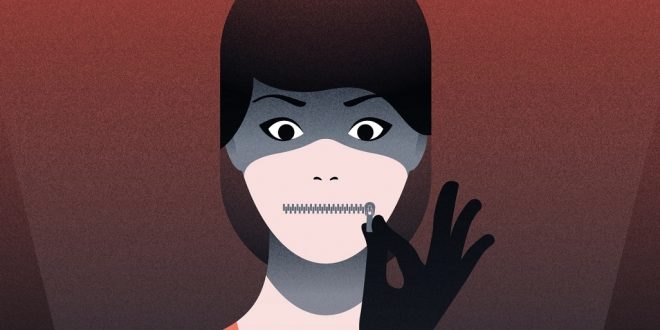
With little public attention, and considered a boutique issue, the new Directive on Copyright in the Digital Single Market will be voted on in the Council of the European Union in April. It includes the controversial Article 13, which will oblige all Internet service providers to introduce mandatory filters for monitoring, identifying and deleting content. This will in practice raise huge barriers for budding entrepreneurs, affect freedom of expression, enable large-scale private censorship and empower algorithms to solve much more complex legal cases.
The History of Article 13
In 2015, the European Commission published the Digital Single Market Strategy, which was declared its flagship objective. One of the steps to achieve the goals set out in the strategy was to modernise and further harmonise European copyright law. One of the main stated objectives of the reform was “ to improve people’s access to cultural content online and thus foster cultural diversity, while opening up new opportunities for creators and the content industry.”
However, the wording of Article 13 turns out to be so general that the ambitious and supposedly well-intentioned goals set could turn into a dangerous undertaking that threatens the freedom of all of us.
In order for new legislation to be adopted in the European Union, the proposal made by the European Commission must be approved by the European Parliament and the Council of the EU. During the Bulgarian Presidency, the Council's position is expected to be finalized, and Bulgaria, as the Presidency, is the only Member State with the right to propose changes. A working group is currently formulating a new compromise text on the controversial provision. At the same time, in the European Parliament, there are two Bulgarian MEPs in the lead committee - Emil Radev from the largest political group (EPP) and Angel Dzambazki, who is even the rapporteur on copyright reform for the third largest political group (ECR).
The two institutions, after forming their positions, will negotiate the final version of the Directive under the auspices of the Commission, where the responsible Commissioner is Mariya Gabriel (EPP). Bulgaria is currently a key country in the three EU institutions, determining the rules for internet platforms for the next decade. This will most likely happen on April 23-24 this year. Will we do what is necessary?
What's wrong with Article 13?
Perhaps the most worrying proposal in the legislative package is the requirement that all websites operating with content uploaded by their users install automatic systems for prior monitoring, recognition and deletion of content.
Article 13 requires collective rights management organisations to organise and monitor the creation of filters that prevent copyrighted content from being published online. The directive also requires all online platforms with user content to enter into binding contracts with rightholders and to be directly responsible for the legality of the user content they host.
The draft regulation is the result of lobbying efforts by the music industry and is aimed at platforms providing access to music and audiovisual content, in particular YouTube. In practice, however, the broad wording of the draft regulation's addressees will affect any platforms working with user-generated content, such as Wikipedia, GitHub, Flickr, etc.
Moreover, the Commission’s wording is so general and vague that it could apply to all internet service providers (not only UGC platforms, but also hosting companies, cloud service providers, etc.). The new obligations could effectively force any internet company to control and implement large-scale “private censorship” of the content they serve, in order to avoid any risk of direct liability for such content. This would have a devastating effect on freedom of expression and innovation.
In addition to the problems that such systems would create for civil rights, legal certainty and market functioning, there are also several more specific technical concerns:
- Automatic recognition and deletion systems are often expensive, which would make it difficult for small players and would give an advantage to the big ones, Google, Youtube and Facebook, which already have developed monitoring systems.
- The technology is not reliable - it does not recognize when protected content is used legally. Imagine that you write a report on a specific scientist and cite him according to all established rules. The filter cannot make this difference and will simply delete. Then it is up to you to prove the legality of your actions. This to some extent puts users in a "guilty until proven guilty" situation. Filters cannot filter out the so-called legal exceptions and limitations to copyright, under which other people's content can be used legally, e.g. in criticism, comment, quotation, use for educational purposes, as well as through contractual instruments, such as free licenses;
- The same technologies are used by a number of countries, e.g. China, for censorship purposes. Once in place, there would be a risk of abuse of the infrastructure. It is not impossible to imagine that a given platform could use its already existing filter to filter out something that is far from being subject to copyright. For example, the name of Ivan Ivanov, which for some reason will not be able to be displayed on the specific site, as it has been helpfully filtered out by the algorithm.
This will affect our daily lives in many ways - we will find ourselves unable to share, and therefore watch:
– a recording of a karaoke night with our friends;
– a video clip of our child dancing to popular music;
– an advertising clip containing a melody purchased from a music bank
– an original composition that includes ready-made samples;
– an educational lecture containing examples of protected works;
– a conference containing short film clips.
Whether Bulgaria and the responsible persons will have the courage to propose changes to the text or whether our society has reached a level where topics such as copyright can concern it, we will find out very soon. In the meantime, a petition has been initiated and debates are expected between representatives of the IT industry, the creative industries and representatives of Musicaautor, who in turn stand on the side of the filters, which in their opinion would protect the rights of artists. Artists from all over Europe stand against the filters in the Create.Refresh campaign, as they believe that they will rather limit them, hinder their expression and in general no censorship systems can be in favor of free art. Bulgaria finds itself at the center of a debate much larger than ourselves, and the pen is still trembling in the hands of the EU – in favor or against the open internet that we have known so far.




When I read this I was about to cry because you are taking away something we love and it is my hobby to post gaming videos. I say it again, you are taking away what we love and God will give it back to you. There will be nothing to distract us anymore. If we don't understand how to play a game, how will we understand how to play? There will be no video to watch. At least my favorite vlogger won't stop uploading. If we have to, we will pay to upload. We can support this with our work, our hobby, our favorite activity. I am shocked. This is really the moment. If you don't enter it, we will be very grateful to you.
This is the dumbest thing I've ever read or heard from other videos. And if you could give me a decent reason why you're taking away our freedom. I really have no words. I just want to know an adequate reason why you're doing this stupid thing. And what, besides all that, don't you respect the rights of other people and what they voted for? Do you only care about how you'll be fine? You'll see. You won't last even 2 days like this. I hope God brings it back to you. But from the bottom of my heart and soul I wish you the best. Well done, you're "great"????
I don't really understand this Article 13, but I think it's dictatorial to ban the things that make us happy. How dare you sleep at night considering that you keep people like animals in a cage or, I bet you will keep them if you put this Article 13 into action. You will never be forgiven for destroying people's lives and limiting them.
My you, huh? - What the hell would you do such a thing. Be ashamed of yourself.
If this Article 13 is in force I hope the Earth will self-destruct, because without You Tube we will never be able to play Games easily thanks to gamers nor to search for trailers and what not. Basically you will come out monsters. The person or people who will put Article 13 in hopefully change and understand what the word FREEDOM really means.
Read George Orwell and his novel "1984". There you will understand the ultimate goal of the European Union. This is just the beginning.
How on earth would a normal human being come up with such a stupid thing.... Hey, fuck you, I'm your mother, Messenger, Facebook, Instagram, and YouTube. I'll delete EVERYTHING because of these pensioners... 50-60 year old jerks of all ages hate them, if they accept this article, teenagers will hate them too... What can I say, what a piece of crap... This 4-year-old can't possibly agree to accept this article... After all, why did so many people flee Bulgaria... But because of these jerks that WE alone chose... How can 11 countries from the entire European Union reject this article and our 'beautiful' country accept it, IT JUST DOESN'T MATTER HOW CAN THERE BE SO MANY BRAINLESS INDIVIDUALS ON THIS PLANET - Ladies, gentlemen and dear trans-genders, this is Bulgaria??♀️???