 EKIP– Expert Club for Economics and Politics A Different Opinion
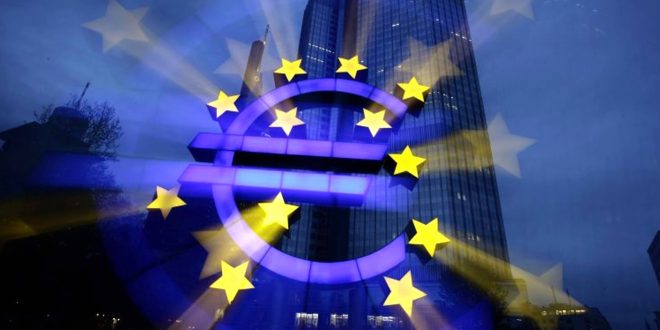
In recent months, Bulgaria's potential entry into the Eurozone has once again become one of the most discussed topics in the public sphere. What is remarkable, however, is that this case has become not so much a topic of debate as a topic of...sermon. A sermon by politicians from all parties and economists and financial experts from all institutions about how great a positive Eurozone membership would be for Bulgaria and why we should enter the monetary union as soon as possible. The level of consensus and unanimity on the subject is so remarkable that it cannot help but raise doubts in any critically thinking citizen. However, the old wisdom is that when all politicians agree that something is a very good idea, it is most likely about money. A lot of money that will come out of the taxpayers' pockets.
In this context, I and my colleagues from EKIP and BLO have had the difficult task of being the only "right-wing" skeptics and opponents of this hasty accession of Bulgaria to the Eurozone, whose arguments are not limited to manipulative populist slogans about doubling prices upon adoption of the euro. Therefore, it is high time that our skepticism and the arguments behind it be, as far as possible, synthesized in one monolithic text. And now there is a concrete reason for this.
The IME's report on the Eurozone and the change in their position
Recently, the aforementioned chorus of euro enthusiasts was joined by the Institute for Market Economics, which, with the financial support of the Bulgarian GERB/EPP MEP Eva Maydel, prepared and published a remarkably in-depth report on the potential economic effects of joining the Eurozone. What is more remarkable, however, is the turn in the opinion of the Institute for Market Economics itself on the topic of Bulgaria's possible accession to the Eurozone. Only a year and a half or two ago, the institute's chief economist (and author of the report I am currently reviewing), Desislava Nikolova, gave interviews to a number of media outlets in which she claimed that, and I quote, "we have largely exhausted the positives of Eurozone membership" and "The later we adopt the euro, the better."
Suddenly, however, the opinion of the IME changed dramatically and in the current 2018, this institute is already one of the strongest supporters of the idea that Bulgaria should join the ERM-II exchange rate mechanism (the so-called waiting room for the euro) and subsequently the Eurozone as soon as possible. I will not speculate on what is behind this sharp turn in the opinion of the IME experts on the topic. I am sure that the change in their opinion on the topic is due to well-considered and logically sustained arguments, at least from their point of view.
After thoroughly studying their arguments, however, I unfortunately personally found them extremely unconvincing. The same applies to the arguments of all those well-known and unknown economists and politicians with whom I have been arguing in public space in recent months about Bulgaria's accession to the Eurozone. Economists, financiers and politicians in Bulgaria are not aware of the key structural shortcomings of the Eurozone as a monetary union, which stimulate the accumulation of excessive systemic risks, which fundamentally destabilize the financial stability of all member states and the entire European banking system. It seems that many of our native "experts" are not at all aware of what "systemic" and "moral" risk, "tragedy of the commons", etc., are.
What is this analysis?
IME deserves praise for synthesizing all these arguments that are floating around in the public space in a single report into a coherent and detailed text. That is why I chose to structure my disagreements, criticisms and concerns regarding Bulgaria's entry into the Eurozone as a response and critique of their report on the topic. I believe that this format is extremely fruitful for topics of such high importance for the entire Bulgarian society, because it is in the debate and clash of ideas that truth is born, as the ancient wisdom says.
The structure of the present analysis to a very large extent reflects the structure of the IME report itself. Since I disagree with the majority of their arguments and the so-called "positives" of Bulgaria's entry into the Eurozone, which they present and argue structured as separate chapters of their report, my criticism follows a very similar form with very slight shifts (you can read the IME report itself here ). Some parts of the IME report are not addressed because they are either too short and unimportant or I agree with the arguments presented there anyway. Such an example is the first chapter of the report, which focuses on the myth that in the event of joining the Eurozone, price inflation in Bulgaria will rise sharply. This argument of some other skeptics regarding Bulgaria's entry into the Eurozone is groundless and in my opinion - there is neither data that something like this is likely, nor is it logical to expect it to happen, following economic theory. That is why I agree with my colleagues from the IME that this is a myth.
However, the agreements end there. Here's why:





Do you support Bulgaria's accession to the Eurasian Union? Does it seem more stable to you?
Manipulative article! Let's not give in to Russian hybrid propaganda!
The future is in a borderless world with one currency!
"Dragging" in defense of the status quo is retrograde and does not work for the future of Bulgaria!
Bulgaria MUST adopt the EURO ASAP!!!