EKIP– Expert Club for Economics and Politics A Different Opinion
Imagine that you live in the Ideal Neighborhood. In the Ideal Neighborhood, you live in an apartment building with a large parking lot in front and a large garden behind it with trees, grass, climbing plants, and whatever else you need to keep it green. There are many more such ideal blocks near you.
The ideal neighborhood of one block has 4 entrances and 24 apartments – a total of 96 apartments. According to the Ideal Norm, one parking space is allocated for 1 residential apartment – there are 96 parking spaces in front of the block. They are given to you for free by the municipality and none of you pay anything to park in front of your own residential entrance. The municipality, with the help of its many statistics and regular studies of the urban environment, numerous expert meetings and committees, makes sure that these small details are arranged in the most correct way possible. Everything is going well – some of the families have cars, others do not, so the parking lot in front is relatively empty.
However, after years, your family and the neighboring families grow. The children become students, the wife becomes emancipated. You may take in a widowed grandmother. Suddenly, it turns out that many of the apartments now have 2 cars - more than the houses without a single apartment. Somewhat surprisingly, the situation changes - now there is not 1 car per house, but approximately 1.3 cars. The entire block of 96 apartments has 125 cars. However, there are not enough parking spaces.
The additional cars start parking on the street. They are displaced by those who are the first to get home from work and park in front of the block. Those who lived there 20 years ago are unhappy with the newcomers, because the new ones are taking the parking spaces of the old ones. The rest are unhappy that the street is becoming narrower and more dangerous for traffic - it is designed, of course, ideally for the movement of cars, not for parking on the side. If in front of the block you do not have an inner-neighborhood street, but an important boulevard, you start parking at the back, behind the block, in the garden. Somehow it turns out that there are not enough spaces.
The economics of parking spaces
The short story – which anyone who lives in Mladost, Lyulin, Druzhba in Sofia, Trakia district in Plovdiv or any other similar neighborhood will guess is “based on a true story” – aims to show that a “parking space” is a resource, like any other – it is limited. And it is subject to all the other principles that apply to any other limited good or service, related to demand, supply, its price, the problems of its regulation and planned distribution.
Some of you will probably think – but what kind of regulation, everyone is free to buy a car. Stupid people don't think before they buy a car and the municipality should think centrally about how many cars it should allow residents to own in a city. However, the problem is not in the number of cars – but in the number of parking spaces.
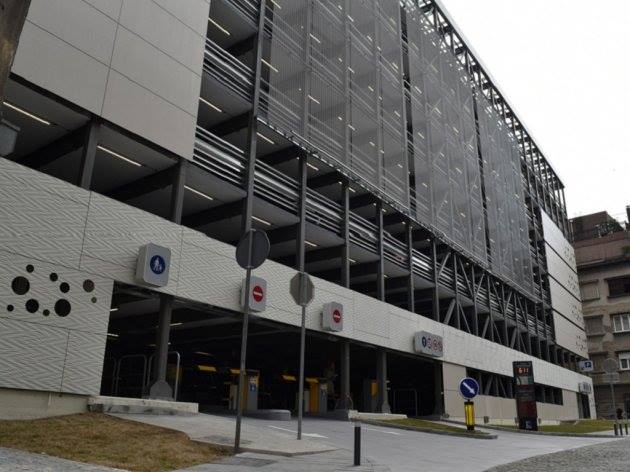
Like many other resources, the resource "parking space" can be created and offered on the market. One possible solution to the problem with your Ideal Block is to rebuild the parking lot in front and make it two- or multi-storey. Or to make an underground parking lot under the garden. Does it sound logical to you? Probably yes. Today, at this moment. As it sounded to the people who planned and invented the still current plan in Bulgarian urbanism that one parking space should be allocated to one dwelling.
Herein lies the fundamental problem with resource allocation. A centrally planned economy never has enough information about consumer desires – including desires that are not related to something momentary but longer-term, like a parking space or a house – and always fails – both in delivering bread, oranges or jeans and in “delivering” parking spaces.
As strange as it may sound, the parking space market in Bulgaria is actually far from free. In general, despite the constant criticism from non-professionals and activists that there is no control in Bulgaria and everyone builds whatever they want, in fact, construction in our country is among the most heavily regulated. One of the organizations that recently touched on this topic was the Chamber of Architects in Bulgaria, which demonstrated how huge the documentation is for the construction of a building – and made a comparison with the documentation in Germany. In fact, anyone who has had even the slightest contact with design in Bulgaria knows how heavy, cumbersome and often even contradictory, due to the numerous amendments over the years, the Law on Spatial Planning (the monster ZUT, in the slang of the architects themselves).
The root of the parking problem in Bulgaria – related to both city centers and many of the perfectly planned neighborhoods – lies in two places. First – with the aforementioned heavy regulation related to the creation of new parking spaces, more humanly speaking, with the construction of multi-storey car parks. Second – with the management of existing parking spaces, which the municipality or state itself owns.
The creation of new parking spaces
A short lesson on ZUT: every city in Bulgaria is divided into very small pieces, called land properties (PI). These PI are either private, municipal, or state property (I'm simplifying, for convenience). Accordingly, these PI can also be regulated (RPI) - this is your only chance to build something more than a wooden hut there. If you are lucky enough to own a RPI, you need to understand how it is regulated. Since it has a function - it can be residential, for landscaping, for transport, etc. Part of these things are determined by the PUP - the detailed development plan of your neighborhood, part - by the details of the RPI itself.
The legislator has made sure that everything is accurate. The area of your piece of regulated property should not have too sharp corners. You must have an exit to a street, which is a strictly defined percentage of the property. If you are going to build a house, you must have a strictly defined percentage of green space. You must provide each house with at least one parking space, which must be within the property, and the approach to it - necessarily within your property itself. And so on.
Although complicated – everything seems to sound okay, right? There will be green spaces, there will be parking spaces, perfect! Except that all the buildings around you (with very few exceptions, much less than you will hear about as "illegal construction") were built precisely according to the existing ZUT, and the results seem not to be the best in the world.
Oh, yes, I forgot – there is a special Law on the Organization and Development of the Sofia Municipality especially for Sofia residents, which every investor must also comply with. Below them, there are dozens of other regulations and other by-laws that make the construction market far from "free".
The problem starts in the planning itself. The requirement for 1 parking space per 1 dwelling is outdated and hardly meets the needs of the city. The concept in general is outdated, as it is based on the idea of a strictly zoned urban environment – here you live, there you work, and in the third place you shop. Our city has long been mixed with different functions and if at one point someone who lives nearby will park in the parking space next to you, then someone who has a job in the area will park there, after him – someone who will shop at the nearby cheese shop.
The more important part, however, is in solving this problem. Obviously, the demand for parking spaces is much greater than the supply. However, the market does not have the freedom to react. There are two reasons. The first is that there is no municipal control over the "free" parking spaces - people park on sidewalks, gardens, not-so-green areas and wherever they can. Because it is free. They pay taxes, so they should be able to park. Thus, the initiative for anyone to build and expect someone to pay for parking spaces is almost eradicated. If the municipality offers free bread to everyone, would you become a bread producer?
The second reason is the overly onerous regulations. We will return to the land use plans. Your land, your piece of "Sofia", has its role in the city. In the urban development plan and the land use plan, it says that you can build a residential building with so many floors, which will be so many meters from the street and so many meters from the neighboring property. If you want to make any changes - let's say to build the incomparably cheaper thing called a "multi-storey above-ground parking lot", you will have to go through an often long and often complicated procedure for changing the land use plan. And then, if you are lucky that none of your neighbors object, you have changed the land use plan.
But can you even take this step? In fact, to build a parking lot, you must meet several conditions. Your property must be far enough away from neighboring buildings. Your property must also be far enough away if there is a school nearby. If by chance your property borders only a boulevard, you have no chance – the entrances to multi-storey parking lots must only be from streets of the lowest classes. And if you are too ambitious and decide to build a parking lot for over 50 cars – your construction becomes a 3rd category construction, which burdens the bureaucracy many times over and you must get a special “yes” from the central Directorate for National Construction Control.
Some of these regulations are just annoying bureaucracy that delays hypothetical construction for months. But many of them are simply an absolute stop to investment intent. In some cases, the legislator literally prohibits the creation of new parking spaces.
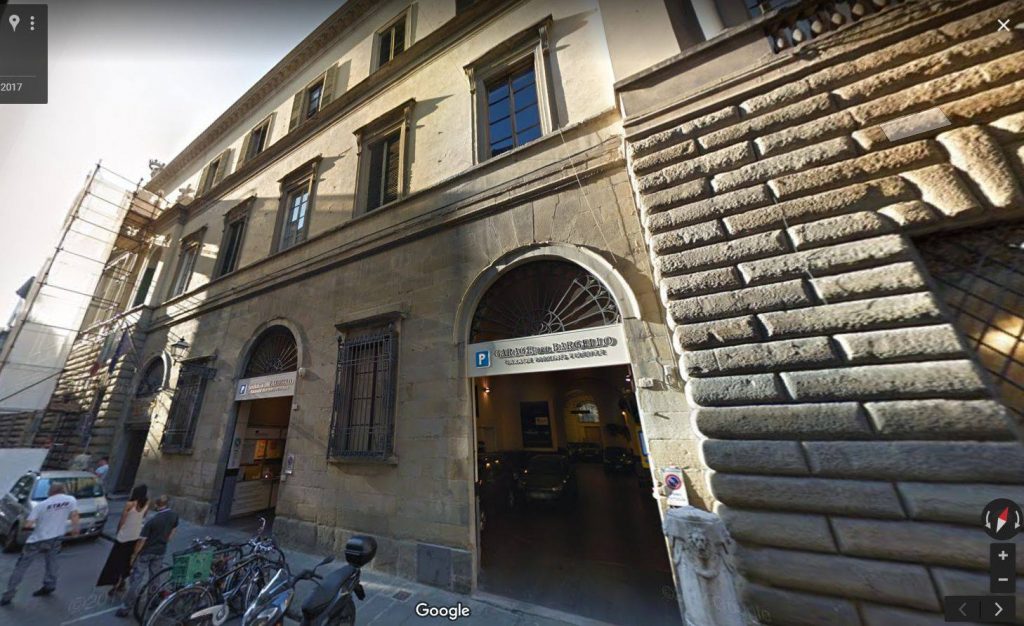
Many of these scruples do not exist around the world. In more densely populated cities, from Istanbul, through Athens to Florence, multi-storey car parks are built in buildings in the center - behind a facade that looks like the neighboring building and complements the city's skyline, a multi-storey car park is built in the very center of the city. There is no need for any distances from the neighbor - on the contrary, they are often built "on a flat surface". The problems with playgrounds and schools are also ignored in some places, without the world ending - in the USA there are many car parks built on sports fields - during the day, during working hours, the place serves as a parking lot, and in the evening it empties and it becomes a basketball court.
In our country, however, this flexibility is stifled by the very heavy and strict legislation, which, in fact, limits the municipalities themselves. For many years, the Municipality of Plovdiv, for example, has been trying to build a multi-storey car park in the problematic region in the city center near the Courthouse, but despite not being the greedy private investor that needs to be regulated – it still can’t, due to the cumbersome procedures. I don’t want to comment on whether there is any point in this municipal project at all.
The regulation of existing parking spaces
Let's go back to one of the problems that is a brake on new investors - the existence of a free alternative. The situation with parking spaces in neighborhoods is often not at all pleasant. Tires are punctured, cars are broken into, fights break out. And the saddest thing is that it is about arbitrariness - someone has decided that the municipal parking space in front of his house is his by right.
In fact, this piece of land is common. One, slightly more avant-garde option is to sell the parking spaces. The other – to give them to a concession, perhaps, with the condition that they are still preserved as parking spaces. But if we decide to leave the bold avant-garde dreams, there is a third option.
The third option, perhaps the most realistic, is for everyone to simply pay. It is indeed a bit strange in the municipality to pay for every piece of paper or note when we submit an application, statement, request or something else, but the parking spaces – these otherwise valuable 25 sq. m. (never 25 sq. m.) that we are entitled to by regulation for each parked car – are completely free. In fact, this happens in the so-called “Blue” or “Green” zone.
It's good to clarify that the purpose of these is not to charge for parking, but to regulate traffic - to prevent people from parking there who will be staying all day. That's why their official name is actually "Short-term parking zones" and your hours in the blue or green zone are actually limited.
In fact, free parking is a social service that the entire urban environment suffers from. At the very least, it is not fair for some people to have invested and have a garage, or to pay a year-round parking ticket if they live in a "zone", and for others to have a free parking space that they protect with skewers, nails and axes from external drafts. Let us recall at the beginning that parking spaces are a limited resource, and if we give away limited resources for free, we have a lot of problems. The municipality does not give free sidewalk rights. Nor does it let us ride municipal transport for free. But it gives away the parking space for free.
This is exactly what the role of the municipality should be – to use its limited resource of “parking spaces” on a market basis. Thus, these areas with fewer parking spaces and more drivers will be more expensive. Many people will think about whether to travel there. Accordingly, areas with lower demand will be cheaper and they will be able to leave their cars at home in these neighborhoods.
At the same time, if the demand for parking spaces in a neighborhood is too high, an investor may appear to build a parking lot. Imagine your Ideal Block from the beginning of the story – if parking spaces are free, everyone will continue to park on the street, in the gardens, everywhere. If the neighboring block decides to be enterprising and build a multi-storey parking lot, and the price for a space there is 50 leva per month, no one will waste this money if they can park for free in front of their home – either on the street on bad days, or in the garden.
However, if the state simultaneously deregulates the ZTA so that you can build parking lots in more places, and at the same time one of two (or both) things happens: the municipality charges everyone who uses municipal land (i.e. a municipal parking space, even in Mladost 4), and does not allow parking on streets and in gardens, then the problem will be solved fairly and correctly. However, this must necessarily happen simultaneously - if only people are chased away, without having an alternative place to park, this will be simply unfair.
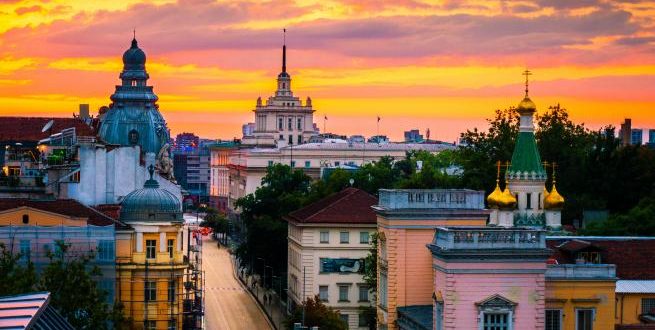
Source of the header image: Vesti.bg