EKIP– Expert Club for Economics and Politics A Different Opinion

Author: Vasil Kanev
The Bulgarian socialists decided to present their vision for Bulgaria, in which they repeatedly emphasize how important it is for the state to take part in all spheres of human life, to plan and redistribute from the rich to the poor, from those who produce to those who need it. In this regard, I also felt the desire to share my personal “Vision for Bulgaria”.
Bulgaria of scientists, not of simpletons would be the first slogan that will appear in the document. Our representative democracy will be transformed into academic governance, carried out by the renewed structures of the Bulgarian Academy of Sciences, while in the building of the current Parliament we can move the satirical theater or "Tear and Laughter" - a matter of consultation among the actors' guild.
We will transform the parliamentary republic into an academic republic. The country does not need politicians, because although by definition they work for the “good of the people”, in reality they work solely for their own good, for the good of their relative, friend, boss. Yes, politicians also have bosses, but they do not show them on television at all. In theory, the job of politicians is to solve people's problems, to propose laws that are in the interest of society, but it has been evident since the Bulgarian Parliament existed that the laws that are forged by politicians are almost always for the good of some specific person, business or social group.
It is also somewhat logical, given how difficult it is to create a law that fully meets the public interest, because it is very difficult to define the public interest. And yet, there should be issues on which we all agree. For example, that it is good to live safely in our country, that there are no thieves, murderers and violent people walking the streets, and this should be the first priority for all politicians and civil servants, but in reality it is not. Why? Because their personal interest always comes first, not the public interest.
In the last few Bulgarian parliaments, we even see the invasion of absolute illiterates, who are clearly elected to represent the illiterates in Bulgarian society or are nominated by some boss to be in elective positions on the lists because they are good, obedient and executive for them. And how exactly can we expect a collection of illiterates, simpletons, suitors, troublemakers, sycophants and fools to make laws that will be respected by the citizens?! I would not understand such an expectation. On the contrary, everything that the Bulgarian Parliament produces is completely natural, considering the people who make it up. What happens to these people when they get power? Power is like a drug and when some stupid person gets hold of it, it starts to harm him, both himself and those around him.
All these politicians think they have built something huge by sitting at a desk that gives them power. These false thoughts also give them false self-confidence and they start crushing everyone under them, from their direct subordinates to whomever they can reach, and God forbid some taxpayer citizen turns to them to solve some problem. Then you feel the true sweetness of power! Either there will be material stimulation or at least the formation of a future dependence, whichever of the options for politics to happen will win, but not the citizen whom he is supposed to serve.
Is it possible to be otherwise? Of course, it is possible when power is a responsibility. When everyone appointed to a state institution is accountable to society for their actions or inactions. When a civil servant understands the true meaning of the word - “civil servant”. He is there to serve the citizens and the citizens are his bosses, not annoying people who come five minutes before the break to bother him with their problems and waste his time. When power is exercised completely transparently and every citizen-taxpayer can check who is responsible for what and what work he has done in a given period, then power becomes responsibility. And when power is a responsibility, we can expect these employees to be responsible and to do their job qualitatively, which I think can also be defined as public interest.
Do we need elections, political parties, movements, coalitions in order to transform a civil servant from a breadwinner and dependent on power into a responsible employee conscientiously fulfilling his duties? Of course not! Every truly necessary civil service can be managed and operated without politically dependent people being appointed there, and it is even guaranteed that it will work better.
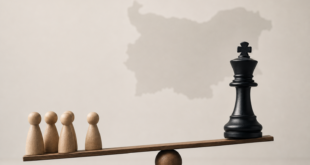
But still, elections are something positive for a well-organized society and could be used to resolve various issues of a public nature. However, for an election to be legitimate and fair, not all people can have a voice with equal weight, at least because people are different and play different roles in the structure of a given society. Some work more and give more, others less, and it is somehow illogical when something has to be chosen for them to have equal votes.
To this end, first of all, we will introduce a registration form so that only people who have a basic education, i.e. can read and write, can participate in elections, then we will introduce a point system for each vote, which will be determined according to the contribution to the general treasury, scientific achievements, absence (or presence) of legal violations, etc. This system, although seemingly complex, will enable the most active, conscientious and talented people to exert the strongest influence in decision-making, this is fair and reasonable.
What we have at the moment is false food for the masses and I would even say harmful to the development of a society, because the system is designed in such a way that it stimulates populism, hypocrisy, lies and even corruption. Because there are people who cannot read, but in exchange for something material that they can touch and see, they will go and vote for the one who gave it to them without realizing that this person will disappear afterwards and will not solve any of their problems. And this vote (and there are not a few such votes) is equal to the vote of a decent taxpayer with two higher educations, who supports his family, helps his parents and participates in charitable causes, is politically engaged and can distinguish the wrong policy from the right one. I personally do not see anything fair in this!
And yet, is there anything positive to be gained from democracy? In my opinion, there is, and that is the separation of powers. In order to protect our homeland from yet another overambitious despot who would take over all state institutions, we must introduce a true separation of powers. True, because what we have at the moment is only called that, in reality, power is centralized in the hands of a single person.
And we can try to make this division by dividing the elections into those for the executive branch, through which the composition of the academic council will be elected, which will fully replace the currently operating council of ministers. Elections for a control authority, which will include the army and the internal security service and will be led by the elected person. Elections for a media council, which will ensure that the public is informed, freedom of speech is guaranteed and will help with the transparent management of public institutions and resources.
Of course, it would be good to introduce a mechanism for mutual control between the authorities, so that each one has an incentive to be correct, transparent and good quality. And finally, there will be local government elections, in which the residents of a given settlement will elect a local person responsible for public affairs, who is nowadays called a mayor and whom it is good for every settlement to have.
All these ideas could easily be shaped into a contract between the state institutional authority and the citizens, called the Constitution, and this contract should be mandatory for all students in school and every citizen should sign it on the day they receive their identity document. In it, we will clearly spell out what the rights and responsibilities of both parties are, and each party will have to respect them after signing. The authorized parties will sign on one side with the term for which they were elected (I think five years is a good period), and on the other side, every citizen will declare that they are familiar with it and that they declare their desire to be a citizen of the academic republic of Bulgaria.
With such a structure of the homeland, I foresee such rapid economic growth and such a strong positioning on a geopolitical scale that the time will not be far off when the Swiss will talk about their country as Bulgaria in the Alps, while in Singapore they will comment on the Balkan economic lion with undisguised envy.