EKIP– Expert Club for Economics and Politics A Different Opinion
Guest author: Stefan Boyadzhiev
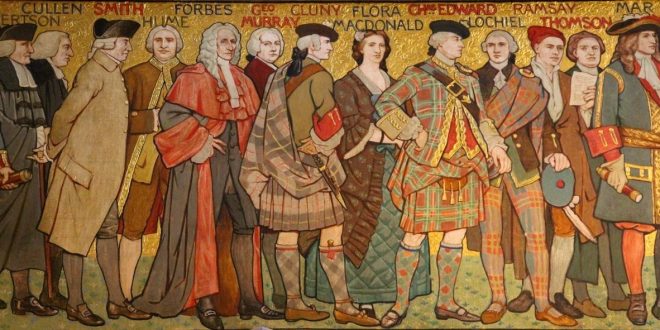
Man never mounts higher than when he knows not where he is going. —Oliver Cromwell*
Two weeks ago, EKIP published an article by Slavcho Marinov, which was dedicated to criticizing libertarianism. It was, in turn, the second part of the author's more general theme and idea, to present his understanding of the libertarian-conservatism opposition, a favorite form of intellectual sparring between the two sides, focusing on what each of them can learn from the other. The second article understandably inflamed passions, provoked discussion and controversy, as a result of which EKIP announced that anyone willing to share their opinion on the topic in the form of an article would be published. The following is my reaction and reflections on the topic.
The characteristic of conservatism is that there is a problem with progress. A circumstance known to everyone and understandable from the very name. Conservatives do not perceive it as criticism, understandable, even used by them as an argument that their beliefs are not ideological and are not a coherent system, but ad hoc behavior. Naturally, conservatives are most afraid of ideas, because ideas, more than anything, lead to change. The fear stems precisely from the fact that they do not have their own clearly expressed principles and trust only what has been proven and established over time. However, from this follows a serious problem for them, namely that with ad hoc behavior they disarm themselves in the public debate and ultimately do not believe in the power of the argument.
Classical liberalism, on the other hand, considers the development of knowledge to be one of the main goals of man; the very essence of development is the achievement of something new. This does not mean at all that the classical liberal naively considers every change to be progress, and that any form of "progress" will appeal to him.
However, when we talk about progress, it would be good to pay attention to an epistemological problem that is often overlooked by libertarians. Progress in an individual or collective (not state, but company/society) endeavor is about a clearly defined, knowable goal. This is not the meaning of the term in the matter of social evolution, because it is not achieved by reason striving with known means towards a fixed goal.
It is more correct to think of progress as a modification of human intelligence, a process of adaptation and learning in which not only the possibilities that are known to us but also our values and desires are constantly changing. The very definition of progress is the discovery of something that was not “more-knowledge” and “more-known”, which means that it could not have been expected or predicted. The process always takes us through uncharted waters, and the most we can hope for is to gain an understanding of the forces that drove it.
Human reason can neither predict nor deliberately shape its own future. Its advances consist in finding out where it has been wrong. — F.A.Hayek 1
Such a general approach to understanding the process of cumulative growth is invaluable if we are trying to create conditions that are favorable for it, and it is never knowledge that enables us to make specific predictions. The thesis that we can derive any general rules and laws of evolution is absurd.
Let us take the issue of homosexuality and same-sex marriage to illustrate what I am trying to say. What should be the libertarian approach? Every radical libertarian should question and test all the values of the society in which he lives, but for this to happen we need freedom. Only in a free society can this happen, and freedom is always one, not divided into political, economic, etc. But the moment we start testing these values we are faced with the epistemological problem - we cannot demand a revision of all values at once; we do not have an Archimedean fulcrum from which to attack the entire moral system. We have had little involvement in its conception, and we do not understand how it maintains the order on which the coordination of the actions of millions of people depends.
And since we owe the order of our society to rules of which our understanding is imperfect, all progress must be based on tradition. We can build on tradition and improve its products. The success of a rule-breaker must be bought with the respect he has earned by strictly observing most of the existing rules. To be legitimate, new rules must win the approval of society by gradual ratification, not by formal voting.
In other words, to return to the same-sex marriage case, ironically, gay pride is one of the strongargumentsvs. While we constantly question our rules (once we have recognized the conflict between a rule and our other moral beliefs), we can always do so solely on the basis of their coherence or compatibility with the rest of the system, in terms of their effectiveness in forming the same kind of overall order of action that all other rules serve.
Law, language, the state, money, markets, all these social structures in their various empirical forms and in their constant change are to no small extent the unintended result of social development. — C. Menger 2
In the next few lines, I will address that part of libertarians who have had a little too much criticism of the role of reason and intellect. Tradition is not something permanent, but the product of a selection process guided not by reason, but by success. It changes, but can rarely be consciously changed. Cultural selection is not a rational process - it is not guided by reason, but creates it. It is no coincidence that A. Smith defines the hand as invisible. (More in book 3 of “Intvestigation into the method of the social sciences with special reference to economics” by Karl Menger; Taleb on the topic of the role of IQ)
In the second part of my presentation, I intend to address a painful criticism of libertarianism, namely that it has broken with reality and is naive. Is this true? If we are as frank as possible, we should admit that, albeit only to some extent, it is true. In his book “The Monetary Order,” Nikolay Nenovsky reminds us of Karl Polanyi’s statement that liberalism is doomed to perish because it can present a model of functioning in which the economy is detached from other social spheres, which logically leads to unreality and to results opposite to those sought by the model. Ironically, the greatest strength has become the greatest weakness.
I support the thesis of Prof. N. Nenovski, who agrees to the extent that it is a question of a reduced economic liberalism in its utilitarian interpretation, but rejects the claim that interdisciplinary liberalism cannot exist. I believe that in the 21st century, libertarians, being influenced by the Austrian liberal tradition, should focus on the interdisciplinary development of ideas about freedom that take into account the multifaceted behavior of people. After all, interdisciplinarity is a cornerstone of the Austrian scientific direction. In order not to be completely speechless, I will point out two examples where libertarianism lags behind.
“Its is not the business of science to criticise the political aims of inflationism. Whether the favouring of the debtor at the expense of the creditor, whether the facilitation of exports and the hindrance of imports, whether… are questions which economics can not answer. With the instruments of monetary theory alone, these questions can not be even elucidated, as far as is possible with other parts of the apparatus of economics." — Mises 3
In the same book, Professor Nenovski raises the problem of the lack of attention to power relations in the analysis of money and economic reality in general within the Austrian tradition. Over time, he says, he has come to believe that the main drawback of the Austrian models of monetary phenomena lies not in the technical difficulties in describing their functioning, but above all in the lack of attention to interests, power and the political process in general. It is surprising that even with an author like F.
Hayek, who is one of the last philosophers to attempt to build a comprehensive system for the development of society and man, lacks the integration of power in his liberal construction. Or, perhaps, it is more accurate to say that there is no special attention paid to the role of groups and powerful interests, as in his later works he refers directly to M. Olson in connection with the theory of groups, their natural selection and the role of special interests.
Law is not derived from a rule, but from the law that is the rule, it is made. — Julius Paulus 4
The second example is from the field of law. Who has not argued with a lawyer and heard the following “argument”: “In which law does it say this?/This is not written in any law!” The reason for this is that we have lost the classical concept of The Rule of Law/Rechtsstaat or in Bulgarian - a state of law. Legal positivism and the idea of popular sovereignty manage to pervert this term and the law turns out to be what the legislature, and ultimately a group of bureaucrats, decides. The problem is that we cannot have a Rechtsstaat (on the continent. liberals from the 40s and 50s of the 19th century, who developed the American legal tradition) if the sovereign (whether a monarch, a parliament, or a temporary majority) can decide at any time what the law is. Precisely because in the first half of the 20th century there was no one to oppose H. Kelsen (while we have someone in Keynesian economics), this way of thinking is unique in legal doctrine.
Many libertarians readily use this understanding of law, without distinguishing between the different legal norms – “nomos” and “taxis”, i.e. general and abstract rules of conduct and organizational rules, which, with a broad sweep, and without going into details at the moment, I will state that they are not law, regardless of the fact that the legislature has called them “laws”. It makes you smile how Rothbard perfectly understands the role of impersonal price signals and gets irritated when it comes to the same function of legal norms. The alternative to impersonal abstract rules is a society supported by specific common goals and plans. At the beginning of the second half of the last century, Bruno Leoni, who is a lawyer by education and a lawyer by profession, noted that our last hope to regain the principle of The Rule of Law lies with the economists, with which I completely agree, but it is certainly not necessary to rediscover a number of postulates that have evolved over several millennia.
Though men be much governed by interest, yet even interest itself, and all human affairs, are entirely governed by opinion. — David Hume 5
I strongly disagree, however, when criticism of the “naivety” of libertarian ideas is motivated by the belief that no one would vote for it. Libertarianism is absolutely alien to party discipline and the art of political compromise, which are the guiding principles of any successful party endeavor. This does not prevent individual libertarians from being part of other such formations. There are many worthy examples from our time - Ron Paul and Rand Paul, Steve Baker, Jacob Rees Mogg.
It is true that in general action (understand organizational rules) the conviction of the majority should be respected, but this does not mean in the least that one cannot do everything to change this conviction. We may have deep respect for this convention and at the same time very little for the wisdom of the temporary majority. There will always be opposition to popular opinion as long as our knowledge and understanding are developing. In the process of forming an opinion, it is quite possible that when an understanding is accepted by the majority, it is no longer the best; someone will have advanced beyond the limit of the idea that has just become generally accepted. Progress consists in the few convincing the many. There is no social experience that was not previously the experience of the few.
The goal of a politician, for his part, is to discover which opinion is held by the most people; it is almost mandatory to be minimally original and to move within already established frameworks, simply because he must win the maximum number of votes.
“Progress, like evolution, must be neither too slow nor too fast. Too slow means extinction from lack of adaptation. Too fast prevents retaining the benefits of past improvements, hence, again, extinction.” (aka Lindy effect) N.N.Taleb 6
Maybe what I'm trying to say in so many words is that libertarianism has a problem with us being too busy preserving ideas, like the Austrianeconomicschool and the legal institution of property. I just want to remind you that one of the important reasons why liberalism became classical in the 19th century (and the term was stolen by the progressivists) is that they considered law to have reached some kind of final stage of development. From there we can observe how the mechanical application of property rights to intellectual property and urbanized real estate leads to, to put it mildly, the unsatisfactory results that we observe to this day.
Notes and translation of quotes:
* Whether or not it was actually uttered by him, it left a deep impression among the representatives of the Scottish Enlightenment of the 18th century.
1. "Human reason can neither foresee nor thoughtfully shape its own future. Its progress consists in discovering where it has gone wrong."
2. "Law, language, the state, money, markets, all these social structures in their various varieties and in their constant change are largely unintended results of social development."
3. "It is not the business of science to criticize the political aims of inflationism. Whether the benefit of the debtor at the expense of the creditor, whether the facilitation of exports and the hindrance of imports, whether the stimulation of production by the transfer of wealth and income to the entrepreneur will be recommended or not, are questions which economics cannot answer. With the tools of monetary theory alone these questions cannot be illuminated, insofar as this is at all possible with other parts of the economic apparatus."
4. "What is right does not arise from rules, but rules arise from our knowledge of what is right."
5. "Although a person is guided by interest, interest itself, and all human endeavors, are entirely guided by opinion."
6. "Progress, like evolution, should not be too slow or too fast. If it is too slow, it is tantamount to extinction; if it is too fast, the benefits of improvements are not allowed to be absorbed, hence extinction again." (also known as the Lindy Effect).