EKIP– Expert Club for Economics and Politics A Different Opinion
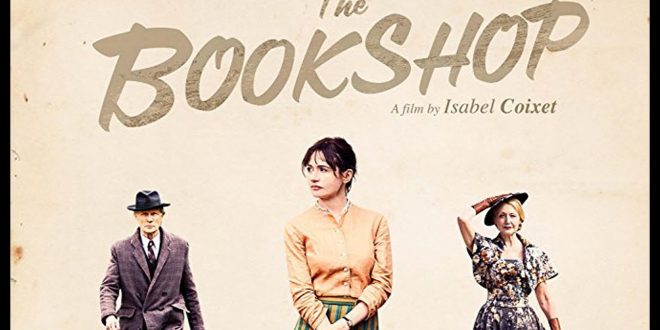
“Pushing ideology into every second scene doesn’t help a single film” – the quote is from Stoyan Panchev’s article about the film “The Queen of Scots”. A film full of politically correct positive discrimination roles – anachronistic for the period characters from all the races needed to be represented, according to the standards of this year. By agreeing with him, I will present another side of the film market, where ideology is not pushed, and the result is wonderful. And although the film I will talk about – “The Bookstore” – did not have the same box office result, I will again quote the article about “The Queen” – the market is a complex mechanism in which everyone participates, and we as consumers send each other signals (especially libertarians should be more active in this) about which things are of quality, and which are dangerous or just plain meaningless propaganda.
Is Hollywood and the film industry that bad?
It is increasingly common to see politics engulfing art, and cinema, as one of the most popular arts that reaches the most people, is most at risk of this. The Oscars have become awards for the most politically correct topic, comparing not the qualities of the films, but how many strong women and empowered non-white people there are in each. We see a reaction against this movement even among “centrist” people, especially after the rather strange success among the nominations of “Black Panther”.
For many people, “European” (I put it in quotes, due to the huge variety of European films, and the fact that the majority of films are now international co-productions) cinema is even worse. However, this is far from the case. First, American cinema is not just Hollywood. Even among films coming out of the USA, there are enough titles that put the story, the plot, the message, and not the politically correct superficial things, to the fore. But I will return to European cinema with the film “The Bookstore” that hit the screens a few weeks ago, whose message is extremely libertarian, but at the same time is not intrusive in any way, which benefits everyone – both the film itself as a work, and the audience, who should not be distracted from the story with contemporary politically correct anachronisms.
"The Bookstore" - a woman's struggle with prejudice and the law, in which her only help is her private property
The story of the film takes place shortly after World War II in a small town in England. A widow who lost her husband during the war, Florence Green, decides to open a bookstore in the town, despite the negative reaction from the town's elite. Everyone tries to turn her down, explaining that almost all the ordinary residents are too ignorant to be interested in literature.
Florence, however, takes the risk, invests in a beautiful old building, which she converts into a bookstore, and develops her business herself, choosing what books to offer on the market. An interesting moment is when she decides to offer the public Lolita by Nabokov - despite her concerns that it will cause a scandal, the book - one of the widely accepted masterpieces of the 20th century - is accepted and sells well. A little girl who is bored in her after-school classes comes to her aid in the bookstore.
However, all of this plays a cruel joke on her when it turns out that the house she rented for the bookstore is actually of interest to the questionable elites of the town, who have tried to evict her. Violet Gamart, one of the wealthy ladies of high society, wants to create an "art center" in the building in question, and nothing can stop her. She tries to convince Florence to abandon the bookstore and leave the town, but Florence refuses - and her only defense is that she owns the building. The private ownership of the so-called "Old House" does not give Gamart a chance to take away the bookstore - and what hundreds of residents of the town are happy to have, supporting it with regular book purchases. She also receives great support, at least morally, from the lonely Edmund Brundish, beautifully played by Bill Nighy, who in a monologue beautifully criticized the idea of creating an "art center" - a beautiful scene about the freedom of art, which makes the entire film worthwhile.
Gammarth – with her positions in society and access to power and legislators, manages to win the battle. Not because of the vulgar market, but because she manages to get legislation that is convenient for her. Using a law passed at the time, similar to the Cultural Heritage Act, she decides to take away the bookstore, which is on the list of valuable buildings. In history, according to this law, every historically valuable building must be accessible to the public. The bookstore actually meets these conditions, but Gammarth needs additional political leverage to fight Florence. Documents were fabricated that the bookstore is not taking good care of the building, which is in poor technical condition, so the house must be taken away from her.
Other laws that do no harm to anyone are also being used – as part of the attack on Florence, she gives work to the little girl who helps her in the bookstore. Employees from the English “Child Protection”, citing a law that children should not work, take the assistant away from the bookstore, thus simultaneously creating difficulties for both the bookstore and the child herself, who instead of happy afternoons and a small income, now receives nothing.
In the end, the town that had a bookstore and had wonderful access to the highest culture of its time suddenly loses that and gets in return a superfluous “art center” in which the elite closed society holds its balls. It doesn’t actually work out that way, and the ending is a bit more anarchistic, thanks to the little girl, but still – the bookstore is gone.
True story or fiction?
The story itself is infinitely libertarian. A woman simultaneously confronts the cultural prejudices of a stodgy provincial England, for which women are not allowed to work and develop businesses, the limited idea of the elites that the common man is stupid and does not understand anything about culture and art, and she also confronts ridiculous legislation - the Cultural Heritage Act, which may have a positive role in some aspects, but can also be used as a "stick" against inconvenient people outside of power; as well as child labor laws.
The film is also valuable from an artistic point of view – the film, as a film. Would this really happen like this? Would a bookstore in every small town be a market success? Would the elites always use the legislation to their advantage to crush small businesses? Hardly. The beauty of the film is that it presents a small story in a small town. We can imagine that this could really happen somewhere.
Although here, libertarians or people with a pro-market mindset can imagine the problems that any bureaucracy can create for a free business, this is far from the theme of the film. The theme is a woman's fight for her own cause. At no point do we see any propaganda in any direction - and there probably isn't any; it's unlikely that the author of the book on which the film is based is a libertarian, nor are the producers, directors, etc. This is simply a cinematic story, the purpose of which is to make us feel and make us ask ourselves various questions. And, for example, in this film, there are no questions like "What are colored people doing in a small provincial town (or the royal court in the 17th century) in England, and why is there so much emphasis on this homosexual story?".