 EKIP– Expert Club for Economics and Politics A Different Opinion
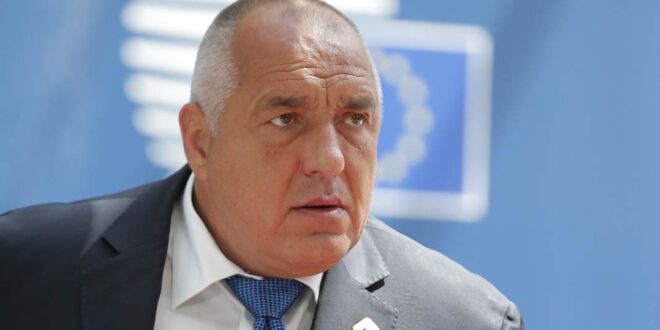
Mass protests in Bulgaria have been going on for two months, but the government stubbornly refuses to resign. Despite the obvious damage this is doing to the ratings of the government and the prime minister himself, despite the increasingly critical tone of the foreign press, GERB and United Patriots are determined to hold on to power until the last moment. "We are preparing for regular, not early, elections," the ruling party categorically declares.
Such stubbornness is particularly puzzling, given the approach we are used to seeing from Boyko Borisov in similar situations. In previous cases of massive protests (in 2013) or simply significant indications of a loss of rating (in 2016), Borisov has always been ready to resign very quickly, in order to calm public discontent and consolidate a vote that would reverse the negative trends in the party's rating. However, this time something is different. The question is what?
1. Fear of revanchism and control over the electoral process
The first, and perhaps most popular, theory as to why Borisov refuses to resign is that he is afraid of a caretaker cabinet appointed by Radev. There is certainly some logic to this theory. The president could well be revanchist towards the government, given the constant conflict between the two institutions in recent years, which represents the most serious confrontation between a government and a president in Bulgaria in the last three decades.
It is easy to assume that Rumen Radev would be revanchist towards the GERB government, especially in view of its acute conflict with the prosecutor's office, in which the ruling party firmly sides with the prosecutor general. But whether this would lead to real revanchism in practice on the part of the caretaker government is another matter entirely. A caretaker government under Radev's control could, in theory, pull out "dirty shirts" for the current one, but let's not forget that the president has already appointed a caretaker cabinet once before, without this leading to any dangerous consequences for GERB. Of course, at the beginning of 2017, the political situation was very different and the conflict between Radev and Borisov, although it existed, was not at all that serious.
Another significant concern for Borisov regarding a possible caretaker cabinet is related to the organization of the elections. It is very likely that the government is worried that if the most serious opposition to them organizes the elections through a caretaker cabinet, this could lead to a far more unpleasant election result than if it controls the process. Election manipulation is a common phenomenon, especially in our country, there is no room for error. And who organizes the elections definitely matters. So, from concerns about exposing the government's "dirty shirts" to those related to the organization of the elections next spring, the GERB government certainly has reason to be worried about a possible caretaker cabinet appointed by Rumen Radev.
2. Preparation of the 2021 Budget
Another factor that may also play a key role in the refusal to resign is the budget procedure. In the next two or three months, the 2021 Budget is to be prepared and adopted. This budget is of exceptional importance, perhaps the highest in a decade, because it will be a crisis and pre-election one. In parallel with the preparation of the budget, in the last quarter of this year, the first tranche of "fat" from the European Union will flow, under the rescue program that was adopted in July.
By the end of this year, Bulgaria will be able to extract about half a billion euros from this funding. How this money will be distributed could have a very serious impact on the elections next spring. Depending on how the current government decides to distribute this money, this could strengthen its election result. When the crisis finances from the EU are added, the 2021 Budget may be the largest we have ever seen. This creates a huge potential for "distributing portions of fat", which if "flows" into the right channels could consolidate the vote for the ruling parties.
Yes, it is about buying votes, one way or another. In fact, fiscal policy in our country has been serving this purpose for quite a long time. It is no coincidence that over the past few years, salaries in the public sector have been constantly raised "by the bucket". A significant part of those working in public administration form part of the core of each ruling party, because each government appoints "its own people" as officials wherever possible. Their loyalty is maintained by raising salaries. It is no coincidence that one of the main "crisis" (in fact pre-election) measures so far has been a 30% increase in the salaries of officials on the "front line" in dealing with the coronavirus in Bulgaria.
3. The proposals for constitutional changes
The third and least likely theory is that the government is quite serious about pushing through its proposed constitutional changes. This is the least likely explanation for the stubborn refusal to resign for two main reasons. First, the constitutional changes themselves are relatively superficial. What key political goal would GERB achieve by pushing through this draft for a new constitution? The only more substantial proposals concern the functioning and powers of the prosecutor's office and the Minister of Justice, but even these seem relatively minor. If the aim is to expand the powers of the prosecutor's office, we would expect far more ambitious proposals. But the more significant thing is that the prosecutor's office does not suffer from a lack of powers at all. Quite the contrary.
The second reason is that the proposed constitutional changes are 99.9% certain not to be adopted. And this is something that was clear from the very beginning. Even without paying attention to the content of the GERB project itself, the political situation in the country is such that it is impossible to bargain for the necessary support in parliament. Neither the BSP nor even the MRF are in line to support the GERB constitutional project. The BSP in particular must be crazy to legitimize the constitutional amendments proposed by GERB, at a time when their main political opponent is in such a vulnerable position. And without support from at least some of the socialists, the GERB constitution cannot be adopted. The position against expressed by the MRF at the beginning of this month drove an additional nail into the coffin of this initiative.
What is the real goal of the government?
Why then does GERB stubbornly continue to push for constitutional amendments, even trading a concession in exchange for support from Vesselin Mareshki's party so that the proposal could even enter the plenary hall? Most likely, the function of the draft constitution is simply to give GERB additional time in power. The importance of the constitutional issue has become a favorite argument of the ruling party every time they are faced with the question of why they still stubbornly refuse to resign.
The idea seems to be to use this project to buy time during which 1) GERB will be able to control the preparation and adoption of the new budget and 2) it will be too late to call early elections. If November comes (when the proposal for the Supreme National Assembly and the new constitution will be voted on), a possible resignation would mean elections at the same time as the regular ones - that is, objectively speaking, it would be a really pointless move. Most likely, it is such a waiting strategy that is behind GERB's proposal for a new constitution. And the main goal is to guarantee full control over the budget and election process.






Bulgaria has NEVER been richer, more successful and more prosperous in its ENTIRE 1339-year history.
Let someone show me statistics, equated to gold, silver, wheat or whatever else you want, when else have we had such national wealth in the form of 120 billion gross domestic product?
When did we have such a record export of 55 billion, and a positive balance with the world's largest EXPORTERS - Germany and the USA? When did we have a 44 billion budget? Such record deposits, reserves, funds? Record low debt and high credit rating?
Such UNPRECEDENTED CONSTRUCTION - THREE HIGHWAYS AT THE SAME TIME, plus dozens of secondary roads, every day a new plant, factory, workshop, infrastructure, entire new modern industrial zones and residential neighborhoods sprouting up in months, like mushrooms?
When were there such crowded shops and crowds of rich and happy Bulgarians at the borders?
1,000 new companies are registered every day, 200,000 job ads daily on job sites, salaries over 1,200 BGN! Free and compulsory primary education, hundreds of vocational and qualification courses - eh . . . ?
Bulgaria's great enemy - Dutch Prime Minister Mark Rutte - stated the other day at the EU meeting that Bulgaria is currently the MOST STABLE COUNTRY IN THE EU financially.
These facts are affecting the health of Chervenushki, Lilavushki, Babikyantsi, Hadzhikyantsi, Radevtsi and Kanchovtsi, who started going completely crazy and composing and sending around the world incredible UNBELIEVABLES about Bulgaria:
-- THE FEELING of CORRUPTION - the detention center is full of corrupt oligarchs, crooks, and even a current minister and deputy ministers. Some are hiding in the Dubai sands. That is, the mechanism for combating corruption works WITHOUT FAILURE. Corruption is EVERYWHERE in the WORLD, in Bulgaria it is around and BELOW average levels. Everyone can and MUST go and report corruption - as was the case with Alibaba, for example. And not just have a FEELING of it. Corruption is not a WRONG.
-- THE DEMOGRAPHIC CATASTROPHE (there are already OVER 16 million Bulgarians around the world, 400 schools abroad, hundreds of community centers, libraries, churches, clubs, societies, bands, courses, establishments, companies, websites, and the BULGARIAN FLAG is flying everywhere), that is, we are not talking about a Demographic Catastrophe, but about a WORLD EXPANSION of the Bulgarian Nation.
-- FIRST PLACE IN MORTALITY (calculated ONLY on the elderly and the sick here in Bulgaria - EVEN GRANDMA KNOWS THAT) - in April we were the country with the LOWEST MORTALITY in the EU - what now?
-- I'M MOST HAPPY, however, with the 111th place in FREEDOM OF SPEECH - how did you hit it - at least make it 112th, against the backdrop of media and social networks full of CURSES and anyone who can say and publish whatever comes to mind! Bulgaria is the country with the FREEST MEDIA, dudes!
-- I LOVE the balalaika that we were the POOREST in the EU - oh, downright BLASTS! But WHO is this idiot who would accept some BLASTS in ERM-2 for example? And in the Banking Union, where we are ALREADY accepted? Every day RUSHES and CLOGS at the borders, crowded Aegean beaches and taverns with Bulgarian blasses DEAD OF STARVATION!
Romania, for example, charges 22% SHARED ECONOMY to its GDP.
If WE TOO count our Gray (and Black) Economy, Romania will breathe DUST on us, in waves.
De facto, Romania is MUCH POORER than us, even despite its oil reserves, but for some reason, the local idiots are trumpeting with foam at the mouth that WE were the poorest in the EU.
Should I tell you about the 500 billion Euro debt that the GREEKS have to pay - and their GREAT-GRANDCHILDREN?
But they are considered RICHER than us!
What about Italy, Spain, Portugal? Countries in TECHNICAL BANKRUPTCY. And in England, debts have risen well above GDP?
Bulgaria has the SECOND LOWEST government debt in the EU after Estonia, and the highest credit rating in the region!
This means that if we want, we can borrow, for example, 300 billion Euros like the Greeks, invest them in profitable projects, and make our salaries over 2,500 Euros!
Should I tell you why we don't do it? Come on, think for yourself.
Even if we were REALLY the POOREST, the mere fact that we are among the 28 RICHEST still sounds good.
When I look at the crowds in the supermarkets and at the borders of rich and happy Bulgarians, I CRY OUT TO MYSELF - LIVE TO WEEP FROM HUNGER, POVERTY AND MISERY.
Currently, work is underway on a project to produce 500-700 tons per hour of hydrogen with water from the Danube River and electricity from the Kozloduy and Belene NPPs, which hydrogen would be exported for $70 billion per year - the same as our current GDP.
The price of a kilogram of hydrogen is currently $14, the demand is over 60 million tons. Plus 360 million tons of oxygen, which will also be produced.
This will allow for an increase in the average salary to over 2,500 Euros and the average pension to over 1,000 Euros, plus the introduction of a mass Conditional Basic Income of 600 BGN plus free vouchers for food, shelter, treatment, transportation, heating, and rest for those in need.
In 5-6 years, Bulgaria will rank among the most developed world economies.
https://hytechfund.alle.bg