EKIP– Expert Club for Economics and Politics A Different Opinion
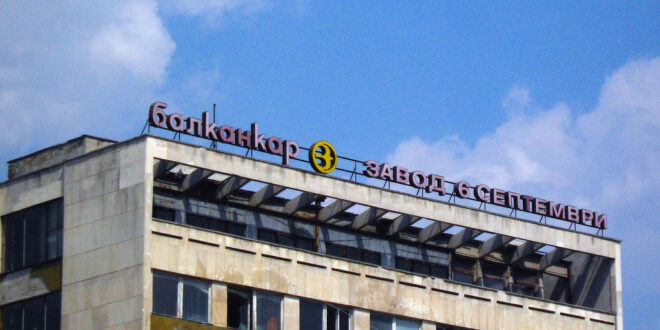
The title is a quote from the Report-Analysis of Quality, Defects and Complaints at the Electric Transport Plant "6th September" - Sofia. The document dates from the second half of 1961. It is an internal attempt by the plant to identify organizational, technical and other shortcomings in the production of electric forklifts.
With the help of authentic archival sources from the late 1950s and early 1960s, in this publication we will identify the main contours and important details of the microeconomics of Bulgarian socialism. For this purpose, the already mentioned “6-ti septemvri” factory in Sofia was scanned. Its production is among the calling cards of the decades from 1944 to 1989. A sober look at its functioning is indicative of the state of the entire political and economic system. After presenting the main facts, we will try to assess how they relate to the present and the future.
Macro frame
By the late 1950s and early 1960s, the basic parameters of the economic model in socialist Bulgaria were firmly established.
In 1947, the Nationalization Act of all private industrial and mining enterprises was adopted. The nationalization itself was completed by 1950. Private initiative in banking, trade, and insurance was replaced by state-owned enterprises and associations. Similar processes were taking place in agriculture. The process of forced collectivization continued until approximately 1958-1959. At least until the end of the 1970s, the private sector in the Bulgarian economy was invisible.
The next fundamental characteristic of the model is the replacement of market “anarchy” with central planning. Political power concentrates in its hands investments, pricing, distribution of credits, raw materials and materials. Huge funds are directed to metallurgy, mechanical engineering, energy and chemical industry. The main directions of economic development are set in five-year plans (five-year plans), which are broken down into shorter-term plans and specified for individual enterprises. In terms of foreign trade, the country is tied to the USSR and other socialist countries. A large part of the production of Bulgarian industry is placed on the huge and unpretentious market of the Soviet Union. There, competition from other national producers is weak and does not stimulate modernization, high quality and productivity.
Against this background, the “6th September” plant in Sofia developed. It was established on January 1, 1952. In 1957, it became the “6th September” Electric Transport Plant (ETZ) and came under the management of the “Elprom” association under the Ministry of Electrification. At the end of the 1950s, the enterprise was still not large - it employed about 500-600 people. Trolleybuses were produced, but gradually the predominant production became electric trucks. In 1965, it was renamed the Plant for Electric Forklifts and Forklifts, which was part of the State Economic Association “Balkankar”.
Domestic problems - "only with a hammer"
Immediately after the establishment of the ETZ, the state control bodies recorded the presence of a number of shortcomings in its work. At the end of 1957, it was established that the enterprise had large quantities of stale and surplus materials, worth about 1,500,000 leva. The situation was the same in 1958. At that time, it was established that the ETZ had been supplied with a number of materials in quantities larger than necessary “or completely unnecessary ones”, which were lying unused in the warehouses. Such purchases bring losses because they freeze the working capital of the plant. On the other hand, materials that are necessary for production are not planned and are supplied unplanned, which means slowly, with difficulty and untimely. As a result, the work of the plant is hampered, orders taken are not fulfilled, interest, fines on short-term loans, penalties, etc. are paid.
In the conditions of a centrally planned economy, the authorities believe that the efficiency of production will improve, the cost of production will be reduced, etc. Enterprises are administratively required to provide measures for the implementation of such goals. In 1957, during the inspection at the ETZ, it turned out that the organizational and technical measures planned for the first six months of the year were reported as completed, but in reality they were not implemented. At the micro level, an explanation is found why the solemn and impressive reports in many official documents should not be trusted.
Again in 1957, state control revealed other structural problems. The heads of the various units did not pay enough attention and did not exercise control over the economical use of materials. A lot of excess material was put into the machines being produced. Due to poor coordination between the individual units in the ETZ and untimely supply of parts and tools, 60,809 standard hours were not worked in the first six months of 1958. Apparently, during their working hours, the workers were forced to be inactive through no fault of their own or were simply absent (the so-called self-exclusions), for which they were paid.
Internal control in the enterprise in the early 1960s revealed a number of other weaknesses. Managers did not comply with technical standards and installed parts in electric forklifts in the hope that “it could be done” anyway. Workers were often poorly qualified, showed bad faith, were not provided with the necessary tools and installed the bearings of the electric forklifts incorrectly and often “only with a hammer”. The fitters were impatient and unconscious, did not care about the quality of their production and “chased the number”. Production standards in the ETZ were low and workers earned their salaries without having to put in much effort. The audit authorities reported “many cases of abuse and theft, in which accounting and materially responsible persons unscrupulously appropriated public funds for their own personal benefit”.
Imported problems
Electric trucks are relatively complex machines. For their production, ZTM "6-ti septemvri" cooperates with dozens of other factories in the country. They are located in Sofia, Stara Zagora, Ruse, Lovech, Kazanlak, Pazardzhik and other cities and produce batteries, metal castings, headlights, engine parts, hydraulic cylinders, rims, dashboards. A relatively wide and complex national supply chain has been built, in which the final product depends on mutual coordination and on the quality of the products manufactured by the partners.
In the preserved Reports-Analysis of the ZTM for 1961 and 1962, a systematic and constant problem is noted. Defective materials and semi-finished products from other enterprises arrive at the plant. Despite the presence of acceptance and technical conditions, bilateral protocols and other similar agreements with most of the partners for the delivery of products with accompanying quality documents, etc., things do not improve. A long correspondence is conducted between the enterprises insisting on correcting certain production components, conferences are held of the persons responsible for quality, etc. The results are not encouraging. For the month of November 1961 alone, 23 acts of rejection of poor-quality production and materials were drawn up in the ZTM. In August 1962, complaints were made about poor-quality production of 17 enterprises, etc. Steels are delivered that do not meet the technical requirements, often the received details have hidden defects that only become apparent after assembly. By then, the warranty on the parts manufactured by external suppliers had already expired and there was no possibility of returning them. The irregularity of deliveries also had an extremely negative impact on the organization of production. These were the main reasons for the difficult financial situation of ZTM. For the first 11 months of 1962, losses from scrapped production and complaints amounted to 13,340,000 leva.
The reasons for the difficulties in cooperation are complex. First of all, ZTM's partners have internal problems similar to those described in ZTM with the motivation and qualification of workers and management personnel, with abuses and thefts, etc. Suppliers do not have reliable methods for testing and quality control, and the users of their products do not have the opportunity to force them to fulfill the obligations they have assumed. This leads the quality manager at ZTM to the unhappy conclusion that their partners are simply "not inclined to normal work."
Conclusion and questions for today and tomorrow
The production of electric forklifts is the pride of the socialist economy. It feeds nostalgia for the time when, allegedly, high-tech and quality products were introduced to the international market. Figures from official statistics, memories of bystanders or direct participants in production are cited in support. The facts presented categorically refute those in love with the socialist past. However, they are unlikely to change their attitude towards the past, because it is emotional, not rational.
A provocation for the rest. The non-compliance with contracts, theft, disinterest in results and poor quality work that were found in the ZTM are not typical only for the era of socialism. They were established on various occasions in previous periods of Bulgarian history. Therefore, the hypothesis that these are cultural features of the community is entirely possible. They contributed to the imposition of the socialist political and economic model, and then their manifestations were reinforced by its characteristics. If so, the lack of inclination for normal work hardly went away with communism.