EKIP– Expert Club for Economics and Politics A Different Opinion
Our previous text [1] on the issue of reshuffle showed the way out of the so-called political crisis in the country. The way to overcome the difficulties in forming a stable, coherent government. At that time we wrote:
"It is increasingly clear that the conflict that led to the beginning of the current phase of the political cycle is fading away, far from the focus of public attention. Getting rid of Borisov is no longer a priority, and accordingly, the coalition assembled for this purpose has collapsed."
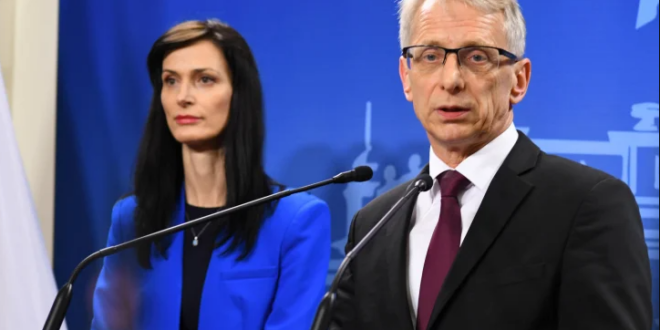
By voting for the Denkov-Gabriel cabinet, the situational dividing axis – for or against Boyko Borisov/GERB – was finally replaced by the new main dividing line in society. Those standing on different sides of the barricade, some of them created with the main purpose of changing (removing) the presence of the others, today already inhabit a common, coalition cabinet. Here is how we explained that it would happen in our text about the end of the political crisis:
"Waiting is actually waiting for things to sort themselves out. They are waiting as if a fat grant will come. For a large Euro-Atlantic coalition to happen, but one that can dominate for a while. Let Putler fight, with the votes of GERB (but without BB), is the dream formula."
And there, in fact, is buried the first opportunity to at least temporarily halt what is perceived as a political crisis, but is actually a phase of the ten-year rearrangement. Through a relatively stable government, created along the new dividing axis. A coalition not against Borisov (especially if he himself is inside), but against the enemies of the country's Euro-Atlantic choice.
Under the force of a combination of electoral hopelessness for some (clearly stated in the four-hour recording) and magnetic ambassadorial pressure for others – the Borisov glue has completely worn out. Hristo Ivanov and the party structures following him were ready for the turn years ago, and the replacement of the Prosecutor General allowed this to be stated publicly. The crowded Euro-Atlantic, globalist sector, the left in the new division, gathered in one place and created a cabinet of Atlantic maximalism, as Raskolnikov calls it.
The goals of the new government are directly set within the globalist ideological terrain– Schengen, the euro, weapons for Ukraine, a green deal and all the other societal changes in the package. The very existence of such a government will lead to a reaction in two directions – thinning the Euro-Atlantic vote and expanding the national-localist one.
The thinning will be mainly caused by the outright lie of We Continue the Change and Democratic Bulgaria, the hug with Borisov and the tender kiss with DPS/Peevski. However, it will be predicted by the very structure of the political division – not everyone can be on one side of the new axis. A binary balance is needed, which will occur one way or another. The swelling will come along the lines of what this cabinet has achieved – the more extreme the successes in imposing the globalist agenda, the more the voters of the other side will grow. The binary nature of politics in its full swing.
A quick example is the situation surrounding the referendum to preserve the lev. Those who signed up for the referendum are over 600,000, while the voters of the party representing this cause are 350,000. How quickly will the difference between the two numbers narrow upwards if the government or the majority in parliament manage to block, circumvent or render meaningless the holding of the referendum? Another example is the government's attitude towards the conflict in Ukraine. How many of the 800,000 members of the "red" political subculture (according to Dimitar Ganev) will recognize Vazrazhdane or return to the BSP if we give fighter jets and tanks to the Ukrainian army? The same thought experiment can be done with all the other initiatives prepared by the new coalition. Since Borisov is no longer a problem, there is nowhere to divert the reaction - it will feed the anti-globalists. In fact, the anti-Borisov vote itself has only one place to move.
With this cabinet, the Rubicon is crossed, we are marching steadily towards the completion of the process of rearrangement. Through it, we have a conscious and dominant political division, based on identity – capitalism and socialism are already topics of the past. The war in Ukraine played a major role, which accelerated the process and practically helped the glue Borisov to be left in history. In the background, somehow in the middle, the president will also freeze with his unclear position on the new division – both extremes consider him a man of the other camp.
Important elements of the previously hidden division have crystallized. The extreme globalist position has been clearly stated – constitutional reform that would turn Bulgaria into a protectorate of the European Union. A continuation of the thesis of Lyubo Datsov, who clarified his support for entering the eurozone as an important step towards the federalization of the EU, i.e. the final integration into a new super-state centered in Brussels. This vision will be contrasted with leaving NATO and renegotiating EU membership on the other side of the division.
What is going to happen? Electoral and public support for national-localist parties will grow. Let's see how Vazrajdane will manage to consume and master its swelling importance, without collapsing from it ala Siderov. Will Kostadinov be able to maneuver in the accelerating processes - not just to speak convincingly, but to act competently. We will find out whether the BSP will ultimately orient itself to what is happening, or will it continue to float in a political order that has already disappeared. We will see whether the cabinet will last more than a few months - to succeed in its goals and thus provoke the reaction we expect.
The globalist sector is overgrown and already cramped for all present, while the field of anti-globalists is emptying. Some will have to prune themselves, others to grow. Both processes will be difficult, but it will be especially difficult for national-localists to form something working on the basis of the schizo and LARP communities inherited in their niche. May the dark elves of Curtis Yarvin come to the rescue.
Finally, let's take into account two more elements - the aerobatics of the DPS, which can always lead to surprising consequences, as well as the shifts occurring in the criminal justice sector, from betrayals to murders. But they too, as well as, for example, the clash of Russophobes and Russophiles, will fit into the new division, taking their place in one of the two camps. This is what the smart-looking and the handsome have already done, finding themselves together, as has long been felt. A good farmer does not keep his sheep in two different places for long.
It turns out that once the rearrangement begins, (for) some the principle(s) are just pasta. But this should have been known…even from the previous historic compromise. The degree of tension will rise and this is already evident in the National Assembly and beyond. Resolving the political crisis will not lead to calm, but to even clearer and more intense lines of conflict. It is one thing to talk behind each other's backs, it is another to swear at each other face to face. Steve Davis clearly tells us that once it is fresh, the conflict is raw and sincere, until it dies down after a few decades until a new compromise, signaling the arrival of a new rearrangement.
Either way, it's more important to return to the present day, to the beginning of the cycle, where we are - we have a lot of gardening work ahead of us.
[1] https://ekipbg.com/politicheska-kriza/