EKIP– Expert Club for Economics and Politics A Different Opinion
Author: Georgi Angelov
Senior Economist, Open Society Institute – Sofia
When the Dieselgate scandal broke out in the US, a series of lawsuits were launched against Volkswagen – including class action lawsuits for damages, and fines were imposed. This is an important element of reducing pollution – the polluter must pay for his mistakes. However, there is another, more interesting aspect.
"Dieselgate" and its consequences for electric vehicles
A court settlement was reached, according to which the company is obliged to invest $ 2 billion in electric vehicle infrastructure in the United States. Volkswagen will build nearly 2,500 charging stations for electric vehicles and operate them on a commercial basis. In this way, the company will, on the one hand, generate revenue and profits from the management of this infrastructure, but on the other hand, it will also support the penetration of electric vehicles and, accordingly, reduce air pollution.
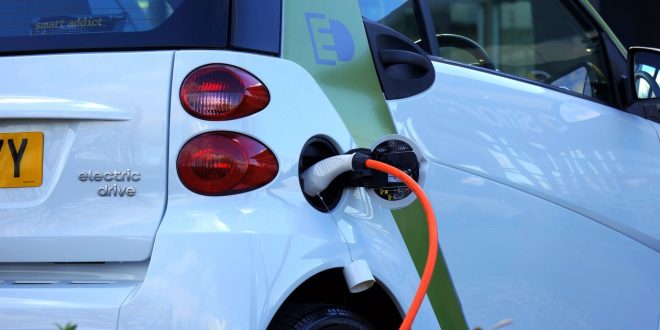
A major problem for electric cars is the lack of enough charging stations. Gas stations are everywhere, while charging stations for electric cars – and fast, high-power charging stations at that – are still rare. And a vicious circle results: if there are no charging stations, not many electric cars will be sold, and if electric cars are not sold, no one will invest in charging stations.
The Tesla company is solving the problem the expensive way: it has taken the plunge to invest in charging stations itself and already has over 7 thousand – but they can only be used by Tesla-branded cars. In markets where there is a large penetration of electric cars, there is sufficient private investment and chains of charging stations are being built. But where there is still no large share of electric cars, there is a problem. And it is this problem that is being solved by the agreement with Volkswagen – instead of the state paying, a private company pays it as part of the compensation for “dieselgate”.
Through pollution penalties to private investment in charging stations
In Germany, an initial attempt was made to do nothing about dieselgate, but this was not met with much enthusiasm by the general public. Some cities announced that they were considering banning old diesel cars entirely, and legal cases were also initiated to restrict the access of such cars to cities with pollution above the standards. When it became clear that some measures would not be enough, the car companies sat down for negotiations with the government and promised a voluntary program for buying old cars and discounts on the purchase of new ones (including electric ones).
Similar programs were later copied in other countries such as Austria and the UK. Through them, car companies buy old – and polluting – cars from their owners and give a significant discount when buying a new car. This way the car fleet is renewed and air pollution is reduced. There is also a separate program specifically to stimulate electric cars, with funding coming mainly from the car companies themselves. Those who caused the pollution bear the costs of reducing it. Again – with private funding, not government funds.
Restrictions on older, more polluting cars are becoming more widespread. In some cities, such as India, this is done through lawsuits, while in other places the decision is made by local authorities. This is reminiscent of the libertarian approach recommended by Murray Rothbard, to restrict polluting technologies not through government regulation, but through lawsuits. It is important to note here that usually the restriction of diesel/petrol cars is for those cities/areas where air pollution is above health standards – i.e. mainly in large cities and megacities. There it is also most effective to invest in electric buses, which is already a widespread practice in Chinese cities and is starting to spread to other countries.
The economy of electric vehicle batteries
One of the drawbacks of electric cars is the batteries – because they are still quite expensive, although they have been rapidly getting cheaper recently. But the battery is also an advantage because it allows you to store electricity, which allows for additional income from an unexpected source.
Recently, the new Nissan Leaf was introduced in Bulgaria, which is equipped with Vehicle-to-Grid (V2G) technology. It allows not only the battery to be charged from the electrical grid, but also vice versa - the battery to return electricity to the grid. In this way, a car can be charged when electricity is cheap (for example, at night) and return energy to the grid when electricity is expensive (at peak consumption). This allows the electric car to generate financial income when not in use. At the same time, in this way, electric cars do not burden the electrical grid, but on the contrary - they help balance and better use of existing capacities.
Several new companies are already offering this service in various Western countries – special software automatically manages the charging and return of electricity to the grid according to the current price of electricity. But this is possible in countries where the electricity market is liberalized and there are corresponding market signals. It turns out that the liberalization of the energy market is a big incentive for electric cars.