EKIP– Expert Club for Economics and Politics A Different Opinion
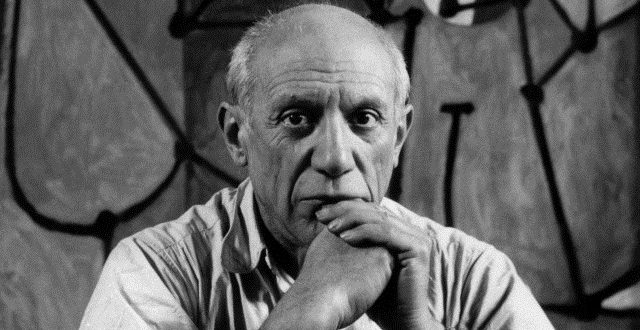
On October 25, 1881, Picasso, the most expensive and most stolen artist of the last 100 years, was born in Malaga, Spain. His full name was Pablo Diego José Francisco de Paula Juan Nepomuceno María de los Remedios Cipriano de la Santísima Trinidad Clito Ruiz y Picasso.
Picasso was a creative artist in every sense, creating over 20,000 paintings, drawings, sculptures and ceramics in various styles, and with Georges Braque he gave the world Cubism. Cubism is an avant-garde movement in art that completely rejects the classical idea of beauty - the objects depicted are often fragmented and presented from different angles.
Drawing became a part of Picasso's life from an early age. Learning from his father, he was absorbed in art and neglected his school lessons. His talent led him to the Royal Academy of Fine Arts "San Fernando" in Madrid, which he left soon after entering. In 1900, Pablo Picasso arrived in Paris for the first time, and four years later he settled in the artistic European capital permanently.
The artist is known for his "periods". The "blue" period lasted from 1901 to 1904 and was characterized by the themes of death, sadness, poverty and old age. The next three years were devoted to the "pink" period, in which the main characters were circus artists, and the colors were in the pink-red range. This was followed by the "African" period, the creation of Cubism, the return to Surrealism and later the Mediterranean period, which was inspired by the war. His works are tragic, denouncing and socially engaged. A strong aversion to violence is read in his works, and in 1940 Picasso himself joined the peace movement.
Picasso died on April 8, 1973, in Mougins, France.
"I act in painting as I act with things in life. If an open window looks bad, I draw a curtain and close it, just as I would in my own room. In painting, as in life, one must act directly."
- Picasso -