EKIP– Expert Club for Economics and Politics A Different Opinion
The history we are taught in school and presented to us by the daily media consists mostly of political events, processes, and leaders. The course of world history is viewed through the entire series of political processes, including declarations, revolutions, and elections. Thus, progress in it is measured through the prism of the actions of political figures.
They play a major role in our understanding of history, and today there is hardly a person who has not heard of the French Revolution of 1789 or the October Revolution of 1917, or the Peace of Westphalia that preceded them. All episodes of history, led by political figures with political significance. What they have in common is that they are significant events in the construction and governance of today's countries. They are the stories of statesmen, military leaders and revolutionaries leading social movements. We consider them the engines of history, pushing us towards development, growth and evolution.
A history not of political but of economic innovation
Austrian economist Ludwig von Mises summarized the story this way:
History is a record of human action. Human action is the conscious effort of man to replace unsatisfactory circumstances with more satisfactory ones. [1]
Human action consists of both changes and movements undertaken with the aim of improving the general condition of people in political terms, and innovations and changes in economic terms undertaken by entrepreneurs, inventors and ordinary citizens. They mark our history and, although we do not emphasize them as much, they still leave their mark on our lives; often in ways that we do not suspect.
All these ordinary citizens throughout history have continued their normal lives and work, despite the turmoil in the political scene, and have provided society with a wide variety of goods and services, as well as many new jobs. Among them, entrepreneurs and inventors stand out, who, with their own means, have influenced their fellow citizens and changed their lives. Let's look at a few such examples.
Three innovations with an unprecedented effect on our lives
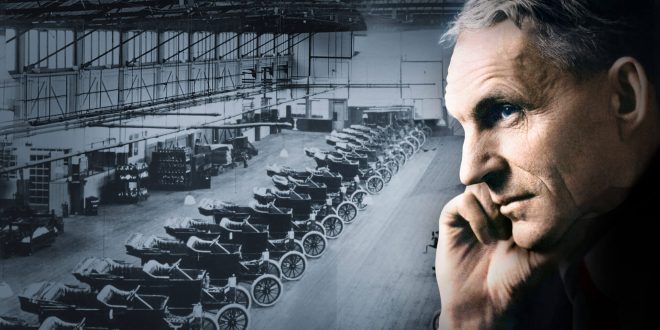
On May 8, 1858, the first successful transatlantic telegraph was made from Queen Victoria to President James Buchanan. In 1908, the first FORD Model T, manufactured in Henry Ford's factories in Detroit, was launched. It was the first automobile affordable to the common man.
In 1990, British entrepreneur Tim Berners-Lee founded the first World Wide Web, which was the beginning of the Internet, used everywhere in the world today. Such events are unknown to most people, and the dates themselves are not emphasized much in school, despite the overwhelming influence they have had on our lives. Something that is noticeable in Stephen Davis's lectures.[2] He begins each one with a parallel list of random dates (in chronological order) from our history. Invariably, dates related to political events receive a response from the audience, while those related to inventions and entrepreneurial successes are met with silence.
According to American historian Stephen Davis , such events are not only as important as the political milestones in our history, but in some respects they have shaped the world we live in to a much greater extent. It is a matter of debate which side of history plays a more important role, but it is worth considering the one dedicated to private efforts for progress, prosperity and wealth shared by all users. Let's take the first date as an example:
The first telecommunications revolution
Before the advent of the telegraph, the fastest way to send a letter over long distances was on the back of a galloping horse or aboard a ship. To send a letter from Europe across the ocean to America, you had to use a ship, which took at least 10 days, and there was a significant chance that the ship would sink. That's why people, until the 19th century, were extremely careful about which ships they boarded.
Suddenly , thanks to the telegraph, it became possible to send a message and have it received at any moment. This led to extraordinary changes, as well as the emergence of things unthinkable in the past; it allowed for the first time in history the development of world empires, governed from their center in a rapid and efficient manner.
According to Stephen Davis, the creation of the telegraph and the immeasurable reduction in the time required to deliver messages over long distances played a major role in the expansion of the British Empire to India.
How cheap cars are changing the lives of the average person
Another example is the beginning of mass production of automobiles. It is indescribable what an impact the ability to buy cars at low and affordable prices had on the lives of most people in cities. [3] A Ford model in 1913 cost the equivalent of four workers' salaries. [4]
Before the automobile, people living in cities were more or less limited by distance, as their only option was to walk, which took a significant amount of time and energy.[5] A horse (or carriage) could also be used, but it was a privilege of the wealthy, and it also left behind waste, which became a problem for city government.[6]
Jobs that were previously hindered by long distances are becoming accessible and providing populations with even greater diversity in earning an income. In this way, the connectivity of people from different parts of cities, countries, and even continents on which they live has increased dramatically, allowing for ever-increasing social and economic integration. Last but not least, the advent of the Internet, which has had a revolutionary effect on the flow, storage, and processing of information, as well as on the business industry; practically transforming our lives in every aspect.
What do all these events have in common?
At first glance, we see that all of these events represent one form or another of innovation, in which enterprising people, driven by the desire to make life easier and better, reinvent various of our everyday practices in irreversible ways. All of these events mark an increase in the variety of life experiences that people can have, i.e. making them massively more mobile and more connected to each other.
Until now, the social structures of societies have been dictated by circumstances beyond the control of the average person. Where you were born and who your parents were were the main factors that determined and significantly limited the development of your life. But with the advent of all these innovative goods and services, the opportunity has arisen for people to escape the limits set by predetermined facts and realize their full potential.
The decision of how their lives will unfold, as well as their choice of career, is increasingly being transferred into the hands of ordinary citizens, thus giving impetus to a new development of societies that starts from the bottom up, instead of following the dictates of a ruling class that has all the control over social mobility.
Gradually, things that in the past were considered a privilege bestowed upon a few are becoming goods and services available to everyone, regardless of their status.
For American historian Stephen Davis, these events are as important as political processes and state-building throughout history. They express the eternal quest to improve and perfect human life, through free thought and innovation. All such economic advances have broken through old-fashioned boundaries imposed by factors such as nationality, race, or religion, and have united people in the global trade of goods and services.
[1]Ludwig von Mises. Theory and History. 224 pages. [2]https://www.youtube.com/watch?v=K460eqYBio4&t=2120s [3] Crabgrass Frontier: The Suburbanization of the United States[4] Georgano, G.N. (2000).Vintage Cars 1886 to 1930. [5] Crabgrass Frontier: The Suburbanization of the United States [6] Waste and Want: A social History of Trash