EKIP– Expert Club for Economics and Politics A Different Opinion
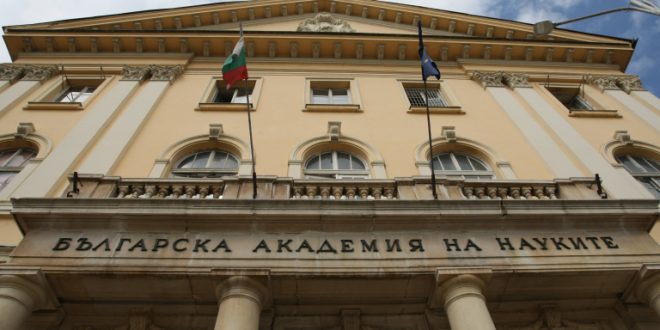
The origin of institutions does not directly determine their subsequent structure, functions and activities. Even the best ideas and most useful organizations can completely change and not correspond to the original principles and intentions of their creators. In a sense, such is the fate of the Bulgarian Academy of Sciences, which claims to be the successor to the Bulgarian Literary Society established in Braila in 1869.
The beginning
In modern economic history literature, it is accepted that the various scientific organizations and societies for the dissemination of useful knowledge played a decisive role in the Industrial Revolution in England and the associated positive changes in living standards. They gradually spread throughout Europe. In the decades before 1878, numerous organizations were also created in Bulgarian society to meet the growing cultural and spiritual needs of Bulgarians. Among the most notable are the community centers, the number of which reached 130, and the schools, which numbered between 1,500 and 2,000. None of them depended on state subsidies for at least two reasons. First, because the state was foreign, but above all because it was too weak to control all the activities of its subjects.
The gradual educational progress and the emergence of a thin, but still noticeable, layer of relatively well-educated Bulgarians before the Liberation led to the emergence of the idea of a society that would resemble the academies existing in Europe. It was discussed for a long time by various Revival figures, some of whom were in emigration, others in the Ottoman Empire. Among those involved in the issue can be mentioned Petar Beron, Georgi Rakovski, etc. Ultimately, the concrete work on the creation of a literary society began in 1867 by Vasil Stoyanov and Marin Drinov. They managed to attract the interest of wealthy Bulgarian emigrants, who committed themselves to financing the activities of the society.
At the end of September 1869, a meeting was held in Braila, at which the Bulgarian Literary Society was founded. Its Statute was also adopted. Article 2 of this document clearly formulated the goal of the organization " to spread general enlightenment among the Bulgarian people and to show them the way to their material enrichment." It is noteworthy that the ideas of enlightenment are directly linked to the possibilities for material prosperity of the Bulgarians. Obviously, in the minds of the founders there is no intention to develop science for the sake of science itself and to accumulate knowledge for the sake of knowledge itself. Its creators did not stop at linking educational with material progress. The society aims to support " the moral upbringing and development of youth of both sexes ", and also to work for the development of " the duties of man to himself, to his closest ones, to society, to the people, to society, to the state, etc. " The goals clearly show the aspiration of the founders of the society to support enlightenment, material progress and at the same time the development of civic consciousness and morality. And something typical of the Bulgarian Renaissance and not quite typical of the Orient - there is no gender discrimination.
The creation of the Bulgarian Literary Society (BLS) was not without problems. They were mainly rooted in its possible foreign policy orientation and in the possibilities for control over its financing. Nevertheless, the most important characteristic of the BLS was that it emerged as an expression of the self-organization of the Bulgarians without support from any state authority. The fact is that until the Liberation, the society's statutes were never approved by the Romanian authorities. Its support came entirely from donations and its own income.
The contradictions
The BKD attracted critical attention from various circles. Some of the criticism remains relevant today.
Even before the establishment of the company, the assistance of the famous entrepreneur and probably the richest Bulgarian before 1878 - Hristo Georgiev was sought. However, he had his objections and hesitations regarding the establishment of such an organization. His words are interesting: " It is true that our scientists are windy and chase big things, and we have no small ones." Two accents in Hristo Georgiev's words deserve attention. First of all, is the characterization he makes of intellectuals as windy people of big words. The successful entrepreneur and major donor correctly senses one of the typical characteristics of many intellectuals. They often play too frivolously with big words and ideas, without paying enough attention to their concrete implementation. Second, is the desire to progress by taking concrete small steps, without flying in the clouds.
The difficulties in the initial steps of the functioning of the BKD also provoked strong criticism from L. Karavelov and Hr. Botev. Both are among the most outspoken critics of the society. The positions from which they view the society are different from those of Hr. Georgiev. In his beliefs, Karavelov is close to classical liberalism and therefore approves the creation of the BKD, even participating in its founding meeting. Subsequently, however, he rejects some Turkophile political actions of the BKD. For Karavelov, and for Botev, the Ottoman Empire is not a liberal paradise, but a backward, sunk in religious fanaticism oriental despotism that hinders the development of the Bulgarian and other subject peoples. Karavelov also criticizes another important aspect of the BKD's activities. According to him, it should be much more directly oriented towards supporting mass education and the material upliftment of the Bulgarian people. In this sense, the positive sciences are more important for the BKD, and not so much the orientation towards the humanities, which is also present in the statute and is a main characteristic of the founders of the society. Botev, on the other hand, sharply criticizes the slowness and unfulfilled promises on the part of V. Stoyanov for regular publication of the society's publications.
Nationalization
The liberation of Bulgaria is also connected with the relocation of the BKD to the newly established Bulgarian Principality. In 1911, a decision was made to proclaim it the Bulgarian Academy of Sciences. In December of the same year, the XV ONS voted a Law on the Bulgarian Academy of Sciences with 7 members. According to Art. 1 of this law, it is an “independent and independent scientific institution”, but is under the patronage of the Bulgarian Tsar. In order to perform its functions, the academy receives 60,000 leva annually from the state. Financial dependence and personal patronage by the Bulgarian monarch are the first steps towards the de facto abolition of the independence of the former Bulgarian Literary Society. It is also noteworthy that the law does not mention a word about the work of the academy for the “material enrichment” of the Bulgarians.
In April 1940, in the conditions of World War II and growing state nationalism, the Law on the Bulgarian Academy of Sciences and Arts was adopted. The initiative for the change came from the Prime Minister and Minister of Public Education, Prof. Bogdan Filov. In his reasons before the National Assembly, Filov indicated that the purpose of the new law was to “ reorganize this higher scientific institute of ours, so that it can be better adapted to the contemporary cultural needs of our country.” Through the reorganization, the Academy will be able, according to Filov, “ to take a much more active part in the construction of our national culture.” The patronage of the monarch and state funding are preserved as essential characteristics of the academy.
Until September 1944, the steps towards nationalization of the academy were accompanied by at least partial preservation of its autonomy. The establishment of the communist regime in September of the same year was associated with a brutal purge and a real "pacification of reason". It was subordinated to the dominant Marxist-Leninist ideology, with copying of the Stalinist economic and cultural model in the country. Then the last remnants of independence were finally destroyed.
The famous Bulgarian historian Prof. Nikolay Genchev chronologically ends his "Short Funny History of Bulgaria" with the September events of 1944. His explanation for choosing this date is as follows: "From now on, Bulgarian history becomes so funny that describing it in a funny story is simply funny." The same applies to the history of the Bulgarian Academy of Sciences, which during the decades of socialism and then the transition never managed to return to its true roots.