EKIP– Expert Club for Economics and Politics A Different Opinion
For a nation to become rich, its entire population must be emancipated, not just the aristocracy.
Monarchism received a new impetus among libertarian and conservative circles after Hans-Hermann Hoppe's monumental work "Democracy - The God Who Failed". In it, the author criticizes the so-called "public ownership of the state", expressed in parliamentary democracy, and praises its "private ownership", specifically that of absolute monarchy.
Hoppe's thesis is that, like socialism and the tragedy of the commons, democracy encourages wastefulness and short-sightedness on the part of those in power because their positions are not permanent and hereditary, as in monarchy. That is, they govern, but they do not own the country. Therefore, they have no interest in treating taxpayers responsibly, in increasing their number and well-being.
History is not on the side of monarchists
If history is any guide, it points to the opposite. Absolute monarchies used the economic system of "mercantilism." Its name comes from the Latin "mercatare," which means "to trade." It involved the government imposing import duties and exporting subsidies in order to maintain a positive trade balance.
Mercantilism is based on the fallacy that when gold (the money of the time) enters a country, it becomes richer, and when it leaves, it becomes poorer. However, if this positive balance is artificially maintained, through import duties, then the goods in the country will become more expensive (local players will also raise their prices to make more profit). Whatever gold enters the country will have to go for more expensive goods, which means that the purchasing power of the population will remain the same.
In Western Europe, mercantilism was the dominant economic theory in the 16th to 18th centuries. In addition to trade restrictions, it also inherited from the Middle Ages the craft guilds. These were monarch-sponsored cartels that united all producers in a given sector. Production without being a member of the guild was prohibited. Guild membership was hereditary and inaccessible to most people outside of it. Thus, the guilds could keep their prices high without being embarrassed by competition, which stifled the rest of the economy. The guilds, in turn, repaid the monarch with generous payments, which he in turn used for his conquests abroad. It was corruption on steroids.
The end of privileges
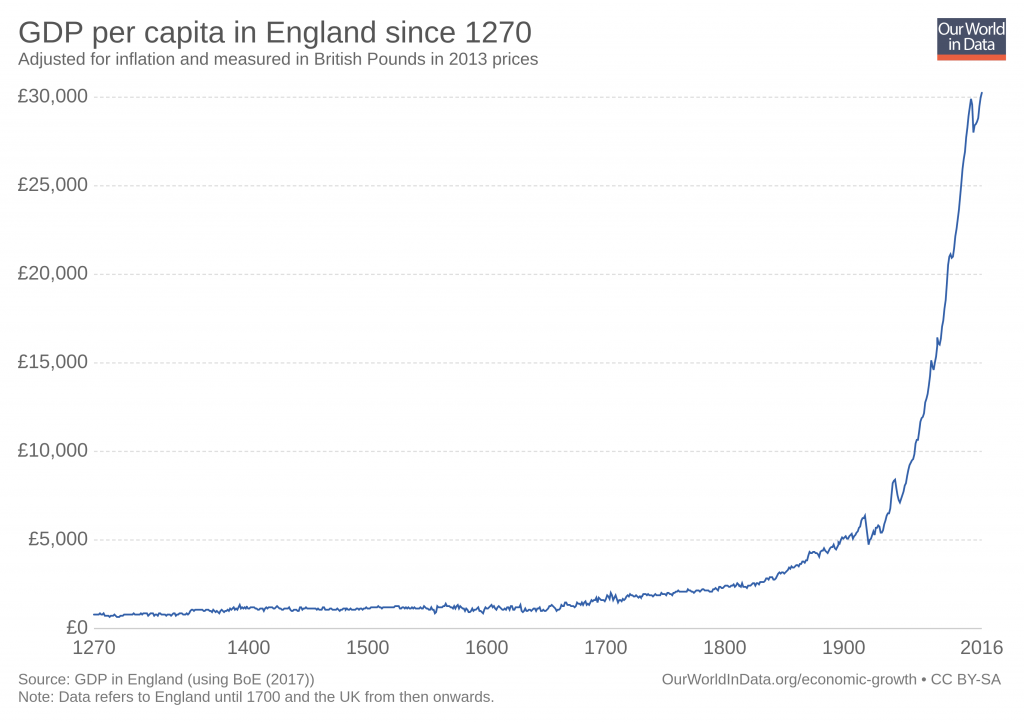
Against this backdrop, it is no wonder that incomes in Western Europe stagnated throughout the 16th and 17th centuries. To reverse the trend, it was necessary to introduce the rule of law. Something that the monarchy proved incapable of doing. But when it was introduced, it set in motion the process that led to the cosmic rocketing of incomes and wealth around the world – the Industrial Revolution.
Chart 1: Dynamics of GDP per capita in England from 1270 to the present
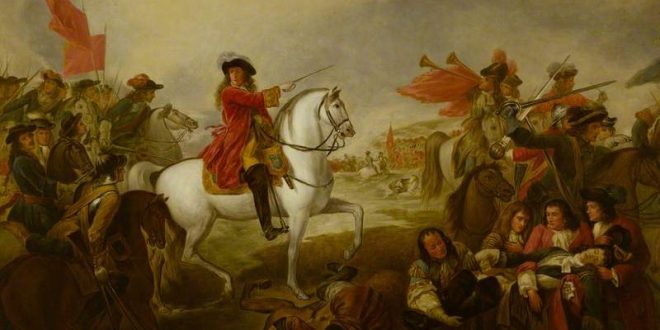
If the creation of the legal, impartial state can be marked by one specific event that marks its beginning, it would be the Glorious Revolution in Britain in 1688. Then, at the invitation of a group of parliamentarians, the Dutch stadtholder William of Orange arrived in England with a fleet and an army and almost bloodlessly overthrew the Catholic James II, who subsequently fled the country. The events that followed limited the power of the monarch, prohibiting him from raising taxes, repealing laws and maintaining a standing army in peacetime without the permission of parliament. These reforms were expressed in the passage of the Bill of Rights in 1689. It forever removed the possibility of a return to the Catholic monarchy on the Island. The law also represented a reaffirmation of the Magna Carta of 1216.
График 2: Реалните доходи по паритет на покупателната способност от 1500 г. до 1950 г. 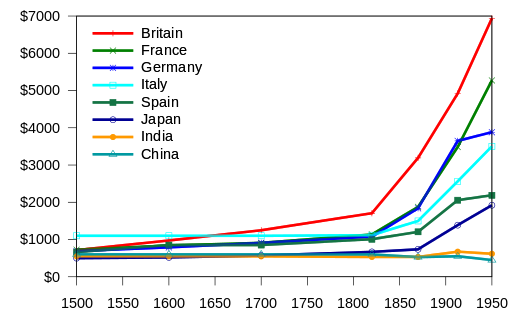
Източник: Essays in Macro-Economic History by Angus Maddison, Oxford University Press, 2007, ISBN 978-0-19-922721-1, p. 382, Table A.7.
In the years that followed, Parliament began to abolish guild privileges and protectionist laws, fearing that it would lose its hard-won rights. The rest is history. This event can be seen as the symbolic beginning of capitalism. For it, it is not enough to simply have private property. It must also be inviolable. But why had kings failed in this endeavor in the centuries before?
Kings really did behave like parasites
Because private ownership of the state does not imply its development to infinity with low taxes and the establishment of impartial laws, as if it were a business. In fact, many businessmen at some point sell their businesses and retire with the income from the sale. They simply do not need that much money. It is the same with kings - at some point they begin to worry more about retaining their power than about leaving more money in the pockets of their subjects, and accordingly - increasing the tax base and future tax revenues.
From here on, with taxpayers' money, they began to buy support and influence, building an aristocracy around themselves, masking their thefts with "Divine Right."
The result is there – in the two centuries before the Glorious Revolution, wages in Britain barely budged, despite the considerable technological gains of a thousand years of the Middle Ages. Real incomes exploded only afterwards. And in Italy, the bastion of papism, real incomes barely budged from the 16th to the 19th century. So much for the thesis that private property was not a value, but only a means.