 EKIP– Expert Club for Economics and Politics A Different Opinion
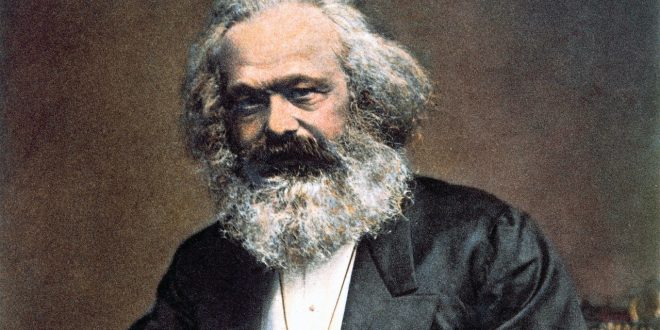
Despite its obvious failures in the twentieth century, Marxism remains one of the most widely accepted political and economic ideologies of our time. Western democracies have adopted many of the principles and policies advocated by Marx and his followers, and many postcolonial developing countries have built their societies on socialist doctrines. This status quo suggests that Karl Marx’s criticisms of capitalism are at least somewhat plausible, and that there is a realistic alternative to private property and the free market. After all, if so many people in the world are striving to put these ideas into practice, we might conclude that they have at least some value, right?
This is far from the truth. The reasons for the continued widespread spread of socialism are deep and complex, and I would not like to delve into them in this article, but we can safely conclude that they are not economic. The countries that have implemented Marx’s economic theories are among the poorest and most underdeveloped countries in the world and suffer from chronic crises. The latest addition to the long list of failed Marxist experiments is Venezuela. The South American country has the largest oil reserves in the world, yet suffers from mass poverty.
The reasons why Marx's critique of capitalism is unconvincing are numerous. In this article, I will examine two of the most fundamental errors of Marxist philosophy - the concept of "exploitation" and the theory of the origin and nature of private property.
Is capitalism exploitation?
Let's consider Marx's claim that capitalism is a system based on exploitation. In his book, New Ideas from Dead Economists, former Bush Jr. economic policy director Todd Buchholz aptly summarizes the Marxist view of the relationship between owners and workers:
“In feudal times, lords had claims on the produce of the peasantry. Under capitalism, factory and landowners have rights over the produce of their workers. The survival of the ruling class depends on the work of the subordinate class. Are the workers in a good bargaining position? No.”
The comparison between feudal lords and landowners and factory owners is deeply flawed. Feudal lords held a monopoly on the labor of their peasants. This monopoly was enforced by force of law, that is, by physical force. In a competitive capitalist system, owners and workers negotiate the terms of their voluntary contract. Workers have a wide choice of employers willing to purchase their labor, as well as the option of working for themselves (by starting their own business, for example). They could also choose not to work at all. This fundamental freedom of contract and association between individuals in a capitalist economy in which private property rights are consistently enforced means that such a system cannot be called “exploitative,” since there is no coercion.
But even feudal relations are not based entirely on exploitation. Historically, feudal arrangements between peasants and lords emerged to provide security. The abuse of power characteristic of late feudalism stems from the fact that lords monopolized the service of “security” and became an appendage of the state. This monopoly is not a characteristic of a capitalist economy that relies on competition. For these reasons, it is a mistake to equate feudal exploitation with capitalist production.
Free market capitalism is a system of enterprises in which workers, managers, and owners are in harmonious relationships. Let's consider the position of workers in a free capitalist enterprise, since Marx and his followers focused primarily on the well-being of the working class. Workers are the people who put their labor into the production process. This process would not be possible without property and capital. Take the factory as an example. The input of workers - physical labor - is a key part of production. But without the land on which the factory is built and without capital investment in machinery and tools, the workers would not be able to produce anything.
For this reason, the land, equipment, and capital that owners provide are very valuable to workers, and they pay for these things with the surplus of their labor. The use of this surplus is not theft, as Marxists claim. It is a currency in the daily internal commerce of the enterprise, since workers could not produce and therefore earn money without managers and owners. Under free-market capitalism, enterprises are based on the joint cooperation of diverse individuals and groups united by a common goal - to improve the well-being of their customers.
Marxists tend to ignore an important fact that refutes their claims that the capitalist system is “repressive” and clearly demonstrates the inadequacy of their economic model. Under capitalism, workers are free to organize and form workers’ collectives and cooperative enterprises. Property could be distributed equally and management decisions could be made democratically. There are certainly many examples of such enterprises and organizations. The fact that, although permitted, this type of non-hierarchical organizational structure is not very common highlights their inherent shortcomings, especially when it comes to production. Democratic enterprises are simply not as productive and successful as those built on a hierarchical principle.
It seems that it is most optimal for the working class to transfer responsibility for management decisions and the risk associated with ownership to others, as this allows them to specialize better and be more productive. Apart from these problems, the very fact that such organizational structures are permitted in the capitalist system means that it cannot be characterized as “repressive.” In fact, the Marxist socialist system is repressive because it imposes a single economic model, most often through state violence. Under capitalism, anyone who wants to can live according to Marxist principles. It is obvious that when people are free, they do not choose to organize their lives in this way, because they do not believe that it is in their best interest.
The origin of private property
Marx and his followers are mistaken about another fundamental aspect of capitalism: the right to private property. Marxists argue that these rights are simply social constructs that legitimize the existing oppressive order. They believe that inequalities are the product of this oppressive order, and that the natural state of the community is material equality among all its members.
This view of the origin of private property and rights is superficial. The source of private property is nature (or God, for those with different metaphysical views). If we conceptualize property as “legitimate control,” it follows that the primary form of private property is our own bodies. Because of this fact, private property precedes all forms of social organization, whether voluntary (family, community) or involuntary (state). But is it possible for private property to be natural but the rights to it to be entirely the product of social convention?
No. Looking again at the body, it is not possible for one person to completely control the body of another. Even slaves exercise some element of free will that compels them to do the bidding of their masters. Their natural rights are almost completely trampled upon by the social convention of slavery, but the natural state of man allows them to retain some minimal freedom through private ownership of their bodies.
The natural extension of the right of private property in the body is the right of private property in what is produced by it. Logic dictates that every product should belong to the one who has taken the risk and invested time and labor in its production. Free trade between people is also a logical consequence of their private property. Once a person has legitimate control over what he has produced, he can keep it for himself or give it away or exchange it for something else.
As we see, the foundations of capitalism - private property and free trade - are the natural state of man. Human hierarchies are also natural, and not simply a product of the social environment, since people are not born with the same physical and intellectual characteristics, and some have innate advantages. Civilized societies cultivate these natural differences between people and build hierarchies based on competence, not on force or superstition, as Marxists claim.
These hierarchies are both fair and efficient, as they place capable and talented people in positions that maximize prosperity and increase the wealth of all members of society. Free market capitalism is the best tool for building such dynamic hierarchies based on competence. And statism is the best tool for building static hierarchies based on force and superstition.
This disregard for the foundations of human nature, the mechanics of the natural order, and natural laws and rights is the cause of the failed Marxist social experiments of the twentieth and twenty-first centuries. The leftist belief that every person is born “tabula raza” and that all inequalities are the product of a repressive social order was empirically rejected almost immediately after the establishment of the first communist regimes. Once in power, Marxists quickly realized that the way of life they proposed was in sharp conflict with the natural instincts of the vast majority of people.
Over the following decades, they used violence on a massive scale in an attempt to change human nature, committing the most horrific atrocities in human history. The Holodomor was an attempt to apply Marxist principles to agricultural production. The Cultural Revolution and the Great Leap Forward in China were attempts to completely erase the memory of the repressive imperial past and to reorganize society along Marxist lines. Hundreds of millions of lives were destroyed in the Marxists' attempts to realize their utopia. Their failure is not surprising - no ideology or religion can oppose natural human instincts.
Conclusion
The reasons for the failure of Marxism are many. In this article I have outlined two of the most fundamental ones - a misunderstanding of the relationships between participants in capitalist production and a misunderstanding of some fundamentals of human nature. We often hear that communism and socialism are “good ideas in theory, but terrible in practice.” People who claim this either did not understand Marx’s ideas or they have a desire to try to apply the theory in the “right” way. The reality is that Marx made serious mistakes at a basic theoretical level. The appallingly destructive results of the application of Marxist principles in practice are due precisely to these fundamental errors in theory, and not to a misinterpretation of Marxist ideas by communists and socialists.
Marx's critique of capitalism is not convincing. Nevertheless, I recommend that everyone read his works; their value lies in their ability to provoke thought and serve as a tool for understanding leftist utopian thinking.






When criticizing, first read a little of his work. Conclusions cannot be drawn from general talk about the free market. Slavery has many forms, as does ignorance. The truth shines when your statements are examined specifically in life. Society does not copy nature, the big ones eat the small ones, it needs something more. Then why do we need social systems, parties, revolutions, crises, wars and oil.