EKIP– Expert Club for Economics and Politics A Different Opinion
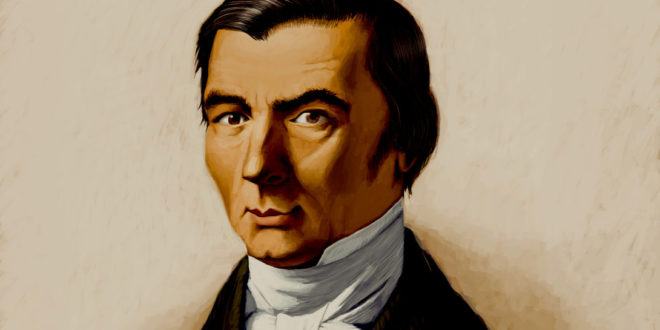
In the mid-19th century, the French economist Frederic Bastiat gave perhaps the most brilliant definition of what a state is. It is “the fiction by which everyone wants to live at the expense of everyone else.” At the same time, another French-speaking economist, Gustave de Molinari, wrote an article in which he questioned the state monopoly in the production of security. He posed the question: if we accept that competition is the best known means of supplying goods and services, why resort to a state monopoly in the supply of security? In the 20th and early 21st centuries, the provocative thoughts of Molinari and Bastiat were further developed by anarcho-capitalists. They denied the need for a state without rejecting private property.
Among the arguments against anarcho-capitalists is the claim that it is difficult to find successful communities without a state organization. The argument is unconvincing. There are many examples of the existence of order without a state. Among them are the Bogomil communes in the Middle Ages, the haidush bands during the Ottoman rule, the pirates, the so-called Wild West in America, etc. Here we will briefly present some more or less successful stateless structures. Their history will help to answer the questions: is order possible without a state and are anarcho-capitalists crazy?
Far, far away
A classic example of a functioning stateless community is medieval Iceland from approximately 930 to 1262. It was settled mainly by Norwegian Vikings and by inhabitants of present-day Ireland and Scotland, and in 1262 it was conquered by Norway. After the settlement, the local chieftains realized the need for order. They created a parliament with judicial power. The execution of sentences was placed in private hands, seats in parliament could be bought. There is no evidence that the level of violence under the conditions of private execution of sentences was higher than in medieval European states. Crimes such as rape, murder of women and children were even less common. The freedom-loving Vikings did not want to tolerate a king or some kind of chieftain over them, so they did not create a monarchy. The executive power and state army were absent.
Several elements of life in Iceland during the stateless period show that there was a fairly good order there for its time. First of all, the population grew. It is assumed that by 930 it was between 55,000 and 60,000 people, and by 1262 it was approximately 80,000. From a modern perspective, the increase is not impressive, but it is typical for the Middle Ages. Another important detail - the Norwegian king taxed his subjects who emigrated to Iceland. This shows that the stateless territory attracted settlers. The conclusion from these facts is that the population of Iceland lived no worse than those included in state structures. Probably even better.
Modern researchers have made efforts to compare the quality of life of Icelanders with that of Norwegians, Irish, English, Swedes and Scots. One of the indicators of comparison is average height. It is known that people who are better fed, especially in early childhood, are taller than those who are malnourished. Based on archaeological data, it is established that Icelanders, for the period from the 10th to the 13th century, were probably taller than the then inhabitants of Norway and of present-day Scotland, Ireland and Denmark. Only the inhabitants of present-day Sweden are taller than Icelanders. It seems that the standard of living in Iceland is better than in most countries with similar natural and climatic conditions. Other calculations indicate that the real incomes of Icelanders are approximately equal to those of the English.
It is noteworthy that the Christianization of Iceland in 1000 took place as a peaceful and conflict-free process. It was the result of mutual consent and compromise on the part of all inhabitants. With the adoption of Christianity, slavery was abolished, but some pagan remnants were preserved in everyday culture. For comparison, we will recall that the conversion of Bulgaria was a unilateral decision of its ruler and caused an anti-Christian rebellion, which Prince Boris dealt with cruelly.
Back to the Balkans and how to (temporarily) sneak through the slaps
In July 1878, the famous Treaty of Berlin was signed. It regulated the changes in the situation of the Ottoman Empire after the end of the Russo-Turkish War of 1877-1878. A large part of the treaty concerns the fate of the Bulgarians, but it contains a number of provisions that concern the entire Balkan Peninsula. According to the treaty, the border between Austria-Hungary and Romania on the one hand and Serbia and Bulgaria on the other runs along the thalweg, i.e. the deepest part of the Danube River.
It turns out that there is a territorial unit that seems to have been left in the lurch. On the Danube River, after the so-called Iron Gates on the border between Serbia, Romania and Austria-Hungary, there is the large island of Ada-Kale, inhabited by Turks, between 3,500 and 4,000 people. Before the Treaty of Berlin, there was a Turkish military unit there. After the signing of the treaty, this military unit was withdrawn to the borders of the Ottoman Empire, and the Sultan lost his power there. Another peculiarity of the island is that the two arms of the Danube River that surround it are approximately the same and it is not easy to determine where the thalweg is and, accordingly, which country Ada-Kale should fall into. For 20 years, after the signing of the Treaty of Berlin, the island remained forgotten and stateless.
During this twenty-year period, the inhabitants of the island arranged their lives as they saw fit. Their livelihood was partly in agriculture, partly in trade, some were employed as boatmen, cafe owners, servants on the Danube steamers, and all of them were smugglers. The island had no mayor, governor, officials, army, police, customs officers, prison, or even a court. No taxes were paid. Insofar as any legal disputes arose, they were resolved on the basis of traditional law by the local hodja. A general assembly of the inhabitants hired teachers and the hodja. The local inhabitants paid their salaries through self-taxation. It is striking that life in the town proceeded peacefully. Only after the withdrawal of the Turkish authorities were some robberies noted, but the robbers were caught and forced to return the loot. According to the memories of contemporaries, the shops in the town were well stocked, the goods were cheap, the town itself was quite clean and tidy, the residents were helpful and hospitable, and private property was well protected.
In July 1898, an Austro-Hungarian army landed on the island and Ada-Kale was annexed to the Habsburg Empire.
The Country of "Freedom or Death"
This is how the French journalist Albert Londre called Pirin Macedonia in the early 1930s. He was not particularly fond of what he saw in the region, but the name was accurate. Pirin Macedonia was annexed to Bulgaria after the wars of the second decade of the 20th century. The Bulgarian population in Macedonia, guided by the classical liberal principle of self-determination, has been waging an armed struggle against the Ottoman Empire since the end of the 19th century. Its goal is autonomy for Macedonia with national rights for all its inhabitants.
After the end of World War I, Macedonia was divided between Serbia, Greece and Bulgaria. The Internal Macedonian Revolutionary Organization (IMRO), led by Todor Aleksandrov and after him by Ivan Mihaylov, continued the struggle for autonomy. According to Ivan Mihaylov, the idea was to turn Macedonia into the Switzerland of the Balkans, without denationalizing regimes towards the local Bulgarians. The implementation of the plans meant the separation of Pirin Macedonia from Bulgaria and its incorporation into the future Macedonian Federation. As modern researchers of the issue specify, this struggle was largely doomed to failure.
For a period of approximately 12 years, in Pirin Macedonia, the VMRO built a practically independent region from the central government in Bulgaria. In it, the VMRO dispensed justice, collected taxes, defended the local population, limited corruption and administrative arbitrariness, banditry and party squabbles. Huts were built, and some infrastructure projects were implemented. The local population was armed and constituted a kind of militia, which had the main merit of repelling the Greek armed attack against Bulgaria in 1925. The activities of the VMRO were not without flaws. It certainly did not appeal to the centralist and authoritarian-minded Bulgarian state patriots. After the military coup of May 19, 1934, the VMRO, along with all political parties, was outlawed, and the state authorities regained control over the region.
The conclusions
From the above cases it is obvious that individual small communities are able to self-organize, to maintain an acceptable order and standard of living. The state is the aggressive party, because it destroys structures independent of it. Based on the facts presented, a more general conclusion can be drawn. In certain conditions and to achieve their goals, small decentralized communities can make adequate decisions. They overcome the shortcomings of the central administrative authority, which, even if well-intentioned, does not have all the necessary information to govern with orders. The development of such concepts brought Elinor Ostrom the first Nobel Prize for Economics to a woman in 2009. She is not an anarcho-capitalist, but in the end it turns out that anarcho-capitalists are not crazy or utopian, and their ideas should be taken seriously.
P. Penchev