EKIP– Expert Club for Economics and Politics A Different Opinion
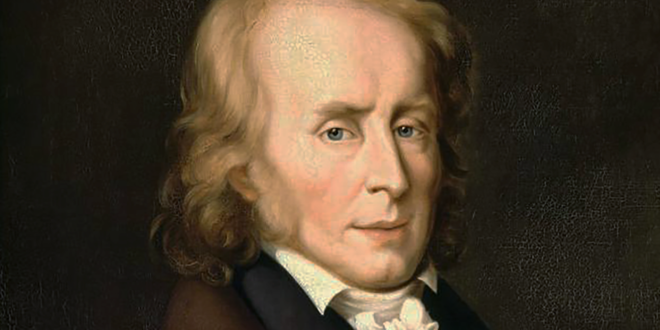
Author: Stefan Boyadzhiev
“Variety is life, uniformity is death.”
Benjamin Constant is one of the most notable and colorful representatives of the generation of classical liberals between Montesquieu and Tocqueville. Unfortunately, to a large extent he shares the fate of another great French thinker, Frédéric Bastiat, and remains poorly recognized by future generations, which corresponds to the decline of the old continental liberal thought. If he is not completely forgotten, it is mainly due to the popularity of his article, in which, trying to emphasize the importance of free trade for the development of civilization and the erroneous modern approach, he uses the statist doctrine belittling individual freedom in ancient societies, which, although a sin, has important political significance in opposition to the ultra-royalists, and his speech in 1819 before the Athenee Royal, becomes a kind of liberal manifesto. Roger Scruton himself does not include him in the "Dictionary of Politics", but eventually corrects this mistake sixteen years later, when he admits that he has undeservedly underestimated him.
Constant was seriously influenced by the Scottish Enlightenment, whose authors and works (E. Burke, D. Hume, Blackstone, E. Gibbon, A. Smith, A. Ferguson and D. Stuart) he became acquainted with when he went to Edinburgh, where he completed his education, and the legends of his exploits there did not fade for the next few decades. His book "Political Principles of All Forms of Government" was initially a translation accompanied by a commentary of Godwin's "An Inquiry Concerning Political Justice", later it grew into a commentary on A. Smith's "Wealth of Nations", and eventually became an essay on the Hundred Days of "Benjamin". This work of his is a broad summary of his philosophical ideas and political experience from the Great French Revolution and the reign of Napoleon. The principles he upholds are the inviolability of private property (but warns that it must also be protected by capitalists, who, being speculators by trade, are not averse to speculating about laws), religious and individual freedom (“...religious tolerance once intellectually established, it remains for the state to direct its repression towards imposing its dogma, not on grounds of unbelief, but anti-sociality”), freedom of speech and the press (a kind of substitute for political rights and freedoms where they are lacking). But above all, being an Anglophile like Montesquieu*, the rule of law and a fierce critic of popular sovereignty (“...it is wrong to think that if something touches all the members of a society, it means that it is in the public interest; it is quite possible that it affects them only and solely as separate individuals”). For him, public opinion is a magic ring around political power that it can never break ("...when the French want to be repressors, they rely on the historical legacy of the Franks and Goths, but when they are repressed, they revise the narrative, relying on the same, but already wronged, Franks and Goths").
B. Constant's intimate life is no less intriguing than his political and literary career, insofar as such a boundary exists at all with him. His first marriage was to Wilhelmina von Kram, a lady-in-waiting to the Duke of Brunswick, to whom he was an advisor. Meanwhile, his mistress was Charlotte von Hardenburg, whom he married secretly fifteen years later. In 1794, he met Madame de Staël, daughter of the financier and statesman Jacques Necker, which led to his separation from his first wife. This is one of the most intriguing, politically influential and intellectual romantic relationships. According to Sismondi, no one truly knew her unless they had seen her in her salon with Constant by her side, nor could they have recognized him after her last lesson. De Staël herself was not only a leading intellectual, but also one of the most influential political figures in France, and even all of Europe. Her early circle and leading candidates for her hand in marriage included William Pitt the Younger, Edward Gibbon, and Jacques-Antoine Hippolyte. A few decades later, she completely enchanted Lord Byron, who placed her on a par with Emperor Alexander I as the most significant phenomenon in London in 1813-1814. After her return to Paris, her salon gathered the Russian emperor, the Humboldt brothers, Talleyrand, the Duke of Wellington, and other notable contemporaries.
With her patronage, Constant began his political career in Paris. He opposed both the royalist counter-revolutionaries and the Jacobins. In 1797, he participated in the creation of the influential political club "Cercle Constitutionnel" along with the abbot Sieyès, Talleyrand, Cabaniss, Danou and a number of other notable figures. At this time, he probably met Condorcet, whom he recognized as his teacher. Unsuccessfully courted by Napoleon, his unshakable liberal convictions and such close ties, such as that with probably the most significant French economist Jean-Baptiste Say, are part of the reasons why he and Madame de Staël fell out of favor with the future emperor (regardless of the favor of Joseph and Lucien Bonaparte) and fled to Switzerland and Germany. There they met Goethe, Schiller, the von Schlegel brothers and were understandably strongly influenced by German romanticism. Constant entered into another, and in this case most destructive, love affair with Jeanne Recarmier, considered the most beautiful European woman of the time and a friend of De Staël. It was Juliette who later managed to win him over to the new liberal leanings of the resurgent Napoleon and persuade him to become his conseiller d'etat.
There is a pun that the only constant thing in him is his love of freedom. And every great passion makes a man blind to everything else, except its object. In his autobiographical novel Adolphe he writes: "Woe to the man who, in the first moments of a love affair, does not believe that it will last forever! Woe to the one who, even in the arms of a mistress who has just given herself to him, maintains a presentiment of impending troubles and foresees the future separation!" Upon the triumphant return of Napoleon I, he admits that he cannot be the same tyrant and, in complete contrast to the returned royalists**, will tactfully provide free and representative government. In this spirit, he composed the most liberal constitution of that time - the "Additional Act to the Constitution of the Empire, the already mentioned "Benjamin", and along with this, as a commentary on it, he completely completed the draft of "Political Principles", from which a book, a chapter and several fragments can be read below.
* Born in Lausanne, Switzerland, raised and educated there, Germany and Scotland, Madame de Staël herself, in a love letter to him, accused him of never becoming French like her. Ironically, she herself was not so different from him in this respect.
** who prove that "they have learned nothing new and forgotten nothing old" in the words of Talleyrand
* * *
"For the support provided by the state."
A regime based on subsidies and various types of support has fewer drawbacks than one based on state monopolies, but it seems to me ultimately dangerous in a number of respects.
First, everyone should be afraid when the state government assumes the right to interfere in private affairs. Regardless of whether this is done only through various types of support, if incentives are not enough, coercive means and other harsh measures will be used. State authorities rarely give up their vindictive revanchism born of the failure of their own policies and, desperate as gamblers, try to prove their rightness. And while the latter rely on luck, the state relies on force.
Secondly, there is the fear that government, by its unusual incentives, may divert funds from their natural destination, where they are always most useful. Resources always move independently and harmoniously to where they will be most useful. There is no need for intervention to redirect them. Support for those who are expected to fail would be fatal. Any industry incapable of self-sustaining existence without government aid ends up as second-rate. In this way the government pays individuals to work at a loss and provides them with a kind of security, the repayment of which can only be ensured by taxation, which means that individuals ultimately bear this burden. Finally, government support seriously undermines the moral foundations of the working people. Morality is built on the natural coherence of causes and effects. The disruption of this coherence causes harm. Anything that introduces chance into the relations between people leads to their corruption. Everything that is not the direct, necessary, and usual effect of a cause, more or less, belongs to gambling. What makes work the most effective consideration for the moral foundations of the workers is the independence of other people and the way in which one relies on one's own conduct, the order, continuity, and regularity which it gives to life. This is the real basis of the moral superiority of those groups of people who are daily occupied with work, and the reason for the immorality so characteristic of beggars and gamblers. The latter are of all people the most morally reprehensible because they rely primarily on chance.
State support and assistance are a kind of game. It is impossible to suppose that the authorities never extend their help and support to people who are not entitled to them or that they never provide more than the objects of these benefits deserve. Even a single mistake of this kind turns support into a lottery. Even the mere existence of a potential opportunity is enough to introduce a gamble into all calculations and therefore destabilize. The probability of chance is of no importance, because imagination always pushes aside calculations. Even the distant and uncertain hope of state support throws into the life of the toiling man an element very different from the rest of his existence. His situation changes, his interests become confused. His condition becomes open to a kind of speculation. He is no longer the same balanced merchant or manufacturer who achieved success through the prudence of his assumptions, the quality of his production, the approval of his fellow citizens granted for his truthful behavior and common sense. This is a man whose immediate interest and compulsive passion is to attract the attention of the state to himself. The nature of things, for the good of the human race, had once placed an insurmountable barrier between the vast majority of people and those who hold power. Only a small number of people were condemned to run hither and thither in the political sphere, to speculate for approval and to enrich themselves by corruption. The rest went their way quietly, demanding from the state that they should be guaranteed peace and freedom to exercise the skills and talents at their disposal. But the authorities, however, not satisfied with such a useful function, bind themselves by generosity and public promises, provoke hopes and create passions that did not exist before, and thus turn everything upside down. This undoubtedly gives rise to a new kind of activism in business circles. It is a fraudulent activism, even more interested in the external effects it produces than in the solid basis of its own production; which pursues public attention rather than success, because it sees success as possible even if only through cheap publicity; activism which in a short time turns the entire nation into reckless, restless and greedy, rather than the prosperous and hardworking it would otherwise be.
And do not imagine that by substituting material incentives for vainglorious motives you will be less harmful. State authorities often enough rely on charlatanism. It is easy for them to believe that their very presence is enough, like the sun, to enliven all nature. Therefore they love ostentation, to talk and smile, convinced that their results should be celebrated for centuries. But again, this means that those who work are torn from their natural occupation. It means that the need for credit is artificially created in them; that their desire is encouraged to replace commercial ones with servile relationships, those of cliental dependence on the state. Thus they will not only learn all the vices of the court, but they will not even acquire the elegance of servility that usually veils them.
Two hypothetical situations that undoubtedly most predispose to a regime of state intervention or support. One is the establishment of a production still unknown in the country and requiring an excessively large initial investment, and the other when assistance must be provided to certain social strata or businesses in the event of unforeseen disasters that have significantly limited their resources.
I am not convinced, however, that even in these two cases, except perhaps in extremely rare circumstances for which it is impossible to establish fixed rules, state intervention is not more harmful than helpful.
In the first hypothesis, the new production will be established more quickly and extensively, but resting on state aid rather than on independent activity, its foundation will be more fragile. In this way, these same individuals, insured by the state against potential losses, will not invest themselves with the same aspiration and care as if they were left alone, relying on their own abilities and having no way of hoping for any success other than that which they deserve. They are rightly fooled precisely by the fact that the state, having once committed itself to the sacrifice of certain resources, will come to their aid again, if only not to lose its initial investment. It is precisely this constantly creeping thought, which is different in nature from that which should serve to deter every hopeless undertaking, that will more or less noticeably harm their effort and activity.
Moreover, in countries accustomed to artificial support from the state, it is too hasty to assume that this or that undertaking exceeds individual capabilities. This is the second reason for the stagnation of an industry. It waits for incentives from the state because it has become accustomed to the authorities making the first move.
In England, a discovery is seldom known before a sufficient number of subscriptions have furnished the inventor with the means of development and application. The whole idea is that these subscribers examine the promised advantages far more carefully than the state ever could, because the personal interest of those engaged in business on their own account is not to allow themselves to be cheated, while the whole speculative interest of those who rely on the state is to cheat it. Work and success are the only means at the disposal of the former. The exaggerations and patronage characteristic of the latter are a far safer and, above all, a quicker way. Chronic reliance on foreign aid is fundamentally immoral in this respect.
It is true that independent initiative, when cut off from all external assistance, sometimes freezes under the pressure of various obstacles. But first, it will turn to other projects and, secondly, it will undoubtedly regroup its resources and so, sooner or later, it will return to the offensive, overcoming the difficulties. Thus, my conviction is that such a partial and short-term obstacle is nothing compared to the disadvantages of the general disorder and lack of continuity in ideas and individual calculations to which all artificial assistance leads.
The logic is almost identical with the second hypothesis, which at first glance seems even more legitimate and favorable. While coming to the aid of merchants and farmers whose resources have been exhausted by unavoidable and unavoidable circumstances, the state above all weakens in them the feeling that contributes most to their morale and energy, namely, to rely on themselves and to place hope exclusively in their own abilities. Such external support encourages the injured and distressed classes to exaggerate their losses and conceal their capabilities, thus opening up an additional incentive for fraudulent behavior. I agree that such assistance can be provided wisely and sparingly, but if we should not dispute the effect on their well-being, it is just as reasonable to dispute its effect on their morale. The state will undoubtedly teach them to rely on others instead of on themselves alone. In the end, they will again be disappointed in their hopes [by the concrete expression of state support], but at the same time their diligence will be weakened and their honesty will suffer. If they have not received enough of the state aid, it will be because they have not mastered a sufficiently skillful deception.
Finally, the state, because of all this, runs the risk of being deceived by unreliable officials. It cannot follow up in detail the execution of all its orders, and cunning is always more skillful than any supervision. Frederick the Great and Catherine II provided a system of subsidies for agriculture and industry. They often visited the provinces they thought they were helping. The people on the roads they passed were greeted by well-dressed and guarded people organized by those who actually carried out the distribution of alms, as a visual proof of the well-being resulting from their generosity. While the real inhabitants of these regions suffered in the depths of their dugouts and their constant poverty, unsuspecting the intentions of their rulers, who in turn thought of themselves as benefactors.
In countries with constitutional freedoms, the question of the policy of incentives and support on the part of the state can be considered from another point of view. Is it beneficial for a public administration to attach to itself a certain group of the governed by a tossed-up alms, which, even if wisely distributed, remains essentially arbitrary? Shouldn't there be a fear that such a group, seduced by an immediate and positive advantage, might become indifferent to individual freedom and justice? Everyone would be right to assume that they are employed by the state for anti-social activities.
* * *
("On the state protection of educational activities" - fragment)
Let us compare the progress of French and German literature in Berlin under Frederick II. No ruler was more sincere in his desire for the development of the human spirit. He welcomed the Academy to prove that error can never be useful. Convinced that the literature of his country was in its earliest stage of development, he attracted to his court all the masters of the pen of France. He won them over with honors and riches. He gave them that acquaintance with the powerful and great of the day, which is known to throw most people into a sweet intoxication. The French works that came out of his court, however, were always mediocre and superficial. The genius of Frederick II never understood the autonomous character of any government. It is true that his protégés repeated philosophical ideas, but only because they were recognizable slogans of their time, but truths always remain sterile when they are produced to order. They wrote bold lines, but with trembling hands, unsure of the conclusions they might draw, and with inexhaustible anxiety they constantly consulted their leaders. Voltaire himself made a brief visit to these literary circles, prompted by royal patronage. But Voltaire was never a creature in need of protection and always a force in his own right. There was no room for two rulers, so he left the monarch to protect his humble literary children in peace.
The German writers neglected by Frederick had no share in his encouragement and material benefits. They worked only for the public and for themselves. And it is to them that the German public owes the high degree of enlightenment it has achieved. And the merits of their work are due to the neglectful attitude of the state.
* * *
("The Duty of Enlightened Individuals During Revolutions" - fragment)
Revolutions seldom begin before the friends of liberty have split into two factions. On one side are the moderates, on the other the zealots. The latter remain united for a long time by their impulse and absorbed in the common idea. The moderates, however, without any prevailing impulse and conviction, easily succumb to personal calculations and reasonings. Pride awakens in them, their courage is shaken, their resistance exhausted, personal advantage, which was repelled for a moment, now possesses them completely. Cowardice has a thousand manifestations and disguises itself in a thousand ways, only to hide itself from its own gaze. It calls itself not only prudence, reason, wisdom, and knowledge of the valuable things in life, but sometimes it also assumes the title of independence. How many people have I seen abandon the weakest, but also the most just party, on the ground, in their own words, that they are too independent to be associated with any party. This choice of words always foreshadowed that at some point they would join the stronger side, and their proclamations of independence were simply the proud phraseology of cowardice.
References:
"Constitutionalism and Democracy" - Georgi Bliznashki; 2009
"Encyclopedia of Political Thought" (Blackwell) publishing house "LIK"
„Principles of Politics Applicable to All Governments” - Benjamin Constant; 2003
“Germaine de Stae: A Political Portrait” - Biancamaria Fontana; 2016
“Dictionary of Political Thought” - Roger Scruton; 2008
“Letters of Madame de Stael to Benjamin Constant&other mementos left by Mme. Chralotte Constant” - edited by Baroness Elizabeth de Nolde; 1906