EKIP– Expert Club for Economics and Politics A Different Opinion
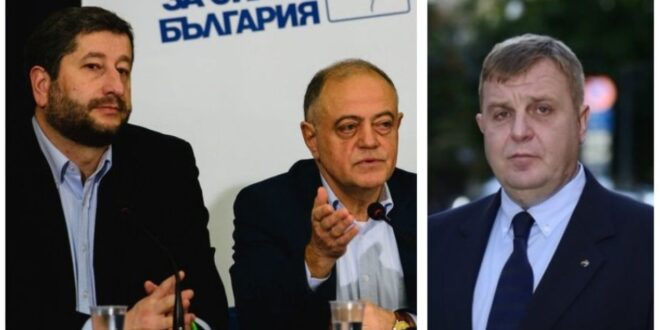
There are a little more than 2 weeks left until the elections. For every Bulgarian with a (un)healthy interest in politics, 2 things are striking – the almost complete lack of campaigns by most participants, and the blurred “field” of new formations. A closer look at these new formations draws attention to something else – the lack of any significant differences.
It is hardly surprising that many of these newly hatched formations are striving to occupy the right side of the political spectrum – on the one hand, we have the increasingly losing momentum colossus GERB, which would leave a huge vacuum that needs to be filled. On the other hand, since 2017, several cases have passed through Bulgaria that were a good litmus test, giving political candidates a direction as to where the political orientation of a significant portion of Bulgarian citizens lies.
At first, this was the ultimatum set by Emmanuel Macron regarding Bulgaria's membership in Schengen only if Bulgaria stopped competing on price with France and other Western European countries, in particular in the transport business. In the end, the so-called "Mobility" package was adopted by the EP last year, but after 3 years of opposition and nearly a year of appeal - something that would not have been possible without strong civil pressure. More about the "Mobility" case here.
Second, it was the Istanbul Convention, whose proposals for changes in legislation were met with almost immediate resistance from the majority of citizens. More about the Istanbul Convention here.
Third, but not least, is the “Strategy for the Child 2019-2030”, which, despite being supported by over 250 NGOs, was nipped in the bud due to the violent public reaction it provoked. It didn’t help that the document, as it was presented, was also unconstitutional.
The commonality between the above events and reactions is obviously that Bulgarian society is reluctant to be modeled after Western models, and even less so according to the modeled wishes of various NGOs. And it is also obviously more conservative than even the local “broad” conservatives in the government have thought on several occasions, as a result of which the upheavals came unexpectedly and could lead to their party entering the opposition.
From here we also see the transformation of some “broad” conservatives into “narrow” ones, carrying messages of protection of the traditional Bulgarian family (Petar Moskov’s KOD), or formations like Tsvetanov’s “Republicans”, trying to occupy both types of conservatism simultaneously, similar to a certain other party, of which Tsvetanov was a part in the recent past. “Attack” underwent an Orthodox-Christian rebranding, while VMRO and NFSB timidly continue with their already well-trodden strategy of firmly pro-EU nationalism.
Judging by the behavior of the leaders of these parties, as well as their candidates, there is a particular discomfort, inexplicable to me for a long time (after all, Covid gave even the most incompetent politicians a chance to remain in power..), but also somewhat understandable. These individuals know what the people want and know that they cannot give it to them. It can also be said that some of them are aware that they are an obstacle to the solution, but the lack of courage and capacity speaks for itself.
Below in the article I will list cases with which these “monkeys” could have brought broad public support, but for various reasons (in my opinion – mostly lack of balls), they did not. I will skip topics like “Radical judicial reform”, since this is already a topic present in the program of every Bulgarian party, along with topics like “radical digitalization”.
“ Where is Janek?”
This is a slogan chanted by thousands of citizens of Dupnitsa online following the kidnapping of Janek Milanov late on the evening of July 31, 2020 by the local mafia and his subsequent disappearance without a trace. The mobilization of local people, both locally and online, was almost instantaneous and was followed by reports in major media outlets such as bTV and Kapital. Despite subsequent investigations, both by the media and law enforcement, the results were zero and Janek's fate remains unclear.
A funny cynical moment is that in the same year 2020, a coalition named “Mutri Veng!” was born, which had the incredible chance to ride the above event and the lack of permission and use it to prove its goals. Naturally, neither the aforementioned coalition nor any other party is talking about the issue.
Water in Pernik
A case that could easily have been used for a premature overthrow of the government, after the 11th largest city in Bulgaria was practically left without permanent water for more than a year. The case is still without a complete solution and recently the city's residents have also had to pay more for water, without a real opportunity to choose an alternative service provider - something that could have been a very useful option after the complete failure of the Water and Sewerage Company to provide an acceptable standard of service. Not only did none of the parties or candidates address the issue, or even the possibility of this sector being privatized, but there also seemed to be no significant resistance to the newly established by the state Water and Sewerage Holding, which is a measure in the opposite direction and can only lead to aggravation of the already existing problems with water supply, not only in Pernik, but also in the country.
Homeschooling
Another case study whose absence from the public debate should astonish us all. First of all, because the pandemic situation has shown that the organizational cost of the whole thing is far from as huge as was thought. Of course, the argument that on-site education should be completely replaced with home-based education is insane, but the lack of will to make home-based education a free choice for every parent is crystal clear. And in 2022 and beyond , Bulgaria will remain a country without any significant alternative to state education. Why is this not a topic more deeply addressed in the programs of the new candidate-governors?
And for dessert – a topic that is simultaneously touched upon in many programs, but is not actually addressed in any of them. This in itself could also be the subject of an article.
Dealing with the demographic crisis
The democratic crisis is already a cliché that every party at least mentions as its goal, in an indefinite future. If they are lazily asked the question “How will you manage?” they begin to mechanically list all kinds of social benefits and incentives that are supposed to make people have more children.
And not a single mention of the main reason there is a demographic crisis at all – the fact that Bulgaria ranks first in terms of abortions performed per capita in Europe, and one of the top places in the world, with 21.3 abortions per 1,000 population. Considering the negative growth of minus 49,545 people according to the latest NSI data, if we add abortions, Bulgaria has negative growth solely due to the high frequency of abortions in the country.
Given this fact, it is interesting to note the complete lack of participation by politicians on the topic in the sphere of public debate. To clarify, this should be data that every so-called “conservative” concerned about the country’s shrinking population is familiar with – after all, the children who are mass-aborted are viable, healthy Bulgarians, ready to serve their country. But they are not, because these people are not really concerned about any of these things, and they do not share the principles they claim to share.