EKIP– Expert Club for Economics and Politics A Different Opinion
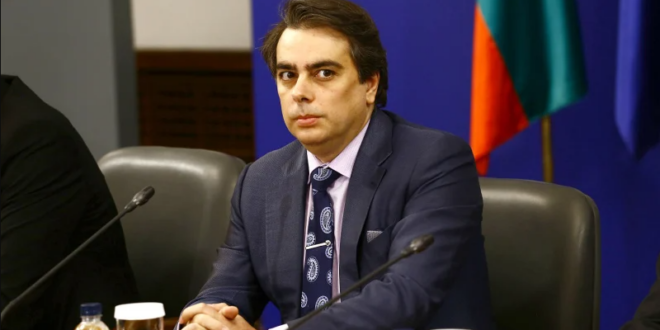
In the context of the already numerous internal conflicts in the ruling coalition, which have been going on for months, another one has been brewing in recent weeks, this time regarding the possible introduction of the euro in Bulgaria from January 2024. At the beginning of the month, Finance Minister Assen Vassilev (from "We Continue the Change") tried to push through the introduction of the plan for adopting the euro through the Council of Ministers, without clear public communication and without discussion in parliament. This was immediately opposed by Lyubomir Karimanski from "There Is Such a People", who is the chairman of the parliamentary committee on budget and finance. The ITN insists that the plan be considered in parliament before it is adopted. And although the PP seems to have agreed, last weekend Iva Miteva from the ITN revealed to the media that the plan has once again been introduced as an item in the next session of the Council of Ministers on May 25.
Beyond the stubbornness of the representatives of “Continuing Change”, it is even more puzzling that there is talk of approving a plan for the adoption of the euro before any official, public analysis of the pros and cons of such a step is available. What is the logic of adopting a plan for a given policy if there is no prior analysis of its potential impact on Bulgaria? Have you heard of this happening in any other context? Have you heard of any law being adopted without an impact assessment? Of course not, that would be absurd and irresponsible, even for relatively minor legislative decisions.
But when it comes to something as fundamental as currency policy, such an important decision regarding what happens to the country's currency is made without such an assessment. Although organizations like EKIP have been demanding for years that such an analysis be prepared and we emphasize that this is a standard step in other European countries. The Central Bank of Poland, for example, prepared such an analysis for the first time in 2004 and since then has periodically published new analyses on the pros and cons for Poland of joining the eurozone. When you prepare a plan for implementing a given policy without having analyzed the potential consequences of this policy, you are putting the cart before the horse in the most irresponsible way possible for a statesman.
Moreover. This case is so important and fundamental for the future economic and political development of Bulgaria that the standards for analyzing the potential consequences of adopting the euro should be much stricter. If we are clearly aware of the gravity of this decision, it should be preceded by detailed impact analyses, both by the government itself and by the central bank. And this is the absolute minimum that Bulgarian society should demand.
In fact, if we are really serious about the topic (as we should be), analyses should also be prepared by other institutions – private and public. As the main representative of the scientific and academic community in the country, the Bulgarian Academy of Sciences should certainly also be involved. Academics in the field of economics from the largest and most prestigious universities such as Sofia University, UNWE, Plovdiv University, etc. should also be consulted. Trade unions and employer organizations should of course also present their own positions and comments.
Only after all public and private institutions representing the widest possible range of public interests have expressed their views on the topic with their own impact analyses can a final decision be made. And this is the sanitary minimum. The public discussion that follows from the consideration and discussion of these analyses between the government and public and private experts and organizations should prepare the ground for a national consultation of Bulgarian citizens.
This would happen in a developed and democratic country. The brazen cynicism of the supporters of joining the euro without such a public debate and without holding a referendum is remarkable, who then explain how if it is not in the eurozone, Bulgaria cannot be considered a developed European democracy. If we are really serious about these claims about the future development of the country in this direction, we ourselves must make efforts to make this happen. And the best way to start is with the topic of the future of the national currency, which is of fundamental historical importance. This may be the most important decision that Bulgaria will make in the 21st century.
From the very beginning of the negotiation process regarding potential accession to the eurozone, the lack of transparency and democracy have been the most obvious problems. Government discussions and negotiations with European institutions have been taking place behind closed doors for over 4 years now, with little or no subsequent public communication. This is something that is high time to change.
Fortunately, there are parties in the current ruling coalition that seem to want the discussions around the euro to be more transparent. I suppose that is why Lyubomir Karimanski from ITN insisted that the plan for adopting the euro be considered in parliament, and not just in the Council of Ministers. This is a very good proposal. But I must repeat again – before considering a plan, an analysis of the consequences of the change in the currency regime itself must be made.
Some might argue that there is no way to do analysis before there is an adopted plan, but that is switching places between two different cases. Changing the current currency regime to that of the eurozone is a completely separate case from how exactly to make that change happen. The decision whether to change the currency requires one analysis, how exactly to make that change requires another. Analyzing the process is not the same as analyzing the decision itself.
A political decision in itself may be good, but the plan for its implementation may be bad, and vice versa. The two things should not be confused. Currently, too many Bulgarian politicians have made the decision that Bulgaria should enter the eurozone without having any objective justification for it. Even parties that disagree on almost every other topic, and are sworn political enemies, such as “Continuing Change” and GERB, are of the same position on this issue. But of course, no one has provided an objective analysis of the pros and cons of joining the eurozone. No government, neither GERB nor PP, has commissioned such an analysis. Why?
When the Ministry of Finance and the Bulgarian National Bank are ready with an analysis of the consequences for Bulgaria of joining the eurozone, the National Assembly can begin to discuss whether, when and how this should happen. I emphasize – such an analysis would be only the beginning of the public debate. The end of this debate should be a referendum in which the Bulgarian people, the “sovereign”, as Slavi Trifonov likes to repeat, make a sovereign decision about the future of their own currency. Only after this decision has been made, and it is that the euro will be adopted, can we talk about drawing up a plan for how exactly this will happen.