 EKIP– Expert Club for Economics and Politics A Different Opinion
The extent to which governments have taken on the daunting task of protecting people’s health is staggering. The latest – and rather absurd – example is the EU’s intention to limit the amount of cinnamon in food [1] on the grounds that it contains a toxic substance that could pose a threat to human health. This measure had a strong impact in Denmark, as its introduction would mean the end of the production and sale of traditional local cinnamon rolls.
Let’s set aside the absurdity of the context for a moment and consider what these types of policies actually are. This is a whole range of nanny state behavior adopted by most Western democracies, namely banning or restricting access to certain products, foods, beverages, and substances in the name of public health. Another typical behavior is the imposition of state standards for food content (remember the Bulgarian “Stara Planina”). Whether it’s banning trans fats, high-sugar drinks, “poisonous” spices, or introducing standards for the size and angle of cucumbers [2], these types of regulations are pretty pointless because:
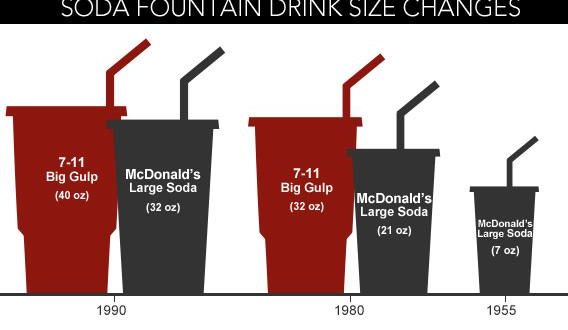
1) At this point, they are extremely easy to circumvent and ignore. For example, Sweden managed to get around the cinnamon restrictions by declaring its cinnamon rolls a “national dish” (which, for some reason, makes it less dangerous to health?). Other such regulations are even more unenforceable, for example, the popular ban in New York on the sale of soft drinks larger than 470 ml, which is circumvented by… buying two 330 ml drinks.
2) Such regulations lead to distortions in the food market. The example of the sausage quality standard introduced in 2010 in Bulgaria is particularly telling – at the beginning, the price of “Stara Planina” sausages was higher than that of the others, and accordingly, the companies whose products met the standards had higher profits than the others. Over time, however, consumers switched to other, cheaper sausages not covered by the state standard [3], and accordingly, fewer and fewer companies remain that comply with the standard. Direct bans on various products can lead to much more serious consequences, such as the closure of companies and the disappearance of entire industries (yes, along with those working in them).
3) Any regulation is the fruit of the work of politicians and specialists (in this case, health professionals), which in turn is paid for with tax revenues. In other words, any such legislative action represents a waste of taxpayer investment in creating unenforceable and non-working restrictions and standards and, accordingly, directing fewer resources to more important areas [4]. Whether we assume that the political apparatus can at all direct resources in a productive direction is a highly debatable issue.
Even if we leave aside the above arguments against the introduction of standards and bans on the production and sale of food, political interference in what and how we consume is a gross violation of personal freedom. As in many other debates (the legalization of drugs, for example), the key question here is whether the individual owns his body and whether he has the right to dispose of it as he sees fit, or (and) does he have “obligations” to the state in this area. If it were a question of positive action on the part of regulatory authorities, then we would not be talking about bans, but about recommendations and advice “for a better life”. However, a ban invariably represents a negative measure and a restriction of personal freedom, i.e. the presumption from which legislators proceed is that they have the right to dispose of citizens’ bodies.
The important question we need to answer is to what extent our bodies are our property and to what extent they are the property of the state. To what extent would the state want to take care of them – various medical studies point to possible harm from a wide variety of food products and supplements? And even if the bans are relatively few for now – and completely random – perhaps the day is not far off when we will only have access to a “health ministry-approved menu.”
In this sense, officials should be kept away from the kitchen. Taking care of the health and lives of individuals is their sole responsibility, and eating one thing or another is their personal choice.
[1] http://www.telegraph.co.uk/news/worldnews/europe/eu/10538172/Traditional-Danish-pastries-threatened-by-EU-cinnamon-ban.html
[2] According to a now-defunct EU standard, cucumbers sold should be curled no more than 10mm for every 10cm of length.
[3] http://www.investor.bg/ikonomika-i-politika/332/a/zalezyt-na-mesnite-produkti-proizvedeni-po-standart-stara-planina,150626/
[4] As long as we accept in general that there needs to be a redistribution of funds through a state apparatus.





Okay, what a stupid article? If there is no control over food products, we will eat a lot of harmful things without realizing it. Or not, we will find out, but in 20 years: )
The thesis of the article is wrong, and the arguments that are proposed show an elementary understanding of economic science. Argument #2 - The food market is already distorted because it suffers from what economists call market failures. Specifically, when it comes to food products, there is a huge asymmetry of the information that the producer has and that which the consumer has. This asymmetry does not allow a free market to reach the optimal allocation of resources. Therefore, state intervention in these markets is needed to ensure product quality.
#3 - Public investment in this work by politicians and professionals is most likely to create competitive returns and increase productivity, especially in the long run. This stems mainly from improved consumer health. Such regulations can also lead to a more stable food industry as a whole by preventing epidemics and health scandals (for example, in the meat industry).
I hope that in the future you will give a more serious assessment of the presence of market imperfections in your analyses.
Some information asymmetry exists in every type of exchange, which is why manufacturers create brands, write labels, and chains select their suppliers, because this asymmetry usually lasts for a short time - until you try the product and like/dislike it. Grocery sellers have nothing to hide that would distort the market. Not to mention that it is absurd to expect officials to deal with asymmetric information? How exactly would that work?
Public investment in what labor? In looking for the straightest cucumber? In telling someone how much cinnamon to use? Does that increase productivity?
I see a lot of empty phrases 🙂