 EKIP– Expert Club for Economics and Politics A Different Opinion
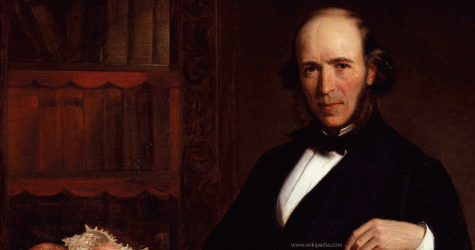
Herbert Spencer
Let us suppose, for the sake of argument, that, in some Malthusian panic, legislators pass a law that all children born in the next ten years will be drowned. Does anyone think such a law would be justified? If not, there are clearly limits to the power of the majority.
Let us suppose, again, that of two races living together—Celts and Saxons, for example—the more numerous one decides to make the representatives of the other its slaves. Will the rule of the majority be valid in this case? If not, there must be something to which the rule of the numerous group is subordinated. Let us suppose, again, that all the people with an annual income of under £50 decide to put a ceiling on their income and to use the principal for common needs. Can their decision be justified? If not, then for the third time it must be admitted that there must be a law to which the choice of the majority is to be referred. What, then, is this law, if not the law of perfect equality— the law of equal liberty?
Those limitations which will reduce the power of the majority are precisely the limitations imposed by this law (of equal liberty). We deny the right of the greater body of men to kill, to enslave, or to rob, precisely because murder, slavery, and robbery violate this law—violations too great to be ignored. But if great transgressions are wrong, so are small ones.
If the will of the majority in these cases cannot be stronger than the first principle of morality, it cannot be in any other situation. So, no matter how insignificant the minority is and no matter how small the violation of their rights, any such violation of the law is impermissible.
"When we make the constitution perfectly democratic," reasoned the earnest reformer, "we shall have brought government into harmony with absolute justice." This logic, though very useful for its time, is entirely erroneous. Coercion can in no way be made just. The freest form of government is, at best, that which arouses the least objection.
The power of the minority over the majority is called tyranny; the power of the majority over the minority is also tyranny, though not so strong. "You shall do as we will, not as you will!" is in any case an immoral declaration; and if 100 men impose themselves upon 99 instead of 99 men over 100, it is only one idea less moral. Whichever of the two factions carries out this declaration and imposes itself upon the other, it necessarily violates the law of equal liberty; the only difference is that in the one case the law is violated by 99 men, and in the other by 100. And the merit of the democratic form of government consists in this alone—it permits the violation of the law to the prejudice of the smaller group.
The very existence of majorities and minorities is an indicator of an immoral state. The man who is in harmony with the moral law is the one who can achieve complete happiness without diminishing the happiness of his fellows. But the carrying out of public affairs by vote means that society is not composed of such men—it means that the desires of some cannot be achieved without sacrificing the desires of others—it means that in seeking their happiness the majority will inflict a certain amount of misery on the minority—it means, therefore, organic immorality. Thus, from another point of view, we again conclude that even in its most just form, government is incapable of distinguishing itself from evil; and, further, that if we have no right to reject the State, its actions are inherently criminal.
* The text is an excerpt from the full essay of the same name, which you can soon expect in the full library of translated and Bulgarian literature on the website of the Bulgarian Libertarian Society






I should point out that people consider it "democratic" to believe that minorities should have rights. They think that this is part of democracy.
In fact, this is a completely UNdemocratic principle: It says that a minority can have rights regardless of the opinion of the majority. De facto, the existence of such a principle in a democratic state violates precisely the basic democratic principle.
In other words: there is nothing democratic about the principle of minority rights. It is simply an external addition to protect democracy from itself (from the bad consequences if it is applied consistently). With this principle people say (without understanding): If we apply democratic principles consistently, there will be very bad consequences: violence, oppression, murders, etc. Therefore, let's pretend not to see and assume that minority rights are "democratic".