EKIP– Expert Club for Economics and Politics A Different Opinion
An interesting article appeared in the electronic version of Sega, discussing the possibilities (or impossibilities) of implementing a reform on the issue of the prohibition of the use, possession and sale of narcotic substances. It is useful to consider some of the theses presented in the text.
At the end of the second paragraph, the author states:
Instead, the whole debate has shown that by legalizing it [the problem of drug addiction, author's note], the state will eliminate one of society's most serious and complex problems in one fell swoop. As if this has ever happened in history.
The above statement is fundamentally wrong. We have a historical example of how the lifting of a state ban on the use of a popular drug has eliminated a serious and complex social problem. Moreover, this case is well documented in terms of statistics and even seriously developed as a topic in the entertainment industry. We are talking about Prohibition in the United States of America.
The magnitude of the problem can be seen from the numbers. With the introduction of the ban on the production and sale of alcohol, murders in the country reached their peak in 1933 (the last year of Prohibition) - 10 cases per 100,000 people, which is a serious jump - from 6.5 per 100,000 people in 1920 (the first year of Prohibition). After the lifting of the ban, there was a gradual decline in criminal activity and in 1940. [1] we have reached the old levels from before the regime.
During this period, crime not only increased, but became much better organized, thanks to the solid and constant income that came from the practical monopoly on a highly sought-after commodity. It is no coincidence that classic mafia structures such as the Chicago Mafia or figures such as Luciano and Al Capone rose to prominence during Prohibition.
Another interesting point to note is the surge in consumption of hard liquor at the expense of wine and other less alcoholic beverages. Before Prohibition, American consumers spent 40% of all their alcohol spending on concentrated spirits. This changed between 1921 and 1934, when about 90% of all alcohol spending went to whiskey, gin, and rum, rather than wine and beer. Of course, after 1933 things gradually returned to pre-Prohibition levels and remained there for decades to come. [2]
The above phenomenon is easily explained – when a substance is illegal, the incentive for producers and users is to be able to transport, sell and use it in a more concentrated form. American researcher Mark Thorton in his book “The Economics of Prohibition” has noticed something similar happening with the prohibition that we have to this day – narcotic substances are becoming more and more concentrated. The economic incentive for those exchanging on the black market is to create stronger per unit mass and therefore more dangerous substances for the body in order to avoid the capture of their goods. Smaller in volume loads are easier to hide from the police and competition.
And alcohol during Prohibition was indeed dangerous. One early-century statistic shows that deaths from poisoned alcohol in 1925 were 4,154, compared with 1,064 in 1920—a quadrupling of the problem. Prohibition also led people to turn to medicinal alcohol, which was available only with a prescription. Sales of such products (95% alcohol) by doctors increased by 400% between 1923 and 1931. [3]
To the problems already listed that the lifting of prohibition solves, we can add overcrowded prisons, gigantic political corruption at all levels of government, ruined legal businesses, alcoholism caused by the changed drinking culture, and much more. In other words, it can hardly be argued that the repeal of insane prohibitions does not solve serious social problems.
Below in his statement, the author from Sega newspaper seemingly agrees with the thesis that the legalization of drugs would eliminate serious problems, such as crime. However, according to him, there is one "but":
First of all, the drug market will never be free. Let's be honest - most people have strong prejudices against drugs and even if they allow their legalization, they will want very serious and detailed regulations for all related activities.
[…]
The result [..] will be the most heavily administered market this country has ever seen. And we all know what that means - expensive production that will only encourage smuggling. Even now, this is clearly seen in all legal excise goods.
And indeed, too heavy regulation of a certain market creates demand for goods that are beyond the costly control of the state and high excise taxes. We see this both with cigarettes and with alcohol. But such a situation is incomparably better than that with marijuana, cocaine or hallucinogenic mushrooms, because there is a huge bright market, because there is no police persecution, because you can buy it legally and even because there is widespread domestic production without criminal structures (such a small market with low margins is not particularly attractive to criminal elements).
The article ends with the following paragraph:
"Bulgarian society and the state are not ready for legalization, which would require effective regulation by an uncorrupted state administration. Legalizing sales in the current situation would create conditions for the creation of monopolies dominated by mafia groups, which would be even worse than the current situation," the movement states. And they propose decriminalization - a more successful option that could be considered.
Both the alcohol and cigarette markets, and the market for other types of narcotics, do not need any form of state regulation. None of the possible regulatory functions (quality monitoring, excise tax collection, issuing permits) of the state are currently being performed, and somehow the drug market works. Moreover, where the state interferes, the biggest problems come - the police hit free entrepreneurs and small fish, but they stretch umbrellas over the large criminal structure and in every way hinder those who try to work as honest traders. And we still have monopolies (or rather, partial, territorial monopolies) and they are controlled by mafia groups.
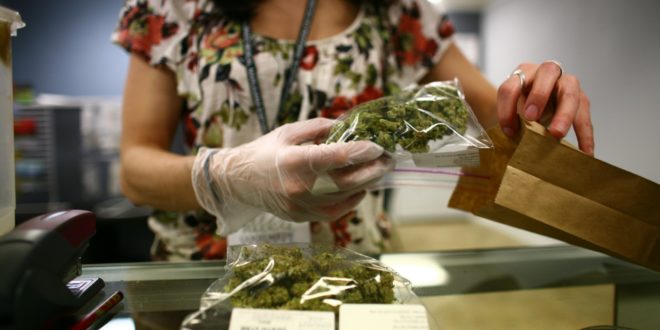
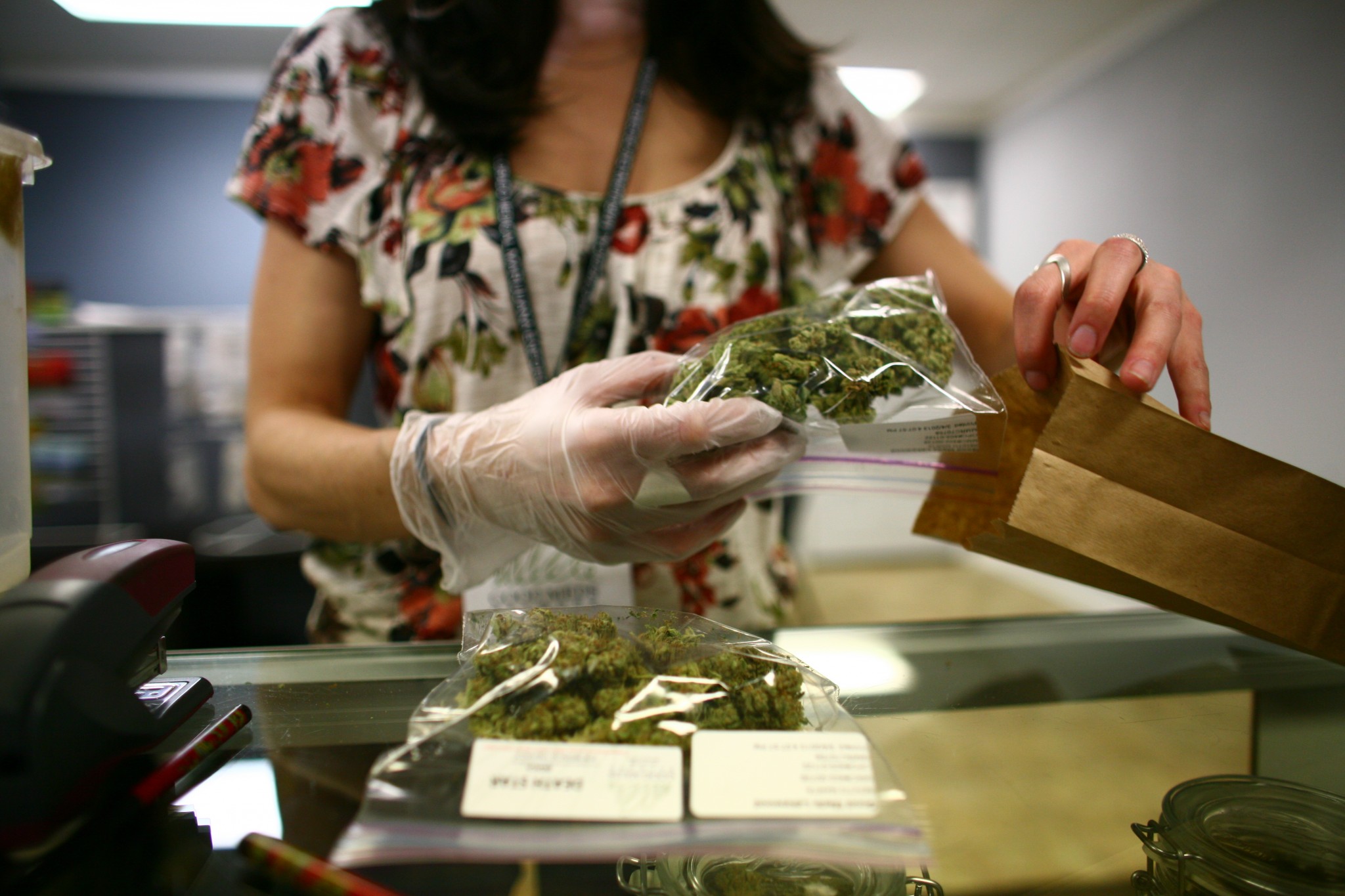
By the way, the classic way to create a monopoly or oligopoly is to stop legalizing medical marijuana. The effect of this would be enormous power in the hands of licensed sellers and prescribers, and a great incentive to create corrupt schemes through which the medical-grade product would be distributed more widely.
The problem with decriminalization ( for reference Portugal ) is that it does not bring business to light. It frees the consumer to some extent, but does not allow the entire process from production to consumption to be in the hands of entrepreneurs and customers who work openly. In other words, there is no legal responsibility, no bright, clean stores, no professionalization throughout the entire process (from cultivation to marketing), no brand and reputational risk (respectively, you can still sell to children) - there remain dark figures shouting "hash, hash" in dark alleys.
Of course, there is an element of truth in this thesis – it is entirely possible to create such a regulatory scheme that, with legalization, we would have certain interests that would gain access to the market at the expense of everyone else. That is precisely why the main goal should be complete legalization, one without the possibility of creating monopolies, oligopolies or other forms of limiting competition.
[1] U.S. Bureau of the Census, Historical Statistics of the United States, Colonial Times to 1970
[2] Clark Warburton, The Economic Result of Prohibition (New York: Columbia University Press, 1932)
[3] ibid.