 EKIP– Expert Club for Economics and Politics A Different Opinion
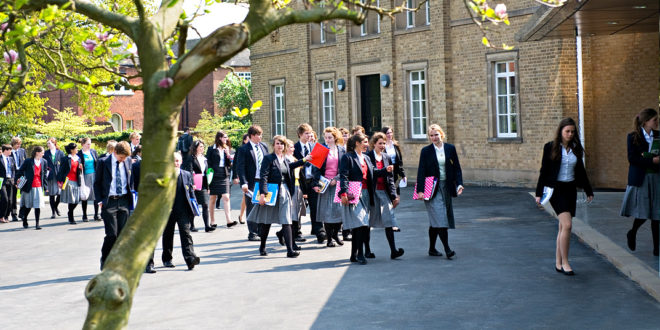
*We present to you a study by EKIP between the regulation of the education systems in our country and in the UK. A suitable topic when we think about changes we want to see in Bulgaria or mistakes we do not want to repeat
As in Bulgaria, the English education system is dominated by state-run primary and secondary schools. It is a waste of taxpayers' money, with the majority of children being subjected to equalization as they are forced to follow centrally imposed curricula, and the education they receive is generally not of high quality.
Many authors go even further in their critique of modern education. According to Seth Godin, the dominant state education system—organized on the model of an industrial-revolutionary enterprise with a centrally planned, clearly defined roles and responsibilities—is completely inadequate to meet the needs of children today. [1] Sir Kenneth Robinson is also among the prominent critics of the educational status quo. He describes state education as failing to meet the individual needs of children, to produce thoughtful and open-minded individuals, and, ultimately, to kill the creativity of adolescents. [2] In Education Without Schools, the English author Colin Lord writes that “… one important role of the state in the national education system is to perpetuate social and economic injustice.” [3]
Some of these criticisms can also be applied to private schools. While state schools in England are “free,” private schools are fee-based, making them – especially the most elite ones – inaccessible to most citizens.
Opponents of the homeschooling system and other alternative forms of education often point out that without state control and an egalitarian curriculum, children are at risk of ideological exposure. But apart from concerns about the potential threat, they have not presented evidence of its realization in reality. Moreover, they completely miss the fact that such “exposure” can also occur in a system regulated by the state, in which teachers are obliged to teach the ideology of the ruling party. Moreover, opponents of the idea of alternative free education do not cite examples of “victims of homeschooling” – people who, as a result of poor-quality education, fail to realize themselves. Quite the opposite – many have had brilliant careers. Among them are names such as Mozart, Edison, Erwin Schrödinger and many others. Empirical research also indicates that children educated at home perform better in higher education institutions than their counterparts coming from public or private schools. [4] , [5]
In its current form, the legislative framework assumes that officials in the Ministry of Education have more knowledge than any parent or child in the country and that they – the bureaucrats – are able to determine the most appropriate path for all students. Such a hypothesis is completely untenable for both England and Bulgaria. The enormous amount of changes that the state education system in England has undergone in the last little more than 100 years eloquently speaks of the fact that officials, operating on the principle of central planning, who do not take into account the individual differences between each child, are completely incapable of creating a good educational system. That is, there is a need for constant central changes, because the previous ones have proven to be disastrous. The Financial Times ranking, according to which almost all the top places in the ranking of secondary schools in England are occupied by private schools, supports this thesis. The results of this year's matriculation exams show that public schools in our country prepare students worse than their only alternative – private secondary schools. [6] It follows that the hypothesis that a central monopoly body is capable of creating a working system is completely untenable for both England and Bulgaria.
State-regulated education and centralized curricula mean that it is not the children and parents, but the officials, who know not only which subjects are good for children, but also the best ways to teach them and what the individual needs of each child are. But nothing could be more wrong. It is the child's relatives who have direct observations of his talents and aptitudes, interests and strengths.
The full text of the study can be found HERE and HERE
[1] Вж. Seth Godin, 2012, Stop Stealing Dreams
[2] See Ken Robinson's speech How Schools Kill Creativity
[3] Colin Ward, 1973, Education Without Schools




One comment
Pingback: Desires and realities in the field of education – EKIP – expert club for economics and politics