 EKIP– Expert Club for Economics and Politics A Different Opinion
Mark Thornton
Most considerate parents today rarely allow their children to be left unattended, especially in public. Parental care begins with a wireless baby monitor in the child's crib and then continues with constant cell phone contact until the child graduates from high school.
That's what makes the reports from the U.S.-Mexico border so disturbing to most Americans. It's hard to believe that parents would send their children to travel hundreds, even thousands, of miles unsupervised or under the control of smugglers who would lead them through Mexico, in the hope of a safer journey to the United States.
This journey is both difficult and dangerous. The northern regions of Central America (Guatemala, Honduras, El Salvador) and Mexico are some of the most dangerous places in the world. The climate is sometimes very harsh, the roads and conditions for movement are difficult, and the children are subjected to violence by robbers, kidnappers, rapists, government police and military, and generally by all kinds of bandits.
As incredible as it may seem, Central American parents are sending their children to the United States, sometimes in larger groups. In many cases, the children are fleeing on their own, without their guardians.
A decade ago, U.S. Border Patrol agents apprehended only a few hundred children a year. In the past nine months, they have apprehended nearly 50,000. Official estimates suggest that the number of children crossing illegally could reach 10,000 a month by this fall. These numbers belie the enormity of the problem, because in the past, the situation was limited to children coming from Mexico, who could be immediately returned to the country. In the past few years, the majority of refugee children have come from Central American countries, and they must be processed separately and handed over to the U.S. Department of Health and Human Services.
One reason for the surge in Central American child immigrants is the belief and rumor that the children will be granted asylum and be able to stay in the U.S. legally. However, before asylum is granted, deportation proceedings begin. Whether this gives the children more time and chances to stay in the U.S. legally is unclear.
Even if the rumor of asylum had an impact, it does not explain why the children and their parents would risk such a dangerous journey.
The role of the war on drugs.
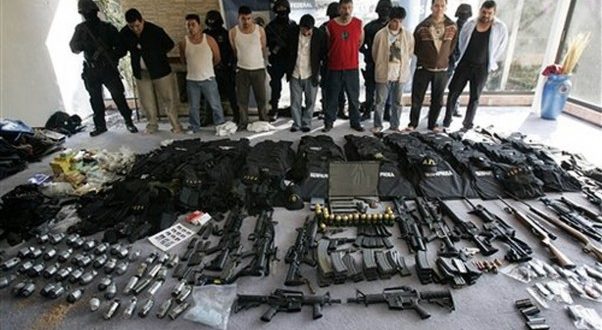
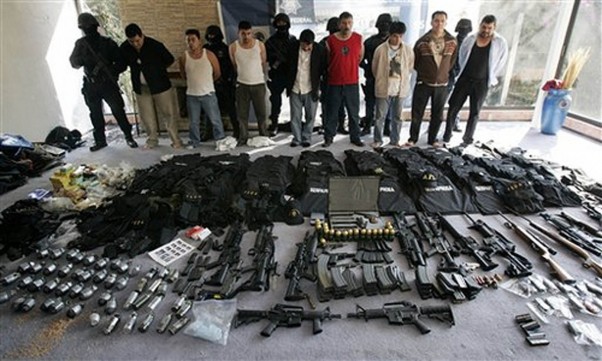
The main reason for this massive and dangerous migration is the US war on drugs. The countries of Central America are the route through which drugs pass from South America to the US border. Unlike most mainstream media, which cites violence and instability in Central America as the cause of the problem, The Economist magazine quite rightly finds the source of the problem in the US war on drugs:
"The demand for cocaine in the US, combined with the utterly senseless war on drugs, has led to an increase in violence. It is American consumers who finance the drug cartels, and to a large extent American arms dealers who arm them."
The result is that the cartels have very strong control over much of Central America. They control the governments, judges, police, prisons, and some of the military through a combination of bribery, threats, or outright force.
As a result of this control, drug gangs and drug cartels can operate in the open or deep in the jungle beyond the reach of the law. In turn, drug cartels can operate above the law, and as a result, they have created a culture of violence that builds on the civil war of bygone times.
Countries like Guatemala, Honduras, and El Salvador have the highest homicide rates of any country in the world, at 7.5 times that of the United States.
Globally, every year since 1990, Honduras or El Salvador has had the highest murder rate. In 2012, nearly 1 in every 1,000 Hondurans was murdered. In addition to murder, there are high rates of all other crimes. A large percentage of those born in El Salvador have migrated, most to the United States.
In addition to the violence, the drug war is a destructive force for Central American economies. After reading about the region once, who would consider starting a business or even planning a trip there? It is clear that the drug war is highly destructive to job creation, trade, and international investment outside of the cartels themselves. Therefore, it would be more accurate to say that it is not so much that opportunities in the United States have increased and thus the country has become more attractive, but rather that there is a lack and reduction of opportunities in Central America that is stimulating emigration, and this is directly related to the drug war.
When you try to make sense of why parents send their children on such a dangerous venture, just remember, this is one horrific consequence of the war on drugs.
The Economist recommends ending the war on drugs and legalizing them worldwide as a solution. Another good solution is for the US to fund and make efforts to rebuild institutions and infrastructure in Central American countries:
"Such plans, however, will not solve the fundamental problem: as long as drugs are prohibited and, therefore, supplied by criminals running the trade from this blood-stained land, this will only push the whole situation to another forgotten place. At the same time, as long as drugs are legalized, this is the best that Central America can hope for."
In other words, the only solution is an end to the war on drugs.
Translation: Eng. Hristo Ivanov
Editorial: Daniel Vassilev
You can read the original text here.






End of the war with the Narcotics!
Drugs are probably just an excuse for her.
Moreover, the presence of drugs is not a condition for the existence of drug addiction.
There is a great example of this: Dimitar Talev's novels describe the production of opium poppy in Prespa as one of the important and widespread crops there, but he does not describe a SINGLE Bulgarian drug addict in Prespa!
One of the reasons for drug addiction is given at the very beginning of Thornton's article: "Parental care begins with the wireless baby monitor in the child's crib and then continues with the constant connection on the cell phone until the child graduates from high school."
If only care could be provided over the phone!
This is just control, not parental care.
Yes - war on drugs!
Aren't there synthetic drugs? Easier to sell - harder to recognize. They're not produced in Latin America, they're not transported through Central America?
See http://www.drugsinfo-bg.org/aktualno/v-sasht-barzat-da-sprat-razprostranenieto-na-noviya-sintetichen-narkotik-u-47700/