 EKIP– Expert Club for Economics and Politics A Different Opinion
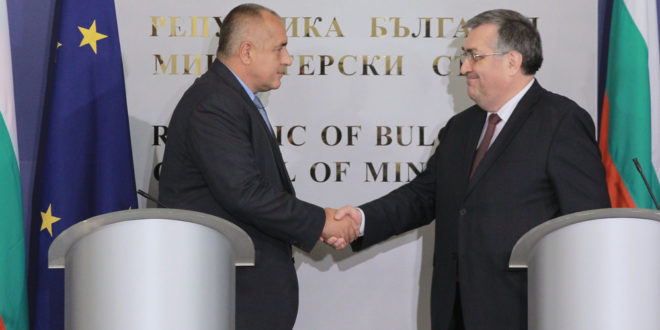

A month after early elections in October, Bulgaria has a new coalition government, comprising GERB and the Reformist Bloc. The successful vote on the 18-ministerial cabinet came after the coalition partners managed to win parliamentary support from the ABV and the Patriotic Front.
Deprived of a majority in parliament, GERB embarked on a search for a partnership with other parties, preferring the option of explicit and consistent support to that of a floating majority. Of course, this move was not chosen for the greater transparency of governance that it supposedly ensures, but because GERB judged that the lack of pre-agreed legislative support would cost them more compromises, in addition to making their government more vulnerable to no-confidence votes.
The existence of an agreement between GERB, the Reformist Bloc, the ABV and the Patriotic Front reveals that each of these parties has assessed that its cooperation with the other three will bring its apparatchiks and electorate more benefits than losses. Let us not forget that the ultimate goal of each party is to increase its influence and stay in power, and the only way to achieve this is through more sophisticated demagogy and the distribution of privileges to a wider circle of people.
Each party would immediately accept the mandate to govern and would proceed with an attempt to expand the electorate that would ensure its re-election if it had a parliamentary majority. In the absence of such a majority, political leaders carefully consider whether the compromises they are asked to make in order to participate in government are acceptable in light of the expected gain in additional privileges.
As for the agreement, its language should be as general as possible, so as to disguise the mutually exclusive goals of the partnering parties. This ostensibly demonstrates a balance of their demands and reduces the liability that the parties would bear if their assessment of the net benefit of participating in the alliance turns out to be wrong.
Mainstream philosophers consider the form of government by several parties, together providing a parliamentary majority for the government, to be the Achilles heel of democracy. If the main feature of democracy is the pluralism of political beliefs, this reasoning must be wrong. But not if we assume that democracy is simply an open entrance to a government that can violate people's rights without restriction and without hindrance. In this sense, a non-working parliament is considered an unpleasant phenomenon that hinders the process of legal redistribution of wealth.
In fact, the negative consequence of a multi-party government stems from the fact that under it, a greater number of social groups segregated by their specific interest will be able to satisfy their exploitative instinct to parasitize on the backs of the others. In the language of democratic philosophers, this will happen through a series of contradictory legal initiatives, each of which will further undermine the foundations of private property and the market economy in Bulgaria.
Photo: Council of Ministers






Ivan, everything except this paragraph:
"The existence of an agreement between GERB, the Reformist Bloc, ABV and the Patriotic Front reveals that each of these parties has assessed that its cooperation with the other three will bring its apparatchiks and electorate more benefits than losses. Let us not forget that the ultimate goal of each party is to increase its influence and stay in power, and the only way to achieve this is through more sophisticated demagogy and distributing privileges to a wider circle of people."
, I like it.
But this is a bit of manipulation, this may be the goal of the parties, but they still consist of people who sometimes do good (you know, reform), even against their own party if necessary.
There are many examples in history.