 EKIP– Expert Club for Economics and Politics A Different Opinion
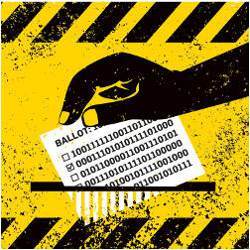
The results of the referendum are now clear – a majority of voters supported electronic voting, but most voters decided not to vote at all. This seems like a great tragedy for the advocates of the idea, but was it really that important? The answer is “no”. Here’s why:
Democracy is a form of government in which those in power are chosen through elections and the right of the majority to determine policy is paramount. We could paraphrase that democracy is the dictatorship of the majority over the minority. Winston Churchill said that despite all its shortcomings, democracy is the best we have. But the majority of people, misled by politicians, of course, are left with the mistaken idea that democracy is some higher goal in itself.
And this is not surprising. Every day, politicians from all media, located on the right-center spectrum, explain how important it is to vote, how necessary referendums are, how necessary it is to strengthen democratic foundations, etc. What they miss (perhaps intentionally) is that the democratic principle does not actually carry any fundamental values and virtues. It simply tells us – “Everything is permitted if the majority of those who vote agree.” Fierce democrats usually use the argument “Do you want a dictatorship?” against anyone who challenges the right of the majority. But they conveniently miss the fact that one of the emblematic dictators of the 20th century, Hitler, was elected completely democratically in elections.
These same people tirelessly campaign before every election – “Vote, it doesn’t matter who!”, “It’s very important that many people vote!”, “Whoever doesn’t vote leaves their fate in the hands of others and has no right to complain later!”. And are they right? The answer is again “no”.
The call to vote no matter who for the sake of voting is quite ridiculous. Some still specify that it is important to eliminate the MRF from power, but their arguments end there. It matters a lot who and, more importantly, what you vote for. The idea that simply by voting en masse, no matter what, things will somehow improve by themselves is, to put it mildly, utopian. In order to feel an improvement in people's lives, very specific measures are needed. We have written about them many times, but they can be summarized briefly as: "removing the role of the state from the life of the individual."
In this sense, the behavior of the "right" politicians in our country, led by President Rosen Plevneliev, is disappointing. Still (perhaps inertia from the socialist rhetoric of the 1990s) their mantra is "democracy". But democracy does not exclude the election of socialists, does not exclude raising taxes (including by nominally "right" politicians), does not exclude the nationalization of the ERPs. Voting no matter who does not exclude Volen Siderov as prime minister, nor Nikolay Barekov as president.
That is why the euphoria surrounding the referendum on electronic voting is surprising. “For” the electronic vote is neither a good nor a bad result. It is simply a new tool in the democratic system, which, however, is simply a means, not an end. Mass voting by the people, including electronically, would be wonderful if it led to the coming to power of politicians ready to carry out the necessary radical liberal reforms – privatization and deregulation in all sectors, tax cuts, and a drastic reduction in the state. The same mass voting would be deadly if it brought to power a nationalist party that wants to nationalize, regulate, tax, close borders, wage wars, etc. (the similarities with specific historical regimes are completely coincidental).
That is why it is important to answer the question "What should we vote for?" on a daily basis, and not simply call for voting. It is important to set the right direction and emphasize that following it can be done through voting, but not to forget that through this same voting, one can also go the opposite way.
Editor: Daniel Vassilev
Proofreader: Dimitrina Ivanova





In principle, there must be over 50% of voters, as in the National Assembly, when there is no quorum (121 deputies), there is no session, that is, if there are not over 50% of voters - elections until there are over 50%
Otherwise, regarding the repeated writings about "removing the role of the state from the life of the individual", I will say that this is vulgar, to put it mildly, and I will give a good analysis of the former Deputy Minister of Economy Lyubka Kachakova - http://darikfinance.bg/novini/83787#comments
"Taxes are like a fee we pay for the privilege of being members of an organized society," said Franklin Roosevelt. Another public figure and thinker, Oliver Wendell Holmes Jr., said: "I like paying taxes. With them I buy civilization." In her study "The Philosophy of Taxes," Catherine Gregory suggests viewing taxes as a special currency. We pay in them and get in return police, street sweepers, health care, education for children, and equal access to the resources of the country.
In this modern system, taxes have five main functions:
- To finance basic social services such as defense, emergency assistance, police, public transport;
- To finance long-term investment projects that bring returns in the form of social goods and public services - healthcare, education, infrastructure;
- To discourage people from consuming goods that have a negative effect on society, at the expense of those that generate social benefits;
- Be a macroeconomic impact tool that plays a central role in fiscal policy;
- To be a tool for income redistribution and equal access to resources and services.
I'll put it another way - according to Eurostat, the tax burden in the EU is 50% and in our country 39%, so are they stupid?! - in some of the member states it is as follows: Slovenia - 59.7%, Finland - 57.8%, France - 57.1%, Denmark - 56.7%, Belgium - 54.4%, Sweden - 53.3%, Austria - 50.9%, Italy - 50.5%, Portugal - 50.1%
The average corporate tax rate in the EU is 2.5 times higher than ours, and the personal income tax rate is 4 times higher.
Prof.D.Sc.Econ.Ivan Angelov - ''The difference in GDP per capita (i.e. in social labor productivity) and in average salary per employed person with those in the EU is huge (45% and 22-23%, respectively) and contradicts any economic logic and elementary justice.....The competitiveness of our economy depends not so much on high salaries, but on the large energy, material, transport and other costs per unit of production, on poor management at the national and company level, on theft and corruption - according to Eurostat data for 2010, our country consumes 853,774 kg. oil equivalent per 1,000 euros of GDP. For comparison - the energy intensity of the Danish economy, for example, is 104.05 kg. oil equivalent per unit of GDP, Ireland (112,367 kg.) and Great Britain (115,469 kg.) - of course this is not an accurate criterion because the financial "industry" is included in GDP.
In short, the world's problem comes from the deregulation of financial capitalism - democracy is the same rules for everyone, not, as Milton Friedman said, the American economic system is socialism for the rich and free enterprise for everyone else. If an ordinary person fails to pay his debt, he is forced to live in his car. If a banker fails to pay his debt, he relies on taxpayers to bail him out.
This is a systemic crisis because for the current global financial system to function with interest rates, etc., profitability requires constant growth, but this is impossible.
In 2011, an interesting book by Richard Heinberg, The End of Growth: Adapting to Our New Economic Reality, was published. The author makes a startling diagnosis: humanity has reached a fundamental turning point in its economic history. The trajectory of the expansion of industrial civilization is facing indisputable natural limits. Further growth will be blocked by three factors: resource depletion, environmental constraints, and the crushing volume of debt. These interacting constraints, Heinberg writes, will force us to reassess cherished economic theories and rethink money and trade rather than continue to pursue the impossible – an infinite increase in GDP.
Mr. Shalapatov, you have written quite a few absurdities, nothing personal. First - the tax is the seizure of someone else's property without the owner's consent, that is - theft in essence. Any attempt to present it as "the price we pay to live in a civilized society" is simply untenable. The five functions you listed are simply ridiculous - social services, income redistribution... You must not forget that society is a collection of individuals and nothing more, it is dangerous to claim that the state should take care of "society" by consuming taxes. On the issue of other European countries - you are making a wrong causal connection between high taxes and well-being. If your logic were correct, we would make taxes 60 - 70%, the minimum wage 1000 leva, and quickly, quickly get rich. You forget that Europe got rich in times when its economy was free, and today it redistributes this wealth indiscriminately and goes from crisis to crisis. The claim that the deregulated financial sector causes problems is also not true. Get acquainted with the Austrian theory of the business cycle. Specific readings that I recommend - Murry Rothbard - America's Great Depression; David Stockman - The Great Deformation.
to the Author
Tax is money that must be given to the Ministry of Interior, army, etc. service personnel called civil servants and servants (in Latin ministers)
I will only say that I am talking about principles, and the fact that there is parasitism of civil servants and theft is a separate topic and how to stop it
I have explained how trillions were stolen through deregulation of financial capitalism - https://www.facebook.com/atanas.shalapatov/posts/1442612112683685
WHAT I DON'T KNOW IS WHETHER YOU ARE DOING IT OUT OF IGNORANCE AND MISCONDUCT OR DOING IT INTENTIONALLY, THAT IS, THERE IS LESS OF ANYTHING BUT CLAIMING THAT THE FINANCIAL SECTOR DID NOT CAUSE THE CRISIS IS A LIE TO PUT IT SOFTLY. And I have given links in my Facebook post to the documentary film Inside Job for which Charles Ferguson was awarded an Oscar, and there is another film by a professor who explains how Bernarke and Greenspan, as heads of the Fed, refused to control and stop the fraud.
Professor Anat Admati, a financial expert at Stanford University, says it beautifully - "Flint and some other bankers are trying to present the financial crisis as some unpredictable natural disaster. Such comparisons are completely inappropriate. What happened can in no way be compared to a natural disaster. Financial crises are created by people and there are specific people responsible for them."
IN THE FACE OF SO MANY FACTS, TO CLAIM THAT THE FINANCIAL SECTOR HAS NOT CAUSED ANYTHING IS A LIE, TO SAY IT MIDLY.
The financial sector did not cause the crisis. The crisis was caused by the state, which, through its central bank, manipulated the interest rate in an anti-market manner and caused a credit expansion that pleased those in power at the moment.