 EKIP– Expert Club for Economics and Politics A Different Opinion
 In 2000, the UN presented its “Millennium Development Goals”, an ambitious program that was supposed to show what humanity should strive for in order to improve life on the planet at the beginning of the new millennium. One of the main goals of the international organization was to reduce the world population living in extreme poverty (i.e., with less than $1.25 a day) by half from 1990 to 2015, or in other words from 47% to 23% in just 25 years. Surprisingly, this was not only achieved, but even became a reality five years earlier, when in 2010 the number of extremely poor people decreased to 22% of the entire population of the Earth.
These successes come after major changes in the two most populous countries, China and India. In the last two decades of the 20th century, in both countries, as well as in parts of Eastern Europe and Africa, we have seen an unprecedented abandonment of the planned economy, an opening to free trade, and at least a partial turn to a market economy as the main source of prosperity. The difference before and after the reforms is clear - the extremely poor made up 65% of the population of China in 1981, in 2007 they were 4%. In India, from 51% in 1990, those living in absolute poverty decreased to 22% in 2015.
The merits of the UN
Achievements that have nothing to do with the work of the UN or its experts. The organization, as well as the American government, became famous for its failed attempts to “re-educate” African dictators through international (financial) aid. Currently, countries on the black continent receive about 5% of their budgets from aid coming from the rich West, while the inhabitants of Zambia have 20% less purchasing power than in 1960, real incomes in the Democratic Republic of Congo are constantly falling, and autocrats like the now deceased Meles Zenawi of Ethiopia are becoming famous for allowing aid to reach only their closest party entourage. Even Time magazine came out with the headline in 2014 – “Stop Sending Aid to Dictators”.
And what has already been sent is not a small amount - according to estimates by the Institute of Economic Affairs, the amount of international aid to Africa and Asia since 1950 has amounted to $ 1 trillion. If the huge infusion of money from Western taxpayers into Africa had worked, perhaps we would already be talking about the economic miracle of Tanzania and Chad. We rather hear about the huge salaries (on average 29% higher than those in the American administration) and privileges of UN employees, about the bribes they received under the “oil for food” program, about the multi-billion dollar budget of the New York-based organization.
A new tax for global bureaucrats
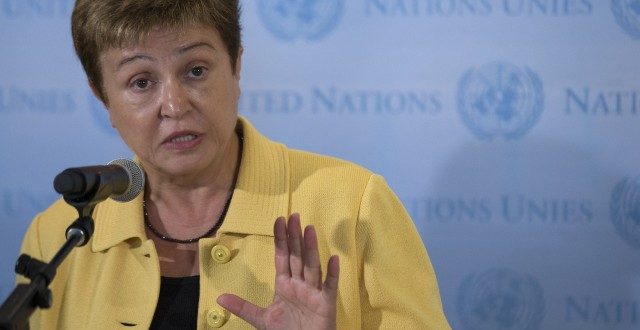
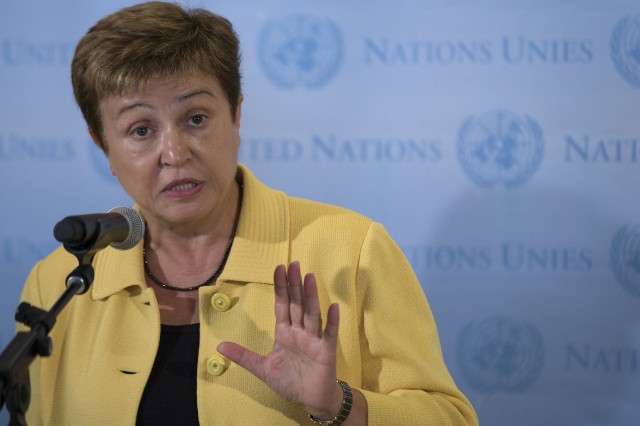
In this economic and historical context, Kristalina Georgieva comes to the fore, who, together with experts from the UN, proposes a new tax to finance even more spending by supranational bureaucracies. Examples of what could be taxed are football matches, taxi services, concerts, all of this to further finance the 25 billion dollars that are already spent every year on "humanitarian aid" - this, according to Kristalina's own report, is 12 times more than in 2000.
The demands of politicians like Ms. Georgieva and officials like the UN should not surprise us – every bureaucratic system needs lofty goals that it cannot achieve with its centrally planned approach. The longer they remain unresolved, the more money can be thrown at expert assessments, reports, plane trips, salaries and conferences. And if people themselves, by turning to freer market relations, reduce world poverty by half – some new crisis will still be invented.





The question is how much inflation was for the period 1990-2015 because according to the World Bank, 50% of the world's people live on less than $2 a day.
and under the article - http://www.economy.bg/world/view/21703/Naj-bogatiyat-1%25-v-sveta-pritezhava-poveche-ot-ostanalite-99%25
In the second comment on Facebook there is a link (terribly evil years are coming) for this data from Sv.banka
Economics is a special and social science and I will explain it as briefly and clearly as possible - for GDP growth to occur, there must be an increase in final demand, but how can there be, when between 1979 and 2007, the incomes of the middle 60% increased by less than 40% while inflation in the US was 186%
IN BRIEF, inflation increases inequality, that is, it DECREASES people's purchasing power, which leads to a decline in final demand, and when there is no final demand for goods and services, how can there be GDP growth?
and that is why Nobel Prize winner in economics Joseph Stiglitz writes: "The only cure for the malaise of the world economy is to increase aggregate demand... Active government policies are needed."
The question is where the state will get the money from, and now I will not dwell on the difference between a state and a private monetary bank.
because
the better option is a ban on offshore, etc. regulations in the target of 6% budget surpluses that are invested in precisely defined things
to avoid oil catastrophe and global warming