 EKIP– Expert Club for Economics and Politics A Different Opinion
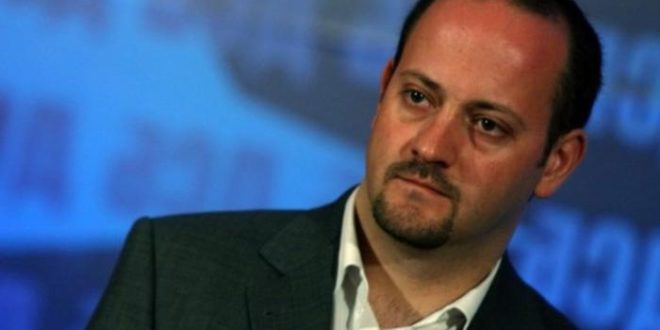
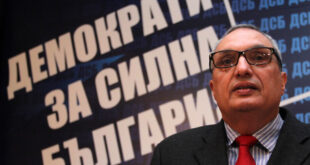
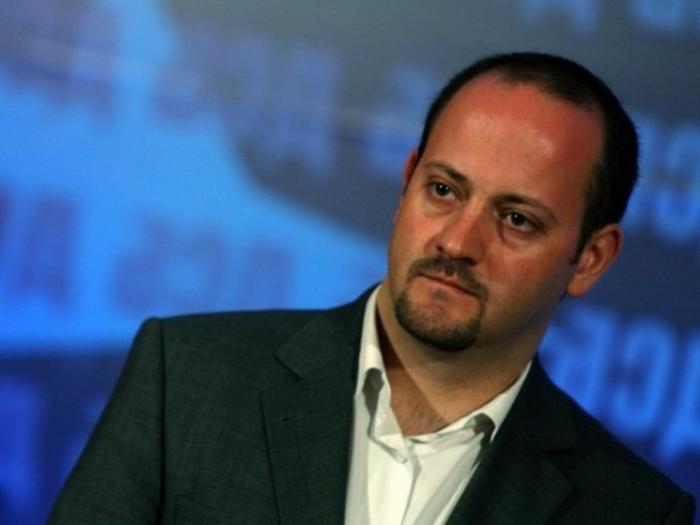 Председателят на ДСБ Радан Кънев преди няколко дни обяви, че подготвя създаването на нов десен политически проект. Според Кънев, Реформаторският блок е изчерпал своя потенциал, отклонил се е от дясната идея и се е провалил в поставените си цели. Именно затова има нужда от нова партия, която да заеме неговата роля и да си постави за цел второто място на едни следващи избори.
It is curious how politicians around the Reformist Bloc and in particular the DSB continue to use the word “right”, giving it the most bizarre meanings in order to attract misguided blue voters. In Bulgaria, “right” still continues to be some vague magic word that unites anti-communism, anti-BSPism, pro-Europeanism, pro-Americanism and Russophobia, while at the same time telling us nothing concrete about current political problems except “Let’s overthrow the reds!” when they are in power, and “Let’s fight the mafia and the status quo!” when they are not.
What is right and what is left?
In fact, the concepts of right and left originate from the times of the French Revolution, when conservative monarchists sat to the right of the president in Parliament, and liberals - to the left. Since then, the meaning and meaning of right and left have changed a lot, and are often interpreted in a completely wrong way. First, it is important to clarify - the real criteria for left and right are not "equality versus inequality". Such a division is intended only to present Nazism and fascism as some kind of opposite to socialism and communism, but anyone more familiar with the history of these ideologies knows that in fact they are very close and in no way look like opposites on the political spectrum.
In moral and philosophical terms, the right-left opposition is expressed in the opposition between individualism and collectivism. The right believes that a person should be above all free to live his life as he sees fit, while the left believes that a person is above all a member of some community (nation, race, class), whose needs are more important than his individual needs.
In economic terms, the opposition is on the level of capitalism versus socialism. The right believes that the economy should be free of regulations, taxes low, private property well protected, while the left are interventionist, wanting to tax, regulate, subsidize, with the extreme left (Nazis and communists) believing that the state should have absolute power over the means of production (state-owned under communism or nominally private but strictly regulated under fascism and Nazism).
The role of the state, according to the right, is only to be an arbiter and protector of individual rights and property, without violating them, while the left believes that public needs are most important and that to satisfy them, as many freedoms and rights as necessary can be sacrificed ("The end justifies the means").
Over the years, the boundaries between right-wing and left-wing ideas have blurred in different countries. More and more often, we see conservative parties and politicians (allegedly right-wing) wanting to increase government spending, raise taxes, issue new debts, actively fight poverty, etc. But this does not mean that the right-wing idea has "gone left", it is simply that democratic processes and sentiments have led to the marginalization of authentically right-wing politicians (e.g. Ron Paul in the USA) and their replacement by conformists and populists (David Cameron in the UK, Donald Trump in the USA, etc.).
But let's return to Bulgaria and Radan Kanev.
Let's see what he thinks right-wing politics is:
" If you are convinced that every decision is related to the rule of law, if you live by these values, there is no more right-wing person than you. A right-wing person means being convinced that the rule of law and political morality come before everything else . "
No, it doesn't mean that. Radan Kanev, as a lawyer, should know that there is a difference between law and right. Not always what is right is legal or what is legal is right. Being right-wing means changing laws so that they protect individual rights and property rights. Being "convinced that every decision is related to the rule of law" means participating in the persecution of Jews during the National Socialist era, supporting segregation, supporting the Prohibition regime just because they are legal.
This is not right wing at all. It would be right wing to fight for the change or repeal of laws that restrict individual rights. To give a more current example, believing that everyone should pay their high taxes ("rule of law") so that politicians can redistribute them to the poor ("political morality"), according to Radan Kanev, makes you right wing. But in fact, if you share these views, you are most likely an ordinary social democrat.
By the way, Kanev himself said in an interview in 2014: "In Bulgarian conditions, I am probably more to the left of the center in my beliefs." Then it is not at all surprising that the social democrat in blue clothes is not very clear about what right-wing politics is. Which in turn casts a lot of doubt about the future project. And according to Kanev, it will be right-wing, "because the idea is to attract people who are convinced that the state begins with justice, security, services and defense." And these people will most likely not be right-wing, because no true right-wing voter defines their views with the state, security and services, but with freedom - the main value of the right.
It is necessary to make these clarifications not because of negative feelings towards the personality of Radan Kanev, but to make it clear that the wrong decisions come from the wrongly defined problems. The real problems in Bulgaria are related to the large (and growing) role of the state in the life of the individual, extensive regulations, growing state spending, poor protection of private property, state-monopolized sectors in a critical state. All of these problems indeed require radical right-wing solutions, but they will certainly not come from someone who is “rather left of center”.



Justice, security and defense are done with money coming from taxes, generally speaking.
According to IMF economists, when the income share of the richest 20% of the population in these countries increases by 1%, GDP growth increases by only 0.08% over the next 5 years. At the same time, a 1% increase in the income of the poorest 20% in these economies leads to a 0.38% increase in growth.
Prof. Dr. Ivan Angelov - ''The difference in GDP per capita in our country (i.e. in social labor productivity) and in average salary per employed person with those in the EU is huge (45% and 22-23%, respectively) and contradicts all economic logic and elementary justice.
Apparently, they don't know the basics of economics, that is, for the wheel of the economy to turn, there must be finite demand, which can be stimulated in two ways:
1) with lending - a dream of the banksters that came true, but you can see what happened, that is, they got caught in their own nets and proved themselves that the system was wrong.
2) with distribution and I have explained - https://www.facebook.com/boyan.durankev/posts/1701431930135034
It's about fair distribution because the average hourly wage in the US from 1975 to 2010 grew 10 times less than productivity, and between 1979 and 2007, the incomes of the middle 60% rose by less than 40% while inflation was 186%.
In 2012, the income gap between the average top manager and his average worker in the US grew more than ninefold – from 30 times in the late 1970s to 277 times today.
Mr. Shalapatov, I'm not sure what the connection of your comment is with the article, but the conclusions you draw are not correct. First - economic growth in itself is not a value and should not be an end in itself. From there on, the reasoning about redistribution is not in relation to reality.
The connection with the article is that less state means less money for justice, security and defense, and for investments in precisely defined things - hot water from the sun, energy efficiency and electric transport.
Apparently, you don't understand what Nobel laureate in economics Joseph Stiglitz said: "The only cure for the malaise of the global economy is an increase in aggregate demand... and a deep reform of the financial system... The private sector created the inequality and environmental degradation that we now have to deal with. Markets cannot solve these and other critical problems they have created, or restore prosperity on their own. Active government policies are needed" - https://www.facebook.com/boyan.durankev/posts/1701431930135034
and I'm glad that Joseph Stiglitz said it, even though he doesn't say clearly where the money to increase aggregate demand and government policies will come from
It is known in economic history as the so-called Keynesian investment multiplier. He claims that when some money is given for pensions and salaries of civil servants or in another non-productive sphere, the result is that 1 lev creates 0.3 - 0.8 leva of GDP growth, while when this leva is invested in new production or infrastructure, then 1 leva can create between 2.5 - 3 leva of GDP growth.
In Bulgaria, there is a monstrous lack of knowledge of elementary concepts of politics and economics. This article is a textbook for mayors and deputies, and for everyone who votes in elections. Such an approach is needed for Bulgaria to move forward. Bravo to the author!