 EKIP– Expert Club for Economics and Politics A Different Opinion
Vasil Haralampiev*
On April 14, 2016, I attended the meeting of the Health Committee of the National Assembly of the Republic of Bulgaria. The agenda was entirely dedicated to the draft amendments to the Law on the Control of Narcotic Substances and Percussives, which were to be voted on at second reading in the committee.
Next to me sat Kaloyan Yankov, a 50-year-old patient with chronic myeloid leukemia. Kaloyan has kidney problems that prevent the use of cytostatics, and thus classical medicine had nothing to offer him, when the first course of chemotherapy in 2014 met him with acute pain syndrome and renal crisis. In search of an alternative, Kaloyan planted several hemp plants with the intention of preparing an extract. The rest is in the criminal chronicle, they caught him "in the field", convicted him and now the criminal has managed to sneak into a committee in the National Assembly!
In fact, I am also a "project criminal" because the hemp, which I use on the advice of my treating medical specialist, has the magical property of turning anyone who touches it into a criminal. My problem is the shortcomings of a diabetic - legs, blood pressure and blood sugar, the nervous system. Not that I want to fit into the majority group, but from a statistical point of view, if parliamentary representation were determined by the diagnosis of society, we - diabetics, would be GERB and govern in a coalition with related autoimmune diseases and onco-diagnoses.
There is enough space for the audience in the Health Commission hall. Behind the front seat reserved for the Minister of Health (or in this case his representative) is a small ensemble occupied by guests of the parliament. Today these are political science students from the University of Veliko Tarnovo. They have the right to listen. In fact, none of the guests, not even the representatives of the patient organizations, who have a prior invitation to the event, have the right to speak, comment, etc. As far as the Commission's regulations make clear, the audience is the only one who has the right to applaud.
Parliamentary Theatre
In my humble concept of theater, such an audience in a theater hall becomes a mise-en-scène. This is one of the conditions for the unprecedented success of such theatrical productions - criticism is impossible, and the art of theater begins to come dangerously close to the art of the circus trainer. I hope that with this metaphor I am sufficiently illustrative, while maintaining good tone.
The law that needs to be amended - the LCPIA - is the cornerstone of drug policies in our country. It regulates both our addiction prevention tools, but also the regulation of the pharmaceutical sector, the licensing regimes for psychoactive substances (PAS), the products that can be legally produced from industrial hemp, and other, no less important aspects that are not subject to the envisaged amendments.
The Health Commission is a political body, and when one looks at its composition, one realizes that for many of its members, the amalgam of legal, pharmacological, medical, and social components of the Health Commission Act needs clarification. It is difficult to fully understand and have a deep knowledge of the topics on the part of professional bricklayers (not to be confused with construction bricklayers), hobbyist doctors with nicknames for anatomical parts, egocentric patriots who have grown up in front of a cable company's lens, and other deficits of the democratic process.
Naturally, the deficit of the democratic process in terms of expertise is foreseen by law. The norm prescribed in the same ZKNVP creates a body called the National Council for Narcotic Substances (NCNS). It is a body under the Ministry of Health, composed of experts, representatives of almost all ministries, directorates and other professionally engaged administration. Something like the “ Council of Elrond” from the book by J. R. R. Tolkien and like the Council, the NCNS fights against a “dark force”. Naturally, for patient organizations affected by the decisions of the council, for non-governmental organizations working in the field with addicts, for project-criminals like Kaloyan and other orcs, the NCNS remains closed.
This council should be a sterile environment for expertise. That is why the law provides that any amendment to the LCPIA must undergo its expert assessment. The reason is called expert policy formation, feedback on implemented policies, control over the lists of PAHs and work with them. That is why the statutory procedure for amending the LCPIA goes through discussion and expert motivation of the changes in the NSNNV, any other intervention in the texts before their reading in the Health Commission must be expertly justified.
This also gives us the civic awareness that there is an administrative unit, on whose expertise we build policies. And when we ask ourselves " WHO is to blame for the mass use of PAHs among adolescents? WHO has ruined this mess with our failed policies for drug prevention and harm reduction from PAH use? ", then we have a sure answer - the National Drug Control Service and its actions and inactions over the last 15 years.
What does the minister know and think?
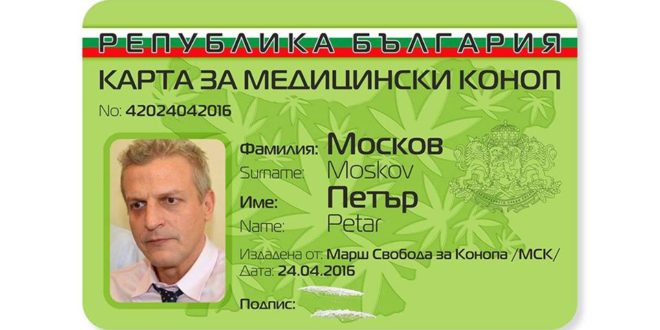
Since the texts amending the ZKNVP were never discussed by the National Council of State Security, as confirmed by the Narcotics Directorate of the Ministry of Health, and the Council of Ministers submitted the amendments to the National Assembly, the author of the texts remains apocryphal, not to mention anonymous. As a political scientist, I am still not sure whether the Council of Ministers is sure or unaware that in this way only the signature of the relevant minister, Dr. Petar Moskov, can be considered authorship?! But I attended the first reading of the amendments, where it became unequivocally clear that Dr. Moskov was not familiar with the substance of a large part of the amendments proposed to him by the ministry, and this raised the question for me "WHO wrote them?!".
But let's go back to the hall for a moment, Kaloyan has taken out his phone and is flitting from one end of it to the other to film every statement with his phone. Since using hemp extract, he has regulated his weight, and the tumor cells have been reduced by over 78%, seventy-six times better than the wildest hopes of the observing doctors. While we are documenting the parliamentary fiasco, there is a heavy taste in our mouth from the news we received from Kazanlak. A close friend of ours had an attack of Multiple Sclerosis. They had to take him to the hospital, where he refused any infusions other than glucose. The police officers in Kazanlak had to take Todor Vankov to the hospital. They arrested him after he voluntarily handed over the hemp and hemp extract he keeps at home. Then the nerves took over, but literally. His son woke up and saw him lying on the floor with handcuffs behind his back, along with him the Multiple Sclerosis woke up, and the attack hit him in the leg. The police had to take him to the hospital, because in the detention center they did not have the referrals and competence to treat the disease. For the latter, Toshko managed to cheer us up with a story about what happened in the hospital ward. He shared with us the documents from the stay and the following comment:
" The second photo shows the name of the head of the neurological department, Dr. Diana Valova, who, upon my arrival at the emergency center, told me that she knew me and knew everything. Then she asked the police officer who was guarding me if I had told him that I had MS. He answered in the affirmative, and the doctor said: "Then why did you arrest him, don't you know that marijuana is a cure for MS?" To which the police officer said: "I know, I even recently arranged seeds for my relatives with a similar problem." ".
Are the representatives of the people informed, like the police officer and the neurologist in Kazanlak?!
If the drafters of the law had informed the representatives of the people about the Bulgarian experience on the issue of hemp and Multiple Sclerosis, they would have realized that the patient from Lovech, Mr. Marin Kalchev, who was convicted two years ago, together with the criminal draftee Mr. Todor Vankov, are not the only patients with similar problems who enjoy cannabinoid medicine in our country. It is true that the majority of patients for whom hemp helps and works are criminals, like us, but it is true that there is a minor part that uses it under the guise of a pharmaceutical company that prefers to optimize costs in clinical trials of medical products. In such a case, in Bulgaria we combine the political climate of “ dark Africa” with the solid reference “ clinical trial conducted in the EU”. We are talking about the medical product Sativex, which has enjoyed many years of research on Bulgarian experimental mice/read patients/. Documentary evidence of this is the response of the Bulgarian Medicines Agency to a question from Mr. Petar Moskov, filed with No. 12-01-162/10.11.2015, a copy of which I am attaching.
Interestingly, while the results of the tests on the Sativex extract, which contains the surfactant tetrahydrocannabinol in a higher proportion than the anti-psychotic cannabinoid cannabidiol, which by definition makes it a potent extract of the hemp plant, are cited as motivation for opening the door to medical cannabis in modern pharmacy throughout Europe, in our country the text in the Law on Medical Cannabis with regard to its use in medicine - Art. 73., is also subject to change, dictated by the anonymous author in the Ministry of Health.
The current legislation, indeed with many reservations, allows the issuance of an individual license for the use of hemp plant products for medical purposes. The proposed amendment would explicitly prohibit it. The proponent of the Bill does not refer to any practical problems in the application of the text or to abuses of it. The proposed amendment also does not correspond to the text of the UN Single Convention on Narcotic Drugs, which also speaks of the possibility for a state to permit any of the controlled substances for “ medical purposes”, and not simply for “ medical research”, in this sense Art. 1 (x) and Art. 4 (c) of the Convention, where the English original speaks of “ medical...purposes”, and in the Russian of “ медицинскими...целями”. The proponent of the amendments single-handedly suspends the text of the Single Convention, changing the current “ medical purposes” to “ medical research”. The reasons for the change are even more ridiculous than the arbitrary and illiterate translation of the Convention, the desire of the Ministry of Health is to: " The text of Art. 73, para. 1 regarding the authorization of activities with narcotic substances from the lists under Art. 3, para. 2, items 1, 2 and 3 of the Law on the Prevention and Control of Narcotic Drugs and Psychotropic Substances is clarified, bringing it into line with the title of the section. "
These reasons are of course formal. Since Sativex is a registered medical product, its medical use does not fall under the scope of Art. 73 of the Law on the Prevention and Control of Drug Abuse and Illicit Trafficking. It can and probably will be reimbursed through the National Health Insurance Fund for multiple sclerosis patients such as Toshko Vankov and Marin Kalchev soon after the adoption of the amendments. After all, the spray has been on the European drug market for years and is registered specifically against spasticity and symptoms of MS. Its price in the Czech Republic is eight minimum pensions, in Germany - 600 euros, in the United Kingdom - 500 pounds for a monthly dose. And if it is true that organized crime and the illegal market raise the price of hemp and its extracts, then the price of the lobbying spray should remind us of other motives on the part of the anonymous drafter of the changes to the law.
Back in the Parliament hall. The floor was taken by MP Georgi Bozhinov, and the paragraph concerns industrial hemp in our country and its processing. He took the trouble not only to review the opinion of the Bulgarian Academy of Sciences presented to the committee, but also to inform himself on the topic. Among the anonymous texts for amendments to the Law on the Protection of Hemp and its Processing shine those that limit licensed hemp farmers in our country in the processing of their crop. It seems as if the submitter is trying to deliberately destroy the entire nascent industry related to the hemp plant as an industrial raw material, by limiting the use of the plant only to the production of fiber, seeds for food and feed, and seeds for sowing. The explanation in the explanatory memorandum is absurd – that only for these products there are direct payment schemes. It seems that the submitter of the Bill is trying to convince us that everything that is not subsidized by the European Union is prohibited.
The end result will be that the administrations of the Ministry of Agriculture and the Ministry of Health will continue to apply different and incompatible standards, and it will lead to absurdities to require a farmer who has received permission from the Ministry of Agriculture to grow hemp plants in accordance with Article 29, paragraph 1 of the Law on the Prevention and Control of Cannabis, after harvesting his crop to treat and destroy it as a narcotic substance, without being able to use his product and without the product itself possessing the objective qualities of a narcotic substance.
Georgi Bozhinov addresses the possibility of producing non-psychoactive extracts from the hemp plant, which would help not only domestic production with its high added value, but also patients who are forced to import it at prohibitive prices - a legal order, without delivery within the EU, per gram of industrial extract rich in CBD costs 120 euros. It is important to mention here that the second ingredient of the Sativex in question, as well as the related registered medical product Epidolex, the legal and clinically tested, anti-psychotic cannabinoid cannabidiol (CBD), is found in abundance precisely in industrial hemp, and the legal ban on the extraction of industrial plants will place a pharmaceutical company as a monopolist in its medical use.
In whose interests!? Qui bono!?
The statement of the MP Dr. Tuncher Kardzhaliev emphasized the same obstacles facing agricultural producers regarding the production of wood from the stems, as well as their processing into composite materials in industry and construction. As evidence, he pointed to the opinion of "Glavbolgarstroy" submitted to the committee.
Then MP Velizar Enchev entered the hall.
Here I want to open a bracket for a personal political analysis. In the last fifteen years, which mark the breakdown of the two-party model of transition, the voice of the quasi-opposition to the status quo has been put into the mouths of various political entities. They all shared the image of the “ jester” in the courtyard of our political elite and invariably discredited the important topics that they were tasked with raising. The “ jesterism” of Yane Yanev, Volen Siderov, Dimitar Bayraktarov is precisely of this nature. Taking the voice of those excluded from political representation and drowning it in the falsetto of Yane, Volen or Bayraktarov is a perverse tool for belittling ideas, inherent in a specific type of political narrative.
I watched Velizar Enchev and his speech in the plenary hall on the case of the lobbying law on camping on the beaches. He presented the arguments of the protesting environmentalists and civil organizations, without distorting, belittling, interpreting their demands. Without a doubt, this is one of the main political dividends for left-wing politicians - to be able to become a voice for the excluded, to articulate the demands of the oppressed, and here Enchev manages to do it. Not only in relation to campers, but I can also confirm the patients using or wishing to use hemp and its extracts in light of their diagnoses.
Velizar Enchev's statement was in line with the demands submitted by patient organizations to the Ministry of Health months ago. He even quoted one of our statements: "Today, the Health Committee of the National Assembly of the Republic of Bulgaria is considering a second reading of a law that is lobbyist in nature and illegal in terms of process!"
Lobbying, not only for certain pharma agents in our country, the amendments to the LCPIA were made anonymously, illiterately with regard to the 1961 UN Convention and against Bulgarian legislation, which requires an expert position from the National Council of State Statistics regarding the texts.
The National Center for the Prevention of Drug Abuse and Illicit Trafficking has never considered the proposed changes! The law will be illegal! The law will serve related parties and in this form it is a crime! ", also attached data from Croatia, an EU member state that legalizes hemp and its extracts in human medicine and currently they can be purchased in the pharmacy network in the country, as well as facts and statistics from the EU, North America and Israel, a number of which can be found in the analysis of the National Center for the Prevention of Drug Abuse and Illicit Trafficking, submitted to the Ministry of Health on 07.07.2015... and then the "joke" manifests itself in the hall.
The MP Dr. Lachezar Ivanov made a remark and a procedure for Mr. Enchev's ignorance of the rules of the committee and accused him of trying to "score points" in front of the students observing the meeting. The pathos was remarkable. Not only did it become clear that, according to Mr. Ivanov, the student political scientists sympathize with Mr. Enchev in his position on medical cannabis, but in his words it became clear that: " this committee deals with the health of the nation, not with politicking! ". The latter made Tatyana Ivancheva, chairwoman of the " MS Society Bulgaria " Foundation, who had taken the seat next to me, grab her head with the words: " There was no such thing even in the time of Mr. Tosh!".
The call for the "health of the nation" met with a stormy response in the hall, most vehemently from Balaganov..., excuse me, Bayraktarov. The latter declared that he would gladly abandon the sick to the care of modern medicine if it meant "two million children who will not become drug addicts." Bewilderment.
Enchev was silent. The rest is in the minutes, unanimity on all points. "Against" the proposal of the patient organizations, introduced by the MP Velizar Enchev, art. 73 to retain its current text, in the form of the current UN Single Convention. Green light for the texts introduced by the apocryphal lawmaker. The only ray of hope was left by the statements of Mr. Bozhinov and Mr. Kardzhaliev, who challenged the Commission to appoint a working group on the case of the Bulgarian producers of industrial hemp.
If we have to draw a line, far more correctly than the pub " let's see to it that they pay the bill ", it became clear that the apocryphal amendments to the Law on the Prevention and Control of Drug Trafficking found their way into the plenary hall of the National Assembly of the Republic of Bulgaria. The illegal law is a play on words, similar to the political theater of the absurd surrounding the "health of the nation" and "millions of drug addict children", which aims only to:
To lobby for the ban on the processing of raw materials into high-value-added products, such as those containing CBD, so that foreign companies can import them at inflated and non-market prices.
To seize the meaning of the demands of Toshko, Marin, Kaloyan, Tatyana for the regulation of medical use and to disguise them as propaganda for the total legalization of marijuana.
To hypocritically talk about the applications of potent hemp extracts in medicine while allowing a foreign corporation, with the services of their Bulgarian medical consultants, to test Sativex on Bulgarian citizens while patients are brought to justice.
Without an expert assessment of the amendments to the LCPIA, a text will be voted on that contradicts not only morals but also the written law. Interests far removed from those of patients, agricultural hemp producers, and society will be realized.
That is why on April 24, Palm Sunday, at 3:30 p.m. I will be in front of the Courthouse in Sofia at the "Freedom for Hemp!" march. There I promised Anita, a dear friend, to push her wheelchair along the route through the Medical Center, the yellow paving stones to Borisova Garden. Anita is one of the patients who will walk together with the farmers and (God forbid!) the healthy consumers of the magical hemp plant. Magical, because as I have already mentioned, any contact with it turns you into a criminal!
*Chairman of the Association " Restart - Patients and Experts for Medical Cannabis "
Co-Director Communications at the International Medical Cannabis Patient Coalition - IMCPC




Nature is illegal in today's society...