 EKIP– Expert Club for Economics and Politics A Different Opinion
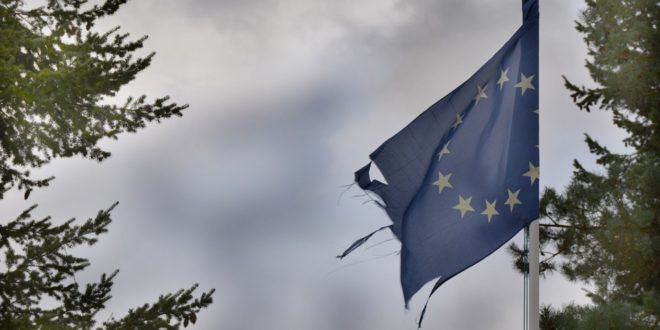
 The events surrounding and especially after Brexit have once again brought to the forefront the fundamental debate about what is the right “recipe” for the European Union – is a Europe of nation states better than a united and centralized Europe? On one side of this dispute stand the Eurosceptic nationalist movements of the Old Continent – UKIP, PEGIDA, Le Pen’s National Front, and in our country – parties such as VMRO and NFSB. According to them, the European Union in its current form is not good because it dilutes the national identity of the different peoples, takes power away from national governments and concentrates it in Brussels.
On the other side of the debate are many diverse parties and movements – from established ones in large countries (the Socialists in France, the Christian Democrats in Germany) to radical leftist formations such as Syriza in Greece, Podemos and the Socialist Workers' Party in Spain, etc. Their vision is a united Europe with highly centralized power for the purpose of easy and effective redistribution of wealth and regulation of people's lives.
The debate – a distraction
The public clash between the two camps actually aims only to distract the attention of the ordinary European citizen and sweep under the carpet the real problems of Europe. Moreover, the opposition of the idea of strong nation-states against the idea of a European Federation completely shifts the focus from what policies should or should not be implemented to how the territorial power infrastructure is constructed. Although in a different context, such a "diversion" in our country is consciously or unconsciously carried out by a certain social stratum, known as the "smart and beautiful", according to whom it is not so much what policies are implemented, but who implements them (argumentum ad hominem in essence).
Are nationalism and Eurocentralism actually different?
At first glance, yes, but deep down they are very close, and in their political actions – actually allies. Both camps are de facto staunch opponents of freedom. While for federalists (be they socialists, social democrats, liberals, conservatives, greens, etc.) freedom is considered a value, the actual policies they pursue (or want to pursue) say otherwise. For them, for example, the common European market is something desirable, but at the same time they want to regulate it down to the smallest detail (documents with 4 and 5-digit numbers of words regulating the cultivation and sale of certain vegetables, for example, are known). The inviolability of individual rights is also among the leading motives, but at the same time they are violated daily through various laws that conflict with the right to property (strict regulations on the labor market, heavy licensing regimes, extremely high taxes in almost all of Europe). "Freedom of movement" is another slogan of the advocates for a united Europe, but given the force majeure circumstances with the refugees, closing the borders quickly became the order of the day.
Nationalists are quite naturally anti-liberal. For them, individual rights are not as valuable as the “national interest” anyway (intentionally in quotes, because the “nation” is an abstract concept, not a real subject of rights or actions). By putting the said “national interest” in the foreground and misleading enough people that this is the right path, they can limit freedom at will, earning a dividend from it (a whole book would not be enough to describe the corrupt nature of every single nationalist idea).
Why does the federalist-nationalist conflict benefit both sides at the expense of the average citizen?
Through their violent public confrontation, the two camps mutually fuel their electoral power and strengthen their political positions. By flooding the media environment with their supposedly different, but in fact quite similar ideas, they create the illusion that there are no other paths to Europe than the above two. Once they have achieved this, they can easily gather followers among the not very demanding population. Nationalists say – “Merkel is guilty, Hollande is guilty, they will ruin Europe, they will destroy nations, they will Islamize the homeland, they are forcing us to bring in refugees who live on our backs, we must fight for sovereignty!”, and their opponents answer – “Dangerous far-right sentiments are rising, populism threatens the European Union, the new Hitler is coming, no to hatred, yes to liberalism!”. In this conflict, the European person finds himself forced to take the side of the “lesser evil”. And whether one is really a lesser evil than the other is not entirely certain.
Both parties would happily take away a fair amount of freedoms in the name of security (for example, anti-terrorism legislative changes, including in our country). Both parties would happily spend taxpayer money, looking for a way to collect more and more of it (federalists are striving for tax harmonization in every possible way, while nationalists are promoting how leaving the EU will save money that can be spent on social activities). Both parties would happily ban GMOs or free trade with non-European countries (some because of the “national interest”, while the others may not even give a satisfactory explanation).
Just as their prototypes (ideas taken to the extreme), the Nazis and communists in the middle of the last century fiercely opposed each other, but in fact strengthened their own power, so today's nationalists and federalists are fighting to seize power, eliminating any meaningful opposition in the storm of mutual accusations. On our homeland, we observed similar tactics years ago between ATAKA and DPS - a fierce media war and apparent antagonism, actually benefiting both sides.
What is the alternative?
From all that has been said so far, it is important to answer the question – what is the right path for Europe? The answer is not difficult – the path of freedom. In a few words – free markets, free movement, low taxes, weak (or no) state regulations, small government budgets, small (or no) welfare state, uncompromising protection of private property. Europe must return to the foundations of free capitalism, thanks to which it has accumulated its wealth, and shake off the aspirations of power-hungry people from all ends of the political spectrum to stifle the free initiative of the people. And finally, it is not bad to recall some words of Ronald Reagan: “Freedom is never more than one generation away from extinction. We do not pass it on to our children. We must fight for it, defend it and bequeath it to them to do the same…”.






I support the point of view. Great article! I still think that this EU cannot be reformed... I can't imagine it with reduced regulations and low taxes...