EKIP– Expert Club for Economics and Politics A Different Opinion
The draft law on the state budget for next year does not confirm the initial expectations. The government has once again accumulated surpluses this year and although the budget balance at the end of 2016. is equal to zero, a balanced budget will not be a fact next year. Instead of trying to utilize its current revenues and maintain the balance, the state's expenses will increase by 2.5% in 2017, and a deficit of 1.33 billion leva is also projected for fiscal 2017 – about one and a half percent of the country's GDP. For the same period, Bulgaria's economy is expected to grow by no less than 2.5% according to preliminary forecasts.
This is a step back from the main goal of the Ministry of Finance - reducing the budget deficit. The institution's program includes its gradual contraction to continue until 2020. instead of the budget being balanced in a timely manner. And next year we will not be able to hope that the administration's revenues will meet its expenses for two main reasons, highlighted in the explanatory memorandum to the draft law:
The increased absorption of European funds
The increase in transfers under EU programs also requires a larger state budget to be able to transfer advance payments to projects.
In this regard, new debt will have to be issued. Initial expectations, which were also supported by Finance Minister Vladislav Goranov, were for a freeze on government debt next year. However, the government will issue a new 1.2 billion leva of government securities. About 0.4 billion leva is expected to be attracted from the Council of Europe Development Bank to be used to co-finance European programs.
What is even more strange is that 0.8 billion of them are earmarked for the refinancing of maturing bonds on the domestic market. This expense, which could have been foreseen extremely easily, was ultimately revealed at the last moment.
Increase in the budget of government structures and inability to sharply reduce spending
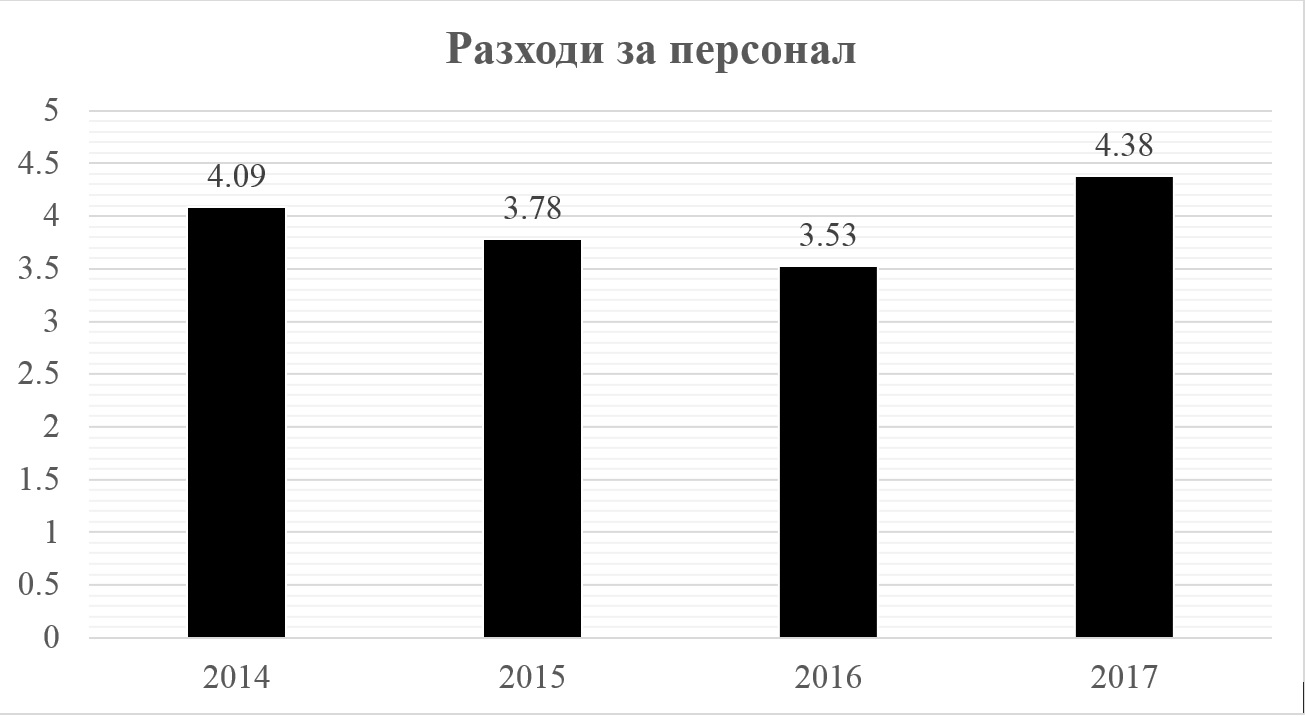
In addition to subsidizing the economy with EU money (a practice that has created dependent sectors of the economy, ranging from vegetable producers to startup accelerators), the state will also spend more on administration. Of all 17 ministries, funding for 16 is increasing. Personnel expenses exceed 4 billion leva annually for the first time since the 2014 Budget, growing by about 8% on an annual basis.
The Ministry of Interior (MI) has a solid budget increase. The structure will receive 100 million more than last year, about a 10% increase compared to 2016.
This shows that the reform of the institution will be delayed, if it happens at all within the framework of this cabinet. Earlier in the year, the government made an attempt to cut costs by limiting the social benefits of police officers, namely: 20 salaries upon retirement for those who have reached the age of 52 and 10 months plus 30 days of annual leave. The planned changes brought a significant part of the 60,000-strong staff to protests, which, in addition to the extreme rudeness of some employees, showed that social benefits are more important than the performance of official duties. In September, Minister Bachvarova withdrew almost all proposals at second reading, which finally put a spoke in the wheels of a more significant "reform".
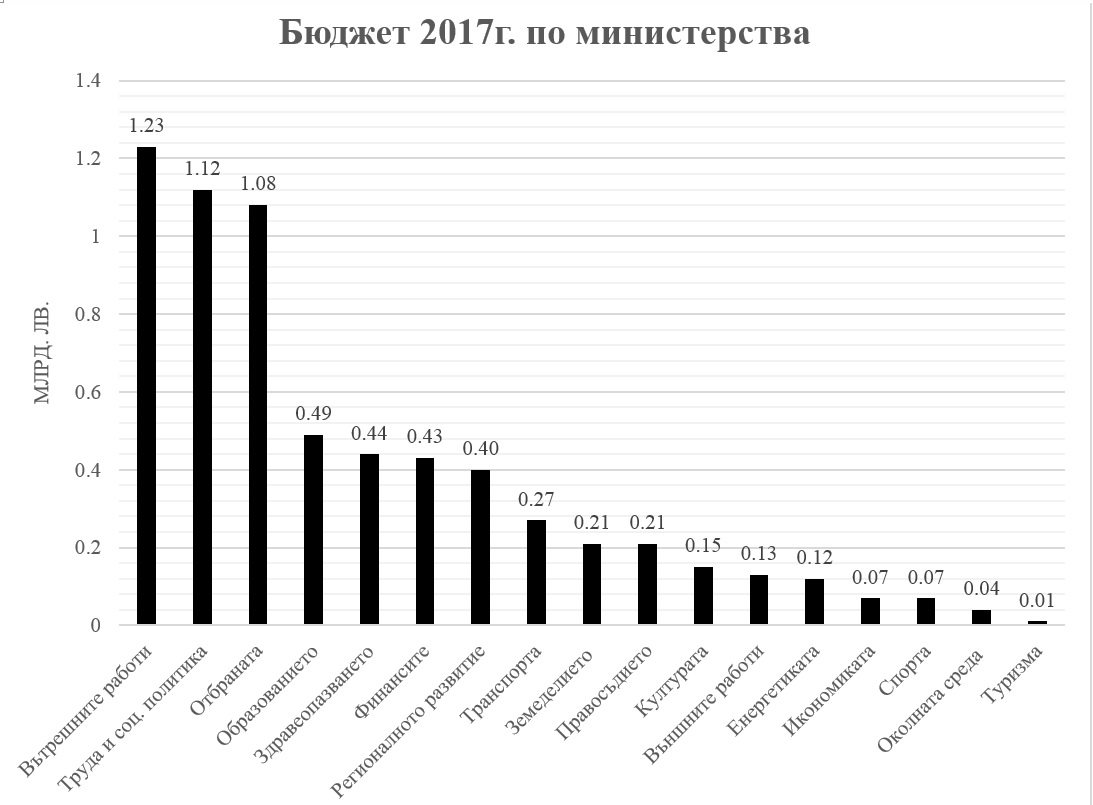
It seems that unsuccessful reforms are the “compass” that the government uses in forming the budget of the institutions. The budget of the Supreme Judicial Council (SJC) is increasing by nearly 20% from next year to 565 million leva. Former minister Hristo Ivanov from the Reformist Bloc envisaged a change in the division of quotas for the election of members of the two colleges of the SJC, which was expected to make the institution politically independent. However, the coalition partners from GERB did not support Ivanov, which led to his resignation and another unsuccessful “reform”, which will nevertheless be financially rewarded by the government.
The state is once again not betraying itself by rewarding inefficiency. The Ministry of Education and Science (MES) can also boast of a budget increase, with 9.25% more money available in 2016. Subsidies in higher education have provided overcapacity, but also significant results. Secondary education is falling in the rankings of the international PISA tests, and the minister has decided to subsidize a certain part of students based on ethnicity in order to improve results.
Expansion budget
As can be seen from the above, government spending is increasing, but why? In its program, the Ministry of Finance intends to raise state revenues to 37-38% of GDP by 2019. And although the burden on the government apparatus will decrease cosmetically (in 2016 it was 37.3%), state spending will continue to increase until the end of this period, remaining almost constant compared to GDP.
The country's economic growth, accompanied by higher revenues from indirect and direct taxes, complemented by better collection, allows this. In that case, however, why not limit government spending so that economic growth benefits citizens, instead of expanding the revenue side of the budget?
Such a decision would require a departure from the routine of political life and a new look at the country's economy. In his second budget as finance minister, however, Vladislav Goranov gives no sign that he is inclined towards either.