EKIP– Expert Club for Economics and Politics A Different Opinion
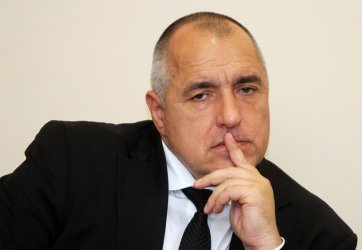
Election night confirmed all preliminary predictions, namely - Rumen Radev won the second round of the presidential elections without a hitch and, in addition to securing the presidential seat, sent the country into a parliamentary crisis with an unclear outcome, because Prime Minister Borisov expectedly announced that he was resigning, a commitment he had made a month ago.
Why did it get to this point?
15 years later, the left again managed to cunningly and cleverly snatch victory in the presidential elections from a “big blue party”, and again weeks before the elections, the sociological polls predicted something completely different. This time, however, the reasons are different. The confidence “We can put up a donkey, you will vote for him” played a bad joke on Borisov. Tsetska Tsacheva has no charisma, she does not know how to speak populist, she cannot control the crowd – qualities without which such elections cannot be won. GERB put up the most unelectable candidate possible, as if to prove to themselves and to all of Bulgaria that winning elections is like child’s play for them. But the strategy that for so many years ensured victory after victory (namely – intensive absorption of EU funds, infrastructure projects, media populism against the background of missing reforms of any nature) cracked. Moreover, at a time when the government was already publicly committed and losing the elections meant mandatory resignation. The BSP, on the other hand, approached it very wisely. It did not nominate an old nomenclature cadre, as usual, but relied on a very strong majoritarian candidate – a former commander of the Air Force, a NATO general who studied in the USA, with no blemishes on his biography. Among other things, the BSP nominated Radev on behalf of an Initiative Committee, and so the ballot did not say “BSP” against his name – something that undoubtedly ensured votes outside the hard-line electorate.
The strong majority candidacy of the BSP allowed for a successful penalty vote against GERB
It was the combination of the above factors that made it possible for enough people, dissatisfied with GERB's policies, to dare to vote for a "red" candidate. The promise of resignation was an additional motivation, turning the elections into a vote of no confidence in the Cabinet.
The big losers are on the right again
These elections finally buried what was left of the so-called Reformist Bloc. Public trust in the Bloc had long since collapsed, but the poor result of Traycho Traykov and even more so – the support of the RB for Tsetska Tsacheva after the first round, drove the final nails into the coffin. Having already officially left the RB, the DSB remained the only surviving castaway, but with no prospects for any real participation in politics anytime soon.
Contrary to some analysts' claims, support for GERB as a party has not dropped dramatically, nor has support for the BSP increased that much. In the next parliamentary elections, GERB will again have a high percentage, and it is quite likely that they will again be the first political force. The votes for Radev, on the other hand, would not at all transfer to the BSP in the same amount in the parliamentary elections.
The referendum – the undisputed winner
Slavi Trifonov’s referendum was the real surprise of these elections. The three questions were supported by more people than any political force has ever supported since 1990. And although a few thousand votes were not enough to make the referendum mandatory, the result opened up many interesting possibilities. First of all, those who voted no in the referendum become a separate electoral group, for whose support the parties will have to fight. GERB and BSP have already realized this and expressed support for the majoritarian system. At the press conference on Sunday evening, Boyko Borisov even went even further – he announced the total abolition of party subsidies (something that is undoubtedly a good step), the introduction of a majoritarian system and even the convening of a Grand National Assembly to change the number of deputies (this issue was rejected by the Constitutional Court, because the referendum cannot concern issues requiring a change in the form of state government under the Constitution).
The missing right-wing opposition and the wasted opportunity
Since 1997, there has been no better time for the rise of a right-wing opposition party than today. The problem is that such a party is missing. It is already clear to a large part of society that GERB does not profess right-wing values, and their rule does not bring any positive reforms to Bulgaria. The current crisis in which the "Big Blue Party" finds itself provides an incredible opportunity for the vacuum created on the right to be filled by a political entity that must declare clear political positions on all current issues, without formless Euro-Atlantic clichés, and for its participants to have a relatively clean biography (in this sense, new right-wing projects from old party leaders are doomed to failure a priori). If the Reformist Bloc had fulfilled its election promises from 2014 and had not been an accomplice in the Borisov 2 cabinet (or at least had left it soon after it became clear that the reforms would not happen), then today it would have a chance to capitalize on the accumulated dissatisfaction. The problem is that with the death of the Reformist Bloc, the idea of a strong right-wing opposition in Bulgaria also dies. To paraphrase Lenin – the blue voter does not want to be lied to in the old way, and the blue parties cannot lie to in the new way. The result is there – growing support for nationalists and socialists and unwavering support for “changing the system”, without it being clear what exactly this means.
Now where to?
The future of parliamentarism in Bulgaria is not difficult to predict under the current system. The next parliament will be similar to the current one with a moderate shift – without dark blue parties, with more nationalists and socialists. The next government will again be a coalition, with the format of the coalition depending on the PR strategies in the coming months. The interesting question is – will GERB and the other parliamentary groups agree to introduce majority voting (which could have a surprising effect for each of the parties) or will they play it safe? The decision on this is not easy at all, because 3.5 million people and a TV presenter with his team are waiting for the answer . If the referendum is botched in the National Assembly, it is quite possible that the next Prime Minister will be called Slavi Trifonov. If the referendum is passed, all kinds of surprises and extremes in the composition of the next National Assembly are possible (including from the other new player on the scene – Vesselin Mareshki).
And so we come to the well-known situation again - while the smart ones are getting smarter, the crazy ones are going crazy.