 EKIP– Expert Club for Economics and Politics A Different Opinion
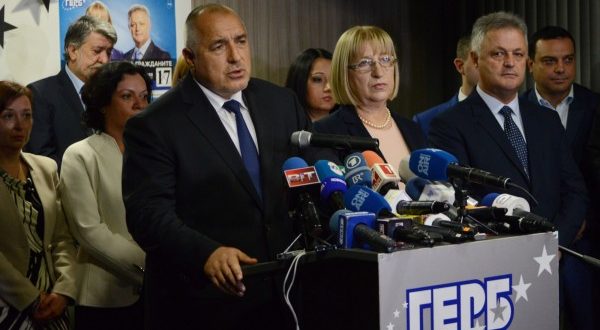
Yesterday, the ruling coalition lost the presidential elections in an extremely difficult way. The main reason for this is, of course, not the BSP party itself, but above all the negative vote of the people against our entire political class. This protest vote is to some extent a natural continuation of the trend of similar events in the Western world, such as Brexit and the victory of Donald Trump in the presidential elections in the USA. It is extremely clear that in a global perspective, people are disappointed with the political class and are looking for change. The main reasons for yesterday's results can be systematized as follows.
Tying the fate of the cabinet to the outcome of the presidential election
The first and perhaps most significant mistake was that the Prime Minister tied the future of his cabinet to the outcome of the presidential elections. This is wrong on a purely conceptual level, because by definition presidential elections are characterized by a pronounced majoritarian element. The fact that General Radev received about 60% of the votes does not mean at all that the BSP will receive even 1/3 of this result in any possible early parliamentary elections. In the next parliamentary elections, all systemic parties will receive results similar to the previous elections, with many of the smaller parties not even managing to enter parliament. The only more significant change will be the entry of a broad nationalist coalition, most likely as a third parliamentary force. Tying the outcome of the presidential elections to the fate of the cabinet led to significant potential for consolidating a protest vote against the ruling majority.
Lack of a real election campaign and the late nomination
GERB approached these elections in an extremely frivolous manner. For some illogical reason, the Prime Minister delayed his nomination until the last moment, which practically deprived people of the opportunity to observe an open and constructive debate on issues key to the future development of the country.
"Even if I had put a donkey in, they would have chosen him too."
The quote above clearly reveals one of the important reasons why GERB lost the elections. They simply underestimated their opponents, which is not even that surprising in the context of the fact that the party has not lost a parliamentary, presidential, or European election in its history. To this can be added a number of sociological studies that clearly showed that even without a presidential candidacy yet, GERB would certainly win the elections. These circumstances have certainly created a deceptive sense of calm and security for GERB about the outcome of the presidential race.
A very important element of the achieved election results is that it was not Tsetska Tsacheva who lost the elections. I dare say that whoever GERB had nominated would have lost them again. She was simply a hostage of the anti-status quo vote, against which it is very difficult to counteract. Tsacheva herself is without a doubt a proven professional and in theory should be able to handle the position of president.
A week dedicated entirely to instilling fear in people
Immediately after the unexpected, at least for me, loss of GERB in the first round, ministers and party leaders who supported the government adopted an extremely wrong strategy of instilling fear in the voters. They said that if GERB lost the elections, it would almost mean the end of Bulgaria. Within just a week, I learned that if Tsacheva did not win the elections, Bulgaria would leave the EU, there would be no state budget, sanitation would stop, in a number of cities in the country there would be a power and water cut and kindergartens would stop working. To this can be added the threats of falling into international isolation, the suspension of Euro funds and hints of bank bankruptcies. From a political PR perspective, it has been proven that the strategy of instilling fear is disastrous. It reveals despair and fear in those in power. In fact, it was at this moment that I began to realize that there was a real chance that Tsetska Tsacheva would lose the elections.
The pernicious influence of the Reformist Bloc
The only reason the parties in the Republic of Bulgaria entered parliament was because they made a commitment to the right-wing electorate that they would be a real alternative and corrective to the previous government of the country. This included a number of pre-election promises, from not forming a coalition with GERB to not participating in a government with Prime Minister Boyko Borisov. Quite predictably, intoxicated by the possibility of real power, the leaders of the Republic of Bulgaria immediately after the elections formed a coalition with GERB, which began an avalanche of "tricks" with which any promises to carry out structural reforms were lightly ignored. A significant part of the truly right-wing voters voted in the first round for Karakachanov, and in the second for Radev, with the clear goal of simply removing the Republic of Bulgaria from power and thus punishing the power-hungry leaders of the parties in the bloc. I have noticed that many of my friends, with whom we always vote for DSB, declare that they will celebrate the NPN in the elections, while in private conversations they have told me that they will actually vote for Radev, but they are simply ashamed to admit it. It is very important for the RB to understand and never forget that the right-wing voter is extremely sensitive to tricks. I think that the parties from the RB will have enough time in the coming years to think about this when they fail to enter the next parliament.
The lack of a vision for the country's strategic development.
So many years after the transition, our entire political class has never been able to understand that spending and redistributing public resources is not economic policy. The absorption of European funds in itself is also not economic policy. Building a highway does not generate sustainable economic growth if a country does not have an established rule of law, a functioning judicial system and independent institutions. The absorption of European funds to create a sports hall for millions of levs in villages with 50-60 pensioners is also not economic policy. And statements by our politicians such as "By giving 100 million to pensioners/teachers" and so on are, above all, frivolous. Spending money from the budget on social transfers right before the elections is, above all, offensive to the recipients of them.
In the last two years, there has been talk of billions in additional revenue in the budget from stopped smuggling without seeking an answer, but why and where did this money leak out in previous governments and why is there no one to blame for this? A fuel cartel was also “discovered” during the election campaign, given that the only reason such a cartel could exist is the vicious state policy of tax warehouses, which legally limits the possibility of competition in the sector. In fact, the possibility of cartels forming in the fuel market can be resolved instantly when the market is liberalized and competition increases. This, in turn, will immediately reduce fuel prices, which will have an extremely favorable impact on the competitiveness of our economy.
The government policy of a country is expressed mainly in the implementation of heavy structural reforms in all problematic elements of public administration, where some significant inefficiency has been established. This invariably includes the assumption of political negatives for the parties due to the unconventional nature of the legal framework that must be implemented. Solving these problems, however, will have a positive impact in the long term for the entire economy and society. Unfortunately, at the moment there is still no party that is ready to assume the potential negatives of carrying out the much-needed deep structural reforms in some problematic aspects of the state. At the moment, all potential negatives from this are being covered up with a constant increase in public spending and the absorption of European funds. However, this approach to governance is not sustainable.
There are really many such examples and they are not the fault of one specific party, but of the entire Bulgarian political class, because all systemic parties have been an integral part of the formation and existence of these problems. It is for this reason that yesterday the people voted in a majority for a person who is not a professional politician with a clear vision and desire to punish the entire political class. So yesterday's result is not a loss for GERB and even more so it is not a victory for the BSP. This is simply the first step in reminding the political class that the people are not happy with them.





The rulers made a mistake by maintaining the implementation of a flawed monetary system.
The current evils are a consequence of the wrong monetary system being implemented.
In the face of this state error, every politician, including Mr. Borisov, is destined to be a victim and certain failure.
Mr. Borisov is suffering because he works in an environment of a flawed monetary system.
The protest vote against GERB is in reality a protest vote against the bad influence of an applied wrong monetary system.
If GERB had implemented an improvement in the monetary system, they would not have the current protest vote.
An improved monetary system is necessary for sustainable social prosperity.