 EKIP– Expert Club for Economics and Politics A Different Opinion
Rositsa Garcheva
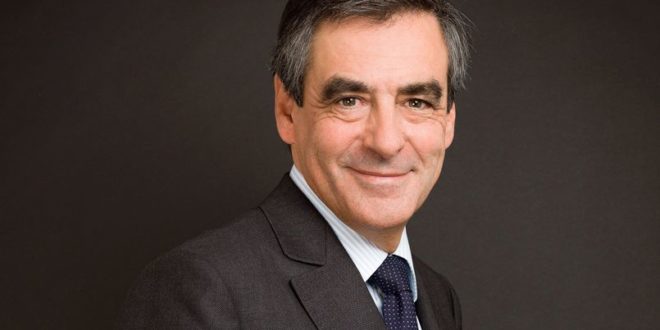
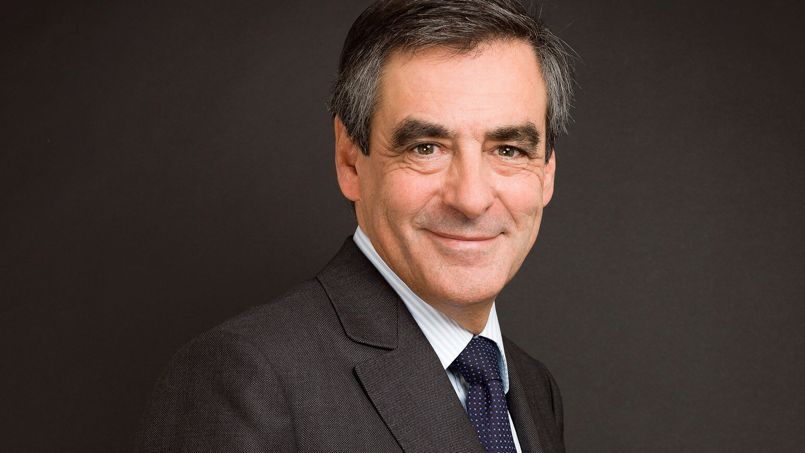
Three years ago, he was the first to declare that he would enter the race. Sociologists assessed him as an outsider, with a chance of reaching 3rd-4th place. The spotlight was on the two favorites – the consensus Juppe and the sharp Sarkozy. The former led in all rankings, relying on the centrists and the left-thinking public.
The road to unexpected victory
François Fillon announced his candidacy on 9 May 2013 and stated that he was "a candidate who wants to propose a project of change and progress with the aim of making France the first European power in ten years". He launched his first campaign in 2013 with the slogan "The courage of truth", setting three conditions for the so often promised but never realized successful breakthrough. Presence of:
- project ready before May 2017
- competent team
- 10 measures that will "unlock the economic situation" in the first three months immediately after the elections.
And throughout his campaign, he did not give up or soften the radicalism of his program.
Why did the French support him? Even though he promised them hard liberalism, raising the retirement age, extending the workweek, reducing the number of civil servants, denationalizing health insurance, etc.
They believed him. He did not change, he did not bend, he did not adjust his speech to please the unions and centrists, he was not ashamed of the traditionalism of his personal Catholic values. When he defended his ideas, he seemed confident and firmly convinced that he knew and could turn them into action.
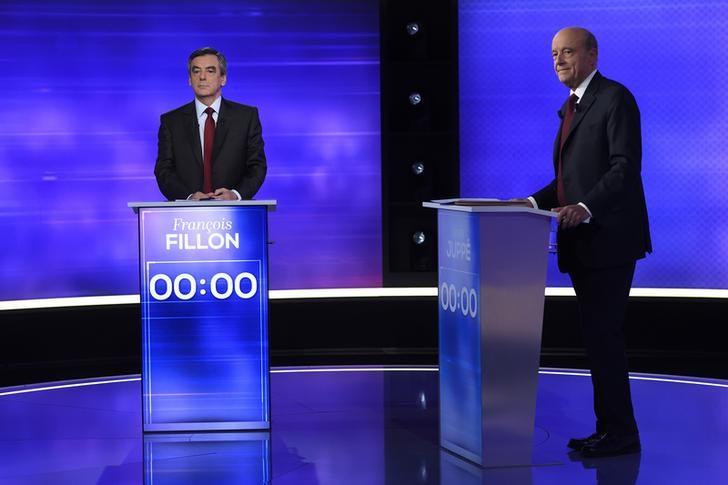
Fillon stood out from the other six Republican competitors only during the televised debates. Just one day before the first round of the primary vote, he appeared in the polls in first place. In the debates (record number of views), people distinguished him as a "man of ideas", who has valuable proposals and confidence in their correctness. He did not defend himself, did not attack others.
The "frivolous" French appreciated his severity and restraint. He inspired them with faith.
And one curiosity – the media is discussing Fillon’s dress code, which is now being defined as completely presidential. What all experts agree on is the coherence between his political message and his style of dressing. “In both cases, it is reassuring and authentic. It clearly shows traditional and conservative values.” Unlike other politicians, who are sometimes forced to defend their style or “modernize” to attract a young audience, François Fillon has remained as he has always been. His stylistic rigor is simply a perfect reflection of the rigor of his political program. After all – France is the homeland of fashion.
The world seems to be turning upside down. Public sentiment gauges are helpless. How did it happen that “Putin’s candidates” – Trump, Fillon, Radev …. won. And maybe they are not his candidates, but Russian political scientists and sociologists are better at sensing electoral trends. It is absurd to believe that because the Russian president mentioned someone as a capable leader, and the other side said that it is better not to enter into conflict with Russia – suddenly we have a Putinist candidate.
Fillon's program
The right-wing candidate himself summed up the core of his proposals in one sentence: " Let's work more and spend less."
He considers the liberalism of his ideas closer to that implemented in Germany by Gerhard Schröder than to that of Margaret Thatcher.
- Simplification of the Labor Code– from the current more than 1200 pages, in which labor relations are regulated in a complex and sometimes contradictory manner, to extract only the essence into something short and clear (150 pages), suitable for direct use. Complete reform of permanent employment contracts, with the inclusion of predefined progressive conditions for their termination. The currently valid disposition of the permanent contract in France (CDI) does not give the employer any opportunity to terminate it, which is an important reason for the reluctance to hire workers under this paragraph and hence – for the high level of unemployment in the country.
Fillon also intends to reduce the possibilities for union intervention in companies by strengthening the advantages of individual direct bargaining.
- Unified social assistance - currently there are a huge number of ways to receive social benefits, and the organisms that provide them are not connected. The presidential candidate wants to administer them through a single structure, which, in addition to savings, will bring more fairness and adequacy in responding to needs.
- Retirement age– 65 years, with the transition completed by 2022.
- Taxes– reducing them to 25% for businesses, increasing VAT by two points.
- Reduction of capital taxation– to 30%. Creation of a mechanism to stimulate investments in small and medium-sized enterprises
- Ensuring the status of independent service providers, by exempting them from taxation for a certain period and under certain conditions - they should bring 1 million jobs in 3 years.
F. Fillon is not against the "welfare state." His thesis is that it should provide the conditions for business to develop and create wealth.
- State health insurance should focus only on serious and long-term illnesses, with the rest – lighter and more banal – being covered by private insurance companies.
Justice for middle-class families - the backbone of the nation. Returning the conditions for family allowances for all to the level before the "Holland era" and eliminating their obligation to participate in the "Sickness" insurance.
- An end to the legally fixed 35-hour workweek, which would be valid for both the private and public sectors.
- Reducing the number of civil servants by 500,000. This should be done during the period 2017-2022, taking advantage of the increase in working hours (to move to a 39-hour week as early as 2017) and streamlining the administration with more computerization.
- 12 billion for the "Security" sector - defense, police and justice. The law enforcement agencies - gendarmerie, various types of police, prison administration and customs should be united and managed by only one Ministry of Interior. An additional 16,000 places should be opened in prisons. All police officers, including municipal ones, should be armed.
On the night of the victory, François Fillon was businesslike, without euphoria: "Our country is on the verge of a revolt. The French are disgusted with politics, we risk seeing the victory of extremism. It is time for a turning point, which must happen in the first three months. The French must feel a change that will restore their lost hope."
He also made specific promises - what he will do for the period July 1 - September 30, 2017, which he wants to end with a national referendum:
- labor market reform – code, pension reform, employment contracts,
- extension of the working week
- healthcare reform, with budget expenditures on this item not exceeding 2%
- changes in the security sector; emphasis on the national identity of the French:
"Foreigners who come to our country will have to integrate, assimilate and respect our cultural heritage."
- changing relations with Russia, "which is a major nuclear power and it is in our interest to have good relations."





First of all, it was probably necessary to write about a rare phenomenon in modern politics – the unblemished reputation and unspoiled honesty of François Fillon, which cannot be said about his main opponents. He has not been convicted (like Alain Juppé) and is not in the process of legal proceedings (like Nicolas Sarkozy). He does not have a large personal fortune and does not associate with the rich.