 EKIP– Expert Club for Economics and Politics A Different Opinion
- In any conflict between two individuals (or groups) who adhere to the same basic principles, the more consistent one wins.
- In any collaboration between two people (or two groups) who adhere to different basic principles, the worse or more irrational one wins.
- When opposing basic principles are clearly and openly defined, this works to the advantage of the rational side; when they are not clearly defined but are hidden or circumvented, this works to the advantage of the irrational.

Intellectual consistency is undoubtedly important to the success of any ideological, social, or political movement. And not just in terms of short-term success in a particular historical conflict, but also for the survival of the movement over a long period of time. Ayn Rand makes the above observations when considering the anatomy of compromise, that is, the compromise between a movement and its ideological opponents. In most cases, she is specifically referring to the outcome of the Russian Civil War, where the ideologically most consistent faction, the Bolsheviks, emerged victorious, despite starting the war with the fewest human and economic resources of all their opponents.
Consistency wins short-term battles. But there is another trade-off that can cost a movement its long-term survival: compromising its own principles. When a movement becomes diluted and allows temporary conjunctural considerations and goals to take precedence over ideological consistency, the movement loses strength and eventually dies. Ultimately, loyalty to one’s own moral principles is more important to a movement’s success than the resources and strength of its opponents.
In the situation of the growing influence of libertarianism in Bulgaria over the past decade, especially among young and educated people (which is the only thing that matters for the future), I am increasingly concerned about the fact that, in general, libertarians in Bulgaria allow compromises with the fundamental principles of the libertarian idea. No, I am not talking about some strict orthodoxy of views, as if there is some system of dogmas that determine who is a “true” libertarian and who is not. I am talking about the minimum threshold below which the main idea of libertarianism – individual freedom – is compromised, that is, according to the true meaning of the word, it becomes a victim of ideological compromise.
Above this minimum threshold, we can have all sorts of differences and still be libertarians. For example, about what the criminal justice system should be like. (After all, individual freedom does not include the “freedom” to commit crimes.) Or how to organize public spending. Or how to resolve religious differences in a free society. And so on. For all these perfectly legitimate differences among libertarians, one difference cannot be tolerated: the idea that some noncriminal individuals should be deprived by state decree of the natural rights that other noncriminal individuals enjoy. Not privileges, such as political voting, but rights: the right to life, liberty, and property.
Compromise with freedom of movement
Unfortunately, in general, libertarians in Bulgaria still allow such compromises. And in the last two years, the compromise that I see being made the most is in the area of immigration. We talk about individual freedom. We talk about a minimal or no state. We talk about the right of individuals to life, liberty, and property, as long as they do not violate the rights of other people. We talk about opposing the classification of individuals by group affiliation and the imposition of different laws on different groups. We talk about the right of the individual – every individual, not just some – to freely enter into any relationship with any person, as long as it does not violate the rights of others. But as libertarians, we talk about these things only as valid only for the group or groups to which we belong. When it comes to people from other groups – people who we perceive as “different” from us – somehow all these principles disappear and we are ready to give the state power over individuals who have committed no crime; and the only thing that distinguishes them from us is that they were born in a different place.
We insist on immigration laws and restrictions on individuals about whom we have no data or suspicion of having committed a crime. And yes, we reject state policies of comprehensive surveillance and information collection when it comes to us and our group – because no one should be under suspicion until proven otherwise – but we still have nothing against this rule being violated when it comes to people from other groups. It is only because they were born somewhere else. And because of their group affiliation. Because they are different from us.
In general, it is strange that such views and sentiments can come from Bulgarians. Just a little over a decade ago, it was Bulgarians who were forced to endure exactly such treatment from Western European countries. Most of us remember the visa regimes between 1992 and 2005, when every Bulgarian who wanted to travel to Western Europe, even for a very ordinary reason such as tourism or visiting friends or relatives, had to go through humiliating interrogations in the embassies of Western European countries. Some of us even remember the scandals in 1997 with self-forgetful employees at the French embassy who used their power to make fun of visa applicants, and one employee even attacked people waiting for documents with her fists. And at that time, Bulgarians were not refugees from a war zone; Bulgaria was not a prosperous country, but it was not a place where bombs were falling.
And the Western European governments had serious reasons not to want Bulgarians: the exploits of Bulgarian car thieves had become known everywhere. Not just anyone, but the Prosecutor General Tatarchev turned out to be the owner of a car from the Interpol database, brought into Bulgaria with inflated license plates. Of course, most Bulgarians traveled for completely legal reasons, the thieves were a small percentage, but everyone else suffered along with them. I have not heard any Bulgarian at the time say that it was morally justified for the sake of a few car thieves and prostitutes to subject tens of thousands of ordinary Bulgarian citizens to humiliation, whose “crime” was that they wanted to travel around Western Europe, or settle there. And why go back so many years, when only two years ago similar views on closing the borders to Bulgarians were expressed by Nigel Farage, and the entire Bulgarian public was outraged.
And now this same Bulgarian public has adopted exactly the same views as Farage, but towards another group of human beings, whose “crime” is that they are trying to find a better life for themselves and their children. Come on, at least Farage was civilized, he just wanted legal obstacles; the Bulgarian public wants to wage war by killing people. Or at least imprisoning them in a concentration camp. Apparently Alek’s story, “God forbid the blind should see,” has not lost its validity more than 100 years after its publication.
That Bulgarians, who until recently were themselves victims of such an attitude, can perceive it towards other people is puzzling and sad enough; it only shows that Bulgarian society still lacks the elementary ability to learn even from its own misfortunes. But that libertarians within it can adopt the same positions is downright startling. After all, we as libertarians are expected to be ideologically consistent with certain fundamental moral and social principles, and the most fundamental of these should be individualism and individual freedom; because if we betray these two concepts, there is no libertarianism left.
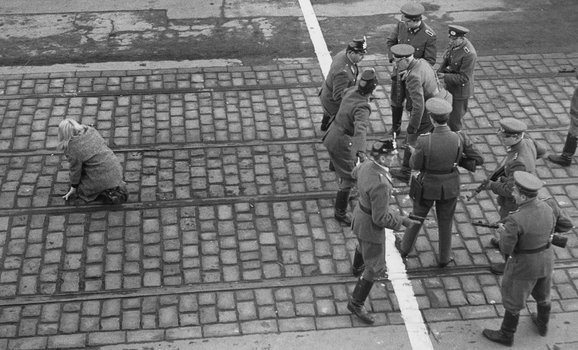
Cultural and political influence of immigrants on the receiving society
In part, I suppose, this is more of a growing up mistake in the libertarian movement: immaturity in understanding the practical applications of the ideas of freedom, imposed cultural traditions, societal influence from friends and relatives, and even the most simple fear instilled by the environment and the media. These factors should not be legitimate for ideologically consistent libertarians. But in addition to them, there is one factor that does indeed be legitimate, and should be seriously considered. This factor is the cultural and political influence of immigrants on their host society.
Of course, as I have said in previous articles, the automatic assumption that immigrants will bring their old culture to their new place of residence is not at all proven. Yes, songs, dances, costumes, recipes for banitsi and dünerdzhiynitsi can survive for a long time, several generations. But this is only the surface of culture. Real culture is ethical and legal principles and relationships – norms of behavior, social organization, standards and laws of justice, etc. We do not have much evidence for these that they are automatically transferred to the new place. On the contrary, we have enough historical examples that this is not true. As I have shown before, Texas in the 19th century is a good example: settled mainly with immigrants from Eastern and Central Europe, it never developed the feudal culture and legal relationships from which the immigrants came. There are not even temporary manifestations of such a culture, in any place, at any time. If these people have lived their entire lives in feudal societies, and if they have traditionally known nothing but feudalism, how come they bring none of this feudalism to the new place, but on the contrary, from the very beginning, Texas develops a society of "wild" individualism?
The very example of Bulgarians abroad also shows that native culture – such as habits and morals – does not always transfer: Bulgarian communities in the States do not seem to develop the standard problems of Bulgarian culture. Yes, yes, I know, Muslims in Europe. But even there, the news usually focuses on the extremes; so far there is no real data on how many Muslims really insist on preserving the cultures they came from. And in the US, from time to time, a Bulgarian does some typically Bulgarian stupidity; two years ago, two Bulgarians were arrested for forging credit cards. But the visible behavior of some radical individuals cannot be an indicator of the rest, who have adopted exactly the same cultural norms as everyone else in society.
Libertarian solutions to the cultural question
But even if we accept that there is some danger of imported culture from immigrants, that still does not justify as libertarians supporting state measures that infringe on the freedom of individuals, whether native or immigrant. Nor does it justify as libertarians demanding state policies of control and regulation of the free movement of people, goods, and capital. Instead, we should seek truly libertarian solutions to the problem.
And there are such solutions. But to understand them, we need to understand a very important difference between two concepts; a difference that was very well understood in Europe in the past. These two concepts are immigration and naturalization.
Immigration is primarily an economic process and it is related to individuals: with their individual aspirations, hopes, expectations, fears, ambitions, etc. As a process, it does not consist only in crossing state borders; migration can be internal. Bulgaria has seen numerous migration waves in its history, internal and external. Some were due to wars and political upheavals, others for economic reasons. The Armenian minority in Bulgaria certainly still keeps thousands of personal testimonies from their migration to Bulgaria more than 100 years ago. Even without mass waves, there has still been some constant resettlement of families from one region to another . In all cases, the characteristic of migration is that it is done with the aim of improving the situation of the individual or his family. It does not matter whether this improvement is an improvement in safety (from wars and violence) or an improvement in the economic situation (opportunities for work, study or business); it does not matter whether the immigrant is fleeing war or looking for a better job. In any case, from a libertarian perspective, migration is a matter of individual decision, affecting only the individual and his family, and therefore should not be subject to state control and regulation. Liberty is a right of the same level of importance as life and property, and therefore should not be violated. And since individual liberty is an inalienable right, immigration must therefore be an inalienable right. For if we allow the state to take it away from one group of individuals, we have no reason to object when it takes it away from another group, and ultimately from ourselves.
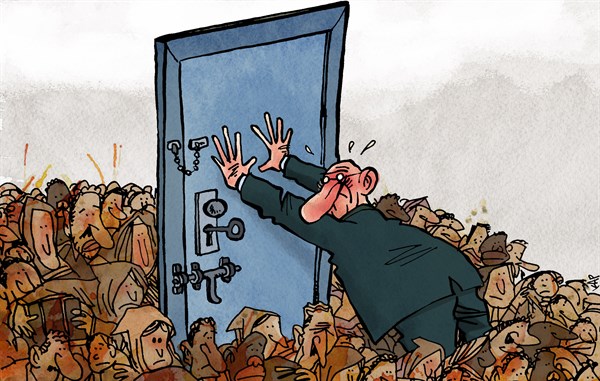
Naturalization is a completely different concept, and belongs to a completely different category. It is not related to rights, but to privileges – specifically, political privileges. In the context of modern states and political philosophies, these political privileges are expressed primarily in the right to vote for members of the legislative branch, and less often for the executive branch. In Switzerland, this vote is directly legislative. In the past, in Europe, there was no voting for the legislative and executive branches, but the political privilege of citizenship was expressed in legal power: voting for local judges or participation in judicial panels. This privilege now remains only in Switzerland and the United States – and in the United States, judicial panels theoretically have the right even to annul laws by declaring those accused of them innocent.
Naturalization, therefore, concerns issues of public expenditure and decisions related to those public expenditures. And that is precisely why it should remain not a right but a privilege, granted only in certain circumstances. And therein lies the fundamental difference between immigration and naturalization: the one is inherently an individual's freedom of movement and bargaining (and the freedom of others to bargain with him), the other is an individual's power to make decisions about public expenditure.
In the modern world, where political ideologies are thickly layered with socialist and statist ideas, this distinction between right and privilege is rarely realized; after all, it is one of the main weapons of socialist propaganda, to blur the distinction between rights and privileges. And that is why in modern Europe, voting is so often perceived as an inalienable right, and immigration is treated as a privilege. That is, the exact opposite of the ideas of freedom and inviolability of the individual. And the exact opposite of libertarian values. And that is why many libertarians, not realizing the logical consequences of their ideology, join the cries of statists – be they left or right – that the state should close its borders to refugees or to immigrants in general.
To be consistent with the values of libertarianism, however, we cannot afford to call for measures that violate those values; we cannot afford to demand laws that treat a given geographic area as the property of government officials. We cannot afford to agree to solutions that appear “pragmatic” for the particular situation but are in fact the product of a statist ideology. We must have libertarian solutions to the problems of immigration and refugees, and these libertarian solutions must be such that, when challenged for their intellectual and moral consistency, they can stand the test.
Good examples of a migration system
And these decisions should be as follows: the border should not be physical, but legal. And it should not be about immigration, but about naturalization. Freedom of movement should be established as a fundamental right of every individual, except in limited cases (proof of a crime committed, reasonable process of temporary quarantine, etc.). The restrictions should be on naturalization: As libertarians, we should demand that the political process be closed to certain groups of people.
It is ultimately a matter of privilege, not of rights. And therefore there is no violation of the values of liberty. These principles have been the basis of Western border laws for centuries. They are also enshrined in the U.S. Constitution, which gives the federal government the power to regulate naturalization but not immigration. (Modern immigration laws in the U.S. are unconstitutional, and were pushed through by socialists and other leftists, such as Ted Kennedy.) These principles are in effect in Switzerland, which alone has preserved the old legal system from the 19th century.
In short, open access to the market, limited access to the ballot box . Only in this way will we be able to maintain our intellectual consistency as libertarians, and provide a pragmatic response to the problems facing Bulgarian society today.
Otherwise, if we continue to insist that the state should restrict the rights of foreigners, we will not have much reason to object when one day it starts restricting our rights as well. Whatever called, came.






We're fine with the market and the ballot boxes, but what do we do with the social system and access to social benefits?
Inviting someone to live in the common areas without the consent of all owners goes against libertarian principles!
In my opinion, there is a simple and fair solution. If someone is in favor of accepting migrants, let them accept as much as their personal home or other property and funds allow! If they want guests, let them take them to their homes and not ask others for their hospitality!
Otherwise, no one is against the free movement of people. As long as people follow the accepted rules for movement through the given territory. After all, the owners of the property/territory also have rights!
Technical error - immigrants