EKIP– Expert Club for Economics and Politics A Different Opinion

Individual freedom is an important topic in every aspect of our lives, and through the prism of libertarianism, the protection of this freedom is a guarantee of prosperity in the relevant sphere. Topics such as the creation of works of art or the preservation of cultural heritage are no exception. In a series of articles, we will try to show that just as economic prosperity is greater in countries with greater and guaranteed economic freedom of the individual, so in countries where individual freedoms to create art and preserve cultural heritage are greater, achievements in this sphere are greater. Or to put it another way: without freedom in art, there is no quality art. Without individualism in the preservation of heritage, there is no quality preserved heritage.
The first article will touch on global issues and a brief historical reading of cultural heritage preservation activities in recent decades. Specifically, the activities of the UNESCO organization, which is a kind of global ministry of culture, education, and nature, the relations of some sovereign states to UNESCO, and how this affects their national legislation.
What is UNESCO and the World Heritage List?
We have all heard of the UNESCO World Heritage List and are proud to have so many sites or territories inscribed on it. Participation in this list always provides wild cards for certain activists – whether it is about preserving the natural wealth of Pirin or the architectural and historical wealth of Old Nessebar. However, these things are taken for granted, as if they have always been so – and accordingly the opinion prevails that without participation in this list they will be lost and destroyed. What is it about anyway?
UNESCO is an organization within the United Nations, created shortly after the end of World War II. Founded with the noble idea of preserving the world's cultural and natural wealth and promoting education worldwide, it was quickly adopted as a positive structure to promote dialogue between nations. After wars, such ideas are often adopted very easily and quickly.
Representatives of the member states meet regularly and adopt various documents relating to the protection of cultural and natural heritage. In 1972, the fundamental document “ Convention Concerning the Protection of the World Cultural and Natural Heritage” was adopted – or the World Heritage Convention. On its basis, the List of Cultural Heritage began to be built – it includes the Rila Monastery, the Boyana Church, the Madara Horseman and other Bulgarian things that we are proud of. Although it seems like something that has always existed, this list has been “filled” since 1978 – historically relatively recently.
The relationship between UNESCO and its Member States
UNESCO's policy in this regard has many positive aspects – even from a libertarian perspective. We can make the following comparison: if you own a house that is classified as a cultural heritage site, in some countries there is a possibility that, if you do not take care of it in a regulated manner, it will be taken away from you and nationalized. Quite legally. However, if you have a house that is part of the World Cultural Heritage and you do not take care of it adequately, the only thing UNESCO can do is remove your house from the list. There is no violence. The activity is carried out solely by increasing or decreasing reputation.
In a similar way, UNESCO treats not only the individual owners of cultural heritage sites (in fact, private sites on the List are rather rare, the majority belong to the respective countries), but also the countries themselves and their legislation. Despite all the conventions and other documents adopted by UNESCO, their activity is more of a wishful and guiding one than a binding and forcibly regulating one. Anyone can voluntarily challenge a UNESCO decision or directly leave the organization.
However, here comes the question of whether UNESCO's reputation is deserved. There are several cases in which the organization's policies have been sharply criticized by various member states. In 2011, for example, during the administration of President Barack Obama, the United States - a frequent critic of UNESCO's work - suspended its annual contributions, which form about 22% of UNESCO's total budget, due to disagreement with the decision to approve Palestine as a member of the organization. This is not a precedent - in 1984 the United States (with President Ronald Reagan) left UNESCO, only to return again in 2003 (President George W. Bush). In the 1980s, the United Kingdom and Singapore also left the organization. Currently, Israel is also a serious critic.
Significantly and a "red spot" for UNESCO is the very fact that they leave freedom to member states - once they decide to leave, they can return again.
Instilling fear
Freedom for member states is commendable, but the very attitude and signals that the organization sends in its specific activities can be criticized. There are more than one or two examples of organizations that start with noble goals, but turn into evil bureaucratic monsters. The obvious example is the European Union, which embraces the idea of a free market and free borders, but decades later begins to regulate the size of vegetables and discuss the introduction of a common minimum wage at a supra-national level. Is this also happening with UNESCO?
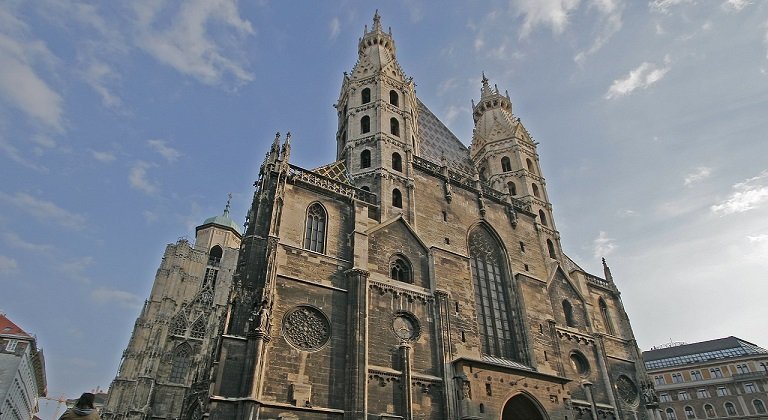
St. Stephen's Cathedral (St. Stephen's) in Vienna - an example of private preservation of cultural value
The fear of apocalypse after the end of World War II is somewhat justified. Many of the directives adopted at that time are related to the destruction of war – various international agreements are adopted to return stolen valuables to their original owners, or various agreements on how the military should treat cultural property during hostilities, and the like. More generally, the cultural heritage laws that sovereign states adopt are mainly related to the documentation and archiving of cultural heritage – the idea of prohibiting the owner of a given object from changing it at his discretion still sounds ridiculous to the majority of people and governments in the world.
35 years after the end of the War, however , the Convention was adopted, which, although noble in spirit, is filled with fear and negativity towards the path of civilization in the relevant years. Already in the first sentence, the opinion is imposed that cultural and natural wealth is being lost and that cultural heritage is "increasingly threatened" by "social and economic conditions". This categorical statement, made in the 1970s, is however difficult to confirm by facts - in fact, people's attitude towards their cultural heritage and natural wealth has historically become greater.
With each passing decade, more and more people around the world are becoming concerned with the preservation of nature and cultural heritage, and this can easily be seen in their behavior – from the growing number of tourism organizations around the world (an absolutely marginal idea 200 years earlier), through the ever-growing visits to museums and galleries, and the ever-increasing cultural tourism.
In previous centuries, "cultural tourism" and interest in "cultural heritage" was an almost non-existent phenomenon - an idea that only took on some form in the mid-19th century. So the cited trend of "increasingly endangered heritage" is quite unsubstantiated and in practice only instills fear and negativity.
The stolen reputation
Ultimately, today we have come to the idea that in order to preserve an object as a natural or cultural value, it must be under the most serious protection possible. And the protections are in the appropriate hierarchy – global (UNESCO), national, regional, local, individual. Or in other words, in order to preserve an object, the safest way is for it to be protected and recognized by the most distant possible player – the world government UN and its symbolic cultural ministry UNESCO. Here the perspective is exactly the opposite of the libertarian philosophy, which places not the regulating institutions, but the person and his voluntary actions at the center of all progress.
The weakness of this notion – that without UNESCO we would almost have no cultural heritage – can be demonstrated with a brief historical overview. First of all, we can “go back” to 1972. At that time, even without UNESCO, individual countries were working to preserve their own cultural heritage. In individual countries, there are public and private foundations that subsidize cultural heritage that is in danger of being lost. The countries themselves have signed various agreements related to the trafficking of cultural values. In some places, there are also various laws on cultural heritage – but still not as strict as in subsequent years.
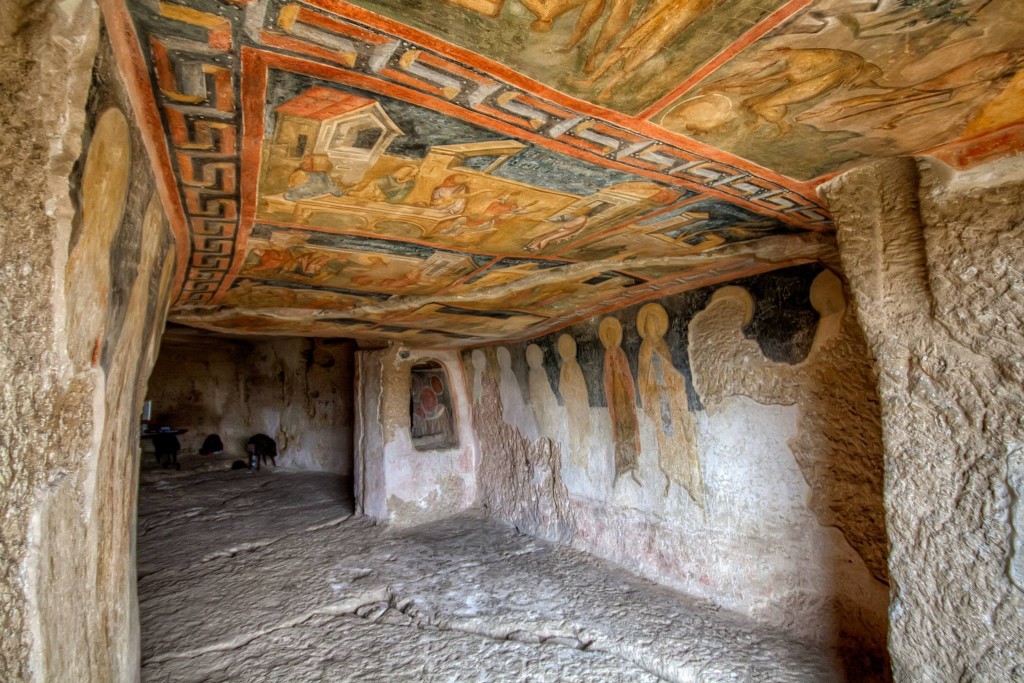
In other words – the rock-hewn churches of Ivanovo have existed for almost 1000 years without UNESCO, in times when people cared much less about cultural heritage. It is a bit naive to think that they were “saved” from evil forces in the last 30 years, namely by some organization residing in Paris. The world somehow managed to preserve its heritage even before the UNESCO List.
Of course, there has been some destruction of cultural heritage – but there has been such since the emergence of the organization. In recent years, cultural values have been actively destroyed in the areas dominated by the Islamic State. There is also a known case from the beginning of the last decade when, despite strong international reaction, unique stone statues of Buddha were destroyed in Afghanistan. It is ridiculous to think that with some conventions we can stop evil and destruction – there will always be such.
But we can also unravel this problem at a deeper level. States have drawn up some legislation, but it is also not what saves cultural heritage. It also appeared after centuries of voluntary human preservation. The Stephansdom Cathedral (St. Stephen's) in Vienna is 500 years old, but the first law on the preservation of cultural heritage was adopted only in 1853 and again it is not related to prohibitions on private property - as we have today. No - the cathedral has been preserved over the centuries by its owners - as well as the entire historical center by all the people who quite consciously and voluntarily decided to preserve their buildings in their respective form. And so, in fact, until 2010, when the law currently in force was adopted. More restrictive than the previous ones and one of the strictest and most centralized in the world, but again including and giving the right to participate to the maximum extent to the owners of the relevant values, who should realize and understand why they should not repaint their facade; or they can file a complaint and request that their building be removed from the lists.
The state is not needed to preserve cultural heritage
The whole idea that cultural heritage should be preserved through political action emerged in the late 18th century after the French Revolution. And not actually as a reaction against the actions of individuals, but as a reaction against the government itself. In 1794, a government decision was made to destroy all Latin inscriptions and other types of “tainted art.” The French government turned out to be the main destroyer of cultural heritage.
The priest Henri Grégoire turned out to be an opponent of this idea, who opposed it with the words:
"...to put the individual artist at the forefront, and to show works of art as an expression of the free spirit triumphing over political repression..."
Similarly, 150 years later, the totalitarian regime – with the absence of the terrible “business interests” today – would prove to be the greatest destroyer of immovable cultural heritage. The old centers of most cities were completely obliterated in order to fulfill the megalomaniac ambitions for large buildings, party houses, squares and boulevards. At the same time, however, the idea was “sold” that the People’s Republic preserves cultural heritage and takes care of history in the best possible way – centrally.

Of course, there was cultural heritage preservation before that. We must keep in mind that every monument, building, object that has existed over the centuries has, for the most part, survived without any state regulation – solely thanks to the fact that it is appreciated by the people themselves as a value.
The preservation of cultural heritage has always begun as a voluntary cause, which, however, is often subsequently absorbed by state power. The self-deprecation of us, individuals, as incapable of preserving cultural heritage or of self-organizing in such actions is insulting to our civilization.
Decentralization works much better
Centralization of power, especially when it comes to cultural heritage, creates too many risks and too few benefits. Switzerland, for example, works in the opposite direction. As a true federation, there is no central structure that takes care of cultural policy or the preservation of cultural heritage. The Swiss federal government has delegated this activity entirely to the cantons. Very often, the cantons themselves delegate this activity to the municipalities.
Comparatively speaking – if in Bulgaria, in order to renovate your house of cultural value you have to consult the National Institute of Cultural Heritage and wait months for an opinion, then in Switzerland – if there is any regulation at all – you have to consult the institutions in the canton at most. Just to clarify – most cantons have a population of under 100,000 people. And if the canton does not regulate construction, then the municipalities do it – here we are already talking about the population of under 5,000 people. Imagine what would happen if a proposal for decentralization appeared to the level of the Municipality of Kuklen to decide about valuable buildings, without consulting anyone else.
Of course, all this is also happening under the supervision of voluntary private organizations. It is they – not UNESCO, ministries and officials – who have the greatest interest, ambition and emotional charge to take care of cultural heritage. One of the first organizations created to deal seriously with the cultural heritage of the Americas, for example – the Society for American Archaeology – started as a completely voluntary structure.
This is how the private, voluntary-funded German Foundation for Monument Preservation ( Deutsche Stiftung Denkmalschutz ) operates today, operating with a budget of millions of euros. In fact, such organizations and foundations exist all over the world. And the smaller the role of the state or supranational structures, the greater the role of private organizations, whose members are enthusiastic specialists, not bureaucrats bored with life. We can hardly blame Germany and Switzerland for stubbornly destroying their cultural heritage, can we?